
By Carol J. Wechsler Blatter

These were Dad’s words to my mom in her frustration about the lack of money to pay our bills on time and have a few dollars for extras.“Of course not.” Not having enough money is all I ever remember in my growing up. Our apartment felt like living under a canvas tent so shaky it was likely to blow away during the next wind storm. Dad’s income fluctuated depending upon how productive his luncheonette and ice cream parlor had been on any given week. We were on a virtual seesaw. On good-income weeks our moods were sunny, our faces radiated with pride. On poor-income weeks our moods were dark, our faces were lined with worry. Although Dad never said it, I knew he wished to be a better provider. It’s not that he lacked trying. He was a diligent worker. But—he lacked the education and opportunities to have a higher paying job. And having a job which required fewer hours so that he could spend more time with our family.
What if Dad got sick and couldn’t work? What if Mom couldn’t be treated for her heart condition because we couldn’t afford the cost for her care? What if our dreams for a future, a home we could own, enough money to afford a new car, our old one was on the verge of collapse, and that Dad didn’t have to work every day except for every other Sunday, was just that, only dreams.
*
Managing money was one of many major conflicts between them. They rarely agreed on anything. Fortunately, Mom was an excellent money manager and managed on Dad’s meager income to provide as much as she could for us. Dad, in contrast, had very little sense of saving even if there was extra money to save. Mom said that money in Dad’s pocket “would burn a hole,” even a few dollars, and some change disappeared quickly.
*
Despite a lack of money, I was the lucky recipient of extras thanks to Mom’s wise and careful budgeting. I went to a summer camp for several seasons subsidized by the University Settlement House in New York, and also to Girl Scout Camp, subsidized by the Scouts. And from the ages of nine through twelve, I had dance, acting, and voice and diction lessons at the Henry Street Playhouse. These lessons were considerably less expensive than comparable lessons at private performance arts schools in New York.
*
Mom was a clever shopper. Her favorite store was Orbach’s, which had much better prices than the elite stores in the fifties like Lord and Taylor, Saks Fifth Avenue, and Bonwit Teller. And the elitist of the elite New Yorkers shopped at Bergdorf Goodman, a store I had never heard of in my youth. Mom knew how to buy the nicest clothes for both of us by making end-of-season purchases and markdowns. She had an uncanny knack for going through a rack of dresses and finding just the perfect one within seconds. I can’t think of a comparable race winner in any other sports division.
*
Things could have been so different if Mom had worked to add to Dad’s income. Mom, who graduated from Hunter College in New York with a Spanish major and an Italian minor in 1931, couldn’t get a teaching job due to the Depression. She married my dad in 1940. She had her first heart attack, a genetic predisposition in her family, twelve years later, when I was ten years old. Teaching would not be possible when she was infirmed with heart disease. Later, despite her health, when Dad was diagnosed with terminal lung cancer she was able to care for him.
*
Mom needed to support herself. With up-to-date medical care, her health improved and she was able at the age of fifty-four, to start the career she was educated for, teaching. She obtained her college transcript and in the mid-nineteen sixties, language teachers were in demand. She taught High School Spanish for fifteen years before her retirement. She earned enough to travel every summer between school years. In an uncanny way, Dad’s death allowed her to have a more productive and meaningful life.
*
Since I married my husband, I have been fortunate to live very comfortably and have some luxuries. In addition to his earnings as an engineer, I contributed to our income with my earnings as a clinical social worker in an agency and later in my private practice. We paid for our daughter’s undergraduate and graduate school degrees. Sadly on June 30th, 2023, the Supreme Court outlawed student debt relief. This means that many of those encumbered by huge student debts will have difficulty moving their lives ahead financially. If ever. I am so glad that our daughter finished her schooling without any debt so she could pursue her career and earn well.
Thankfully, I have never heard these words since my childhood, “What do you want me to do, rob a bank?”
© 2023 Carol J. Wechsler Blatter
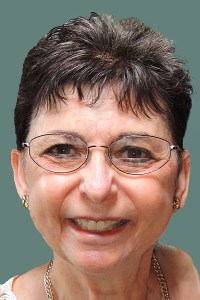
Carol J. Wechsler Blatter has contributed writings to Chaleur Press, Story Circle Network Journal, Story Circle Network Anthologies, Writing it Real anthologies, Jewish Literary Journal, Jewish Writing Project, New Millennium Writings, 101.org, and poems to Story Circle Network’s Real Women Write and Covenant of the Generations by Women of Reform Judaism. She is a wife, mother, and a very proud grandmother, and a recently retired psychotherapist in private practice.

 True Stories Well Told