
By Sarah White
This is part one of a two-part series on a topic we don’t talk about. (Click here to read part two.)
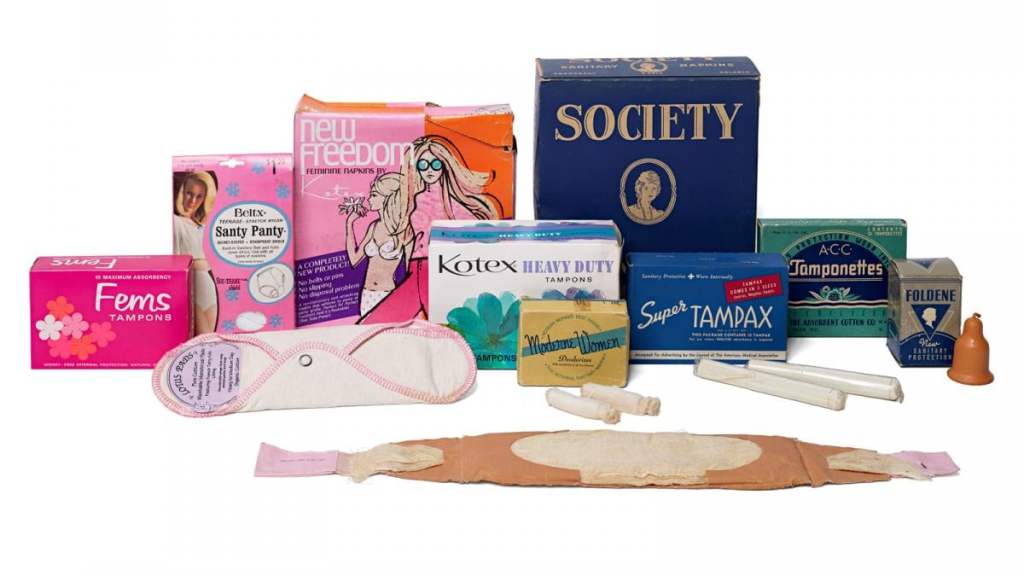
The word “menarche” comes from Greek and Latin roots meaning “month” and “beginning.” According to Wikipedia, it means “the first menstrual cycle, or first menstrual bleeding, in female humans. Many societies have rituals, social norms, and religious laws associated with it.
The dominant ritual in mid-century America was silence, which meant taboo to talk about, which meant shameful. The stigma surrounding discussing menarche was so great that I had received no information whatsoever by the time it happened to me.
Admittedly, my mother was blindsided. I was 11 and a half years old. She wasn’t expecting to have to have that conversation with me for a few more years. What puzzles me is how I knew it was shameful even thought I didn’t know what it was.
It came between a Sunday evening and a Monday morning in the summer of 1967. At the time, I was very much still a child, inhabiting my imagination more than the real world. I had spent the last two nights in the beech woods behind our house, camping with friends in our family tent. We communed with fairy folk back there. It was a sultry summer night in Central Indiana. As was my habit, I slept on top of the quilt on my bed, rather than between the sheets.
I was awakened in the wee hours by the wetness between my legs. My baby doll pajama panties were red with blood. I went to the bathroom, examined the mess, stuffed toilet paper between my legs, and went back to bed. I wondered if I was dying. Probably not, but maybe I had some terrible disease down there? I lay in the dark, worrying. Why I didn’t think I could wake up my parents to alert them I might be dying still baffles me. Already, I’d learned the family culture was: Don’t be a Problem to the Adults.
Mornings in that house always began with the smell of coffee brewing, followed by cigarette smoke—the signals my father was up. Soon I heard my mother stirring and called her into my bedroom. She saw the mess. I believe she gasped. Then she explained something about female biology. “This will happen every month” is the only part I understood or recalled. To say I was horrified doesn’t begin to express my state of mind.
To her credit, my mother did apologize as she showed me the rectangular pads and the elastic belt they hooked to—they must have been in the house for her needs, since she hadn’t anticipated mine. (This is the first time I’ve thought about my mother as a menstruating woman.) “I was fifteen when I got my first period, so I thought I had years to prepare for this conversation,” she said.
It didn’t help that my mother set about scrubbing the blood out of the quilt, which as it happened was a family treasure stitched by her mother and sisters decades prior, out of small squares of white, yellow, and blue fabric. Much of the white was now rusty red. She worked on that quilt for days, alternating treatments with different solutions and rinses in cold water. We didn’t have a washing machine in the house, so all of this was done by hand, in a big washtub on the back porch.
The boys took no notice, of course, as any sort of women’s work was invisible to my brothers, one and two years older than me. I absorbed the message that all signs of menses must be removed, as surely as the process itself must be kept out of sight. It stained me as deeply as the red on the fabric. This was a secret my mother and I kept between us.
Then came the annual family camping trip.
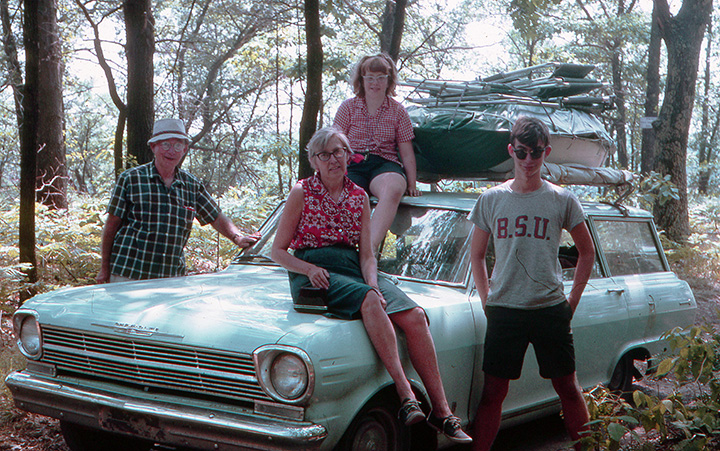
The destination this August was a lake outside Baldwin, Michigan, on land some friend of my father owned. It wasn’t even a proper campground this year, where there might be other girls to play with; just a campsite in the woods above a lake with a rickety picnic table and an outhouse about fifty feet down a trail. I don’t know if our family was in a poor stretch that year, or if it was just the fishing my father was after, but I was resentful. I had cherished our summer weeks spent in the boreal forests of Canada’s provincial parks. Here I was, stuck in the muddy Michigan woods with nobody but my brothers. My imaginary fairy friends stubbornly refused to join me here. (In fact, I never saw them again after my menses arrived.)
And then my next period came. I hadn’t packed “supplies”; I was still in absolute denial that my body was going to do this to me AGAIN and AGAIN. I whispered to my mother that there was blood in my panties; she dashed into town and came back with a big box of pads that came with little bright blue bags for disposing of them.
I began disappearing down the path to the outhouse multiple times a day, carrying a little blue bag each way. It didn’t take long for the brothers to take note. Like any group of close-in-age siblings, we were intensely competitive and attuned to who received preferential treatment.
“What’s in those bags! What is she getting that we aren’t getting?” the boys demanded. Who knows what they thought it might be—a toy or treat? Then my mother had to explain to them about the miracle of menarche. I was absolutely mortified. They were TALKING ABOUT IT, this shameful thing.
Eventually, that moment passed, and silence settled over the subject again. I was never happier for a camping trip to end.
From that summer on, I took great pains to hide every evidence of my monthly bleeding—buying my own supplies, burying used pads deep in the bathroom trash, washing out my soiled panties and drying them in secret, making sure no one in the family ever had a clue.
Menarche goddam.
© 2025 Sarah White

 True Stories Well Told