
By Loriann Knapton
Today I made potato salad. I started with my grandmother’s recipe, passed down from one mother in the family to another. As the small red potatoes cook, I start to chop hard-boiled eggs, celery, and onion, and start thinking about my Grandma Ring, her potato salad, and the Pumpkin Hollow Homemakers cookbook of 1955.
Created as a fundraiser, the book is grease-spattered front and back, held together by a plastic spiral strip and filled with recipes, the best each woman in the area had to offer. The typed ingredient lists were very specific, with phrases such as “Use a piece of butter the size of an egg” or “add enough flour to make a soft dough,” and included distinct instructions like “bake until the crust is like butterscotch.” Or “mix so they will roll out without sticking to the board.” I cherish the book passed to me when my grandma died. It’s filled with her handwritten notes, added ingredients, and additional recipes jotted in the margins. I still occasionally use the book, mostly when I am feeling nostalgic. But every time I open it, I ponder over how its contributors were credited. Written below each recipe, I see their names. Mrs. Alva Ring, Mrs. Carl Cummings, Mrs. Glen Lawrence, and so it goes with every recipe in the book. In 1955, the credit was given to each woman only as an appendage of the men they married.
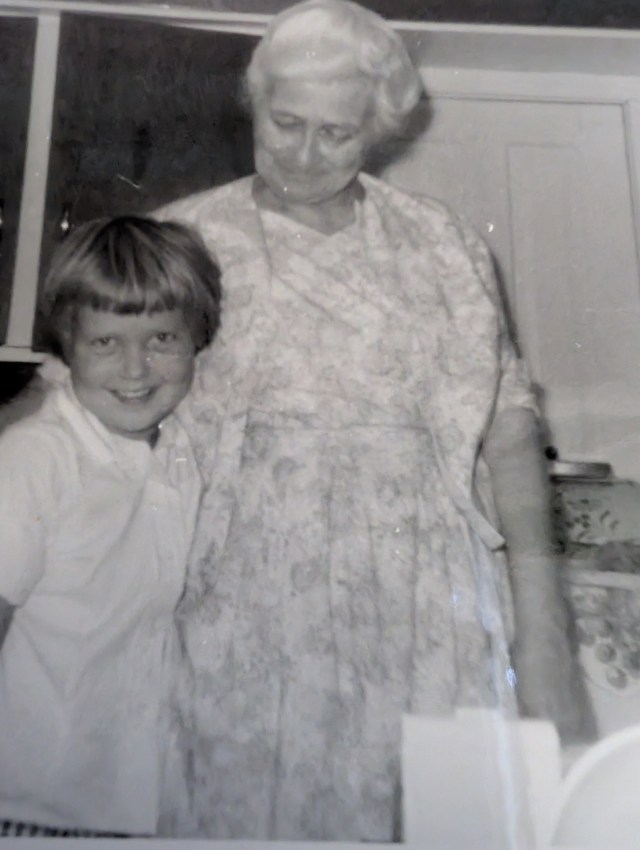
I chop a couple of extra eggs, and I think about Mrs. Alva Ring, my paternal grandmother, who always added additional eggs to her potato salad for “substance.” Alma Spielvogel Ring, the daughter of German immigrants, lived through two world wars, the passage of the 19th Amendment, Prohibition, and the Great Depression. She kept a 22-caliber rifle by the back door of her little house and could drop a rabbit from the doorway at 30 yards, skin it, butcher it, and make a delicious stew in time for company supper which, if anybody asked, was chicken. And neither would she hesitate if she had the good fortune to have one available, to head out to the coop with her kitchen axe to chop off the head of a chicken, tossing it into the garden for fertilizer before gathering its still flopping body from the yard to singe, pluck, and prepare it for Sunday dinner. The depression taught her to make do with what she had. She was resilient in the face of tragedy, burying her husband and two of her three adult children in the span of seven years. She was also opinionated, honest, direct, and loyal to her friends, and I am so proud to have inherited many of her qualities. She taught me to stand up for myself, take care of myself, and depend on myself.
As I skin and dice warm potatoes, I think about my mother-in-law, Mrs. Roy Knapton Sr. “If the potatoes are warm, the dressing will soak in for more flavor,” Nancy Jean Krueger Knapton always said. She was married at seventeen, bore four children, and buried one before she was twenty-three, then had three more. She worked full-time in a retail store, then came home and canned 52 quarts of peas, carrots, green beans, corn, mixed vegetables, and homemade ketchup from her garden each canning season. She washed clothes for eight in an old Hoover washer, crocheted and knitted blankets, sweaters, hats, coats, and mittens to keep her family warm, butchered chickens, hunted deer, and taught each of her children how to swim. She loved roller coasters, card games, and brandy old-fashioneds. She taught me time management, how to take things in stride, never to take myself too seriously.
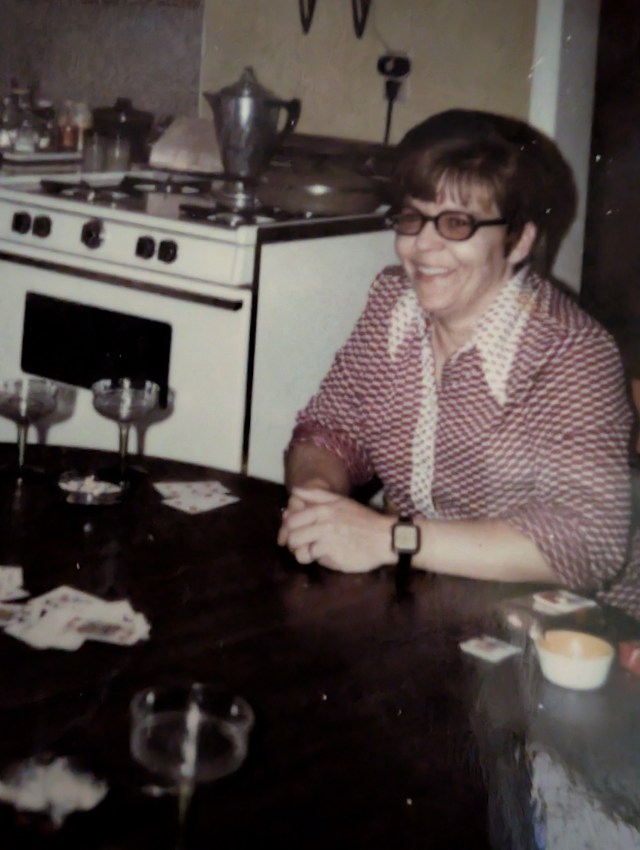
As I mix the dressing, mustard, vinegar, salt, pepper, and mayonnaise, I think about my mother, Mrs. Lauris Ring. Betty Ann Charlotte Kvidt Ring taught me that mayonnaise, not Miracle Whip, and just a touch of mustard, is the secret to good potato salad. She completed first and second grade in one year, trained as a practical nurse at 17, married my dad, promising in sickness and in health in 1954, then kept her promise, nursing him at home for eight years when he was diagnosed with multiple sclerosis four years later. She worked full-time nights at our local hospital, managed the household, paid the bills, fixed the leaks, hung the pictures, mowed the lawn, took care of the car, volunteered at her church, was a 4-H leader, and delivered Meals on Wheels, all while caring for me and Dad. Mom never meant to be a feminist. Really, she was a reluctant one. She was a feminist by the necessity of having to juggle it all. She taught me that life is not always perfect, but with resilience, patience, and flexibility, it is possible to find beautiful roses among the thorns.
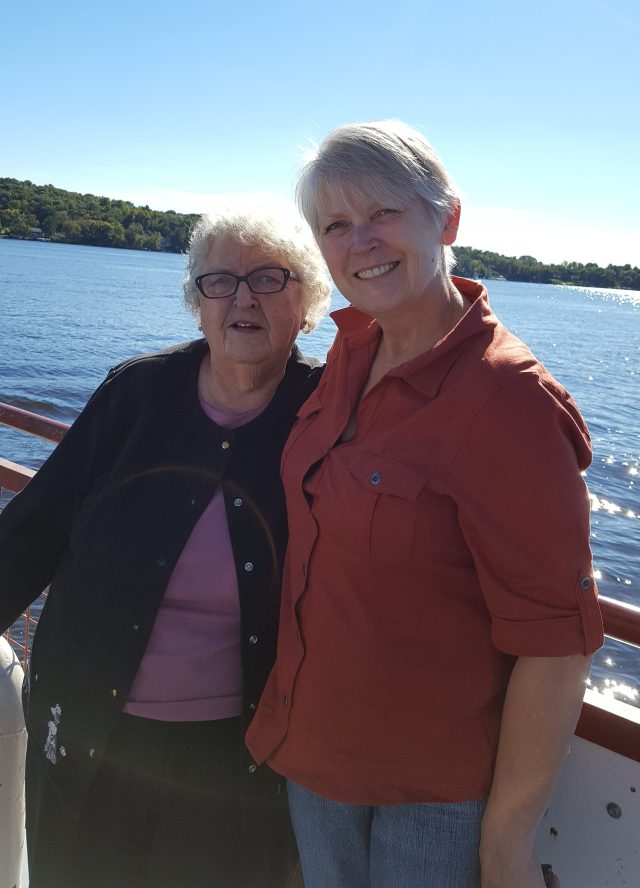
As I gently fold dressing into the vegetables, I think about my maternal grandmother, Mrs. Elmer Kvidt. Ruby Corella Opdahl Kvidt was a gentle soul. In her world, the more gently you stirred, the softer the touch, the better the outcome. She knew how to make a point without using a loud voice or overt drama. The daughter of a Lutheran missionary pastor, she lived through two world wars, the great depression, and the grief of losing an infant. She collected water in galvanized pails from an open pipe jutting out of a freshwater spring, 250 yards from the house and the master bathroom; the only bathroom was an outhouse located 35 yards from her back door. Clothes were washed using a squeaky wringer washing machine kept in an unheated back porch, and the galvanized wash tub that collected the clothes as they dropped from the wringer was the same tub she bathed in on Saturday nights. She never had indoor plumbing until 1978, but I never heard her complain. She was kind to her friends, good to her neighbors, and loved within her small northern Minnesota community. She taught me that kindness matters, and more importantly, it is really 10 percent what happens to you and 90 percent what you decide to do about it.
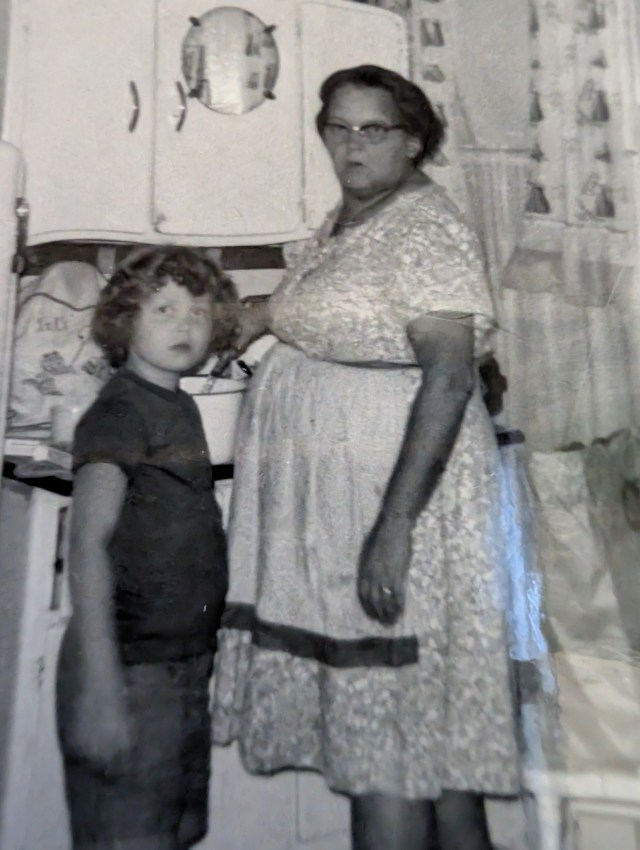
As I wash bowls, spatulas, and the potato pot, I think about my aunt, Mrs. Florian Ring. Helen Marie Wuerch Ring was married to my dad’s brother, and I can hear her in my hea,d “Lori, if we make a mess, we have to clean up a mess.” She taught school in a one-room schoolhouse, married a dairy farmer, raised her own three children, and took in my three cousins and me in the summer of 1963 when our parents were struggling with health issues. She milked cows, drove tractor, fed chickens, tended garden, made the best pies in four counties (it’s in the lard), volunteered as a 4-H leader, served as president of her Homemakers club, managed the many accounts and purchases for the family business and served as the Wyocena town clerk for over 30 years. Helen is 100 years old this year, still lives in her own apartment, and with the aid of a walker exercises daily. She was and is remarkable. She taught me that cleaning up the messes I make in the kitchen and in my life are the keys to successful living.
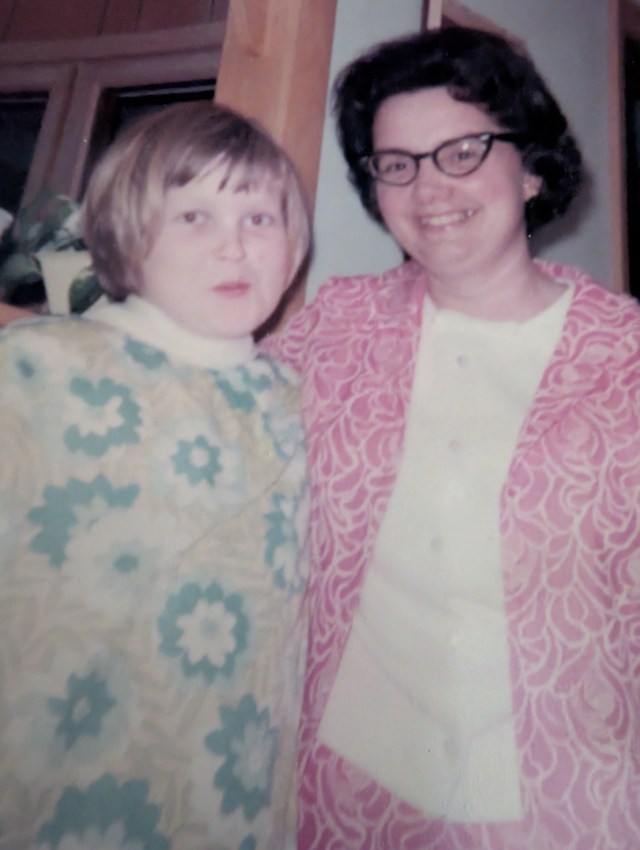
Alma Spievogel Ring, Nancy Krueger Knapton, Betty Kvidt Ring, Ruby Opdahl Kvidt, Helen Wuerch Ring. All married, but certainly not defined only by their husband’s name. They have always shined brightly in their own right, lighting the way for their daughters and granddaughters to never have to present themselves, unless by choice, as Mrs. inserts a husband’s name. They are the women who paved the way for me. Today I made potato salad. Then I opened the pages of the Pumpkin Hollow Homemakers cookbook and defiantly and proudly inked Alma Spielvogel Ring next to Mrs. Alva Ring on each of her recipes.
© 2025 Loriann Knapton
Loriann Knapton has been writing since childhood. Having crafted countless rhymes, short stories, and personal essays over her sixty-odd years she has a keen interest in ensuring her family memories are recorded for the next generations. Her writing reflects the humorous and poignant experiences of growing up in 1960s small-town America with her mom and disabled dad.

 True Stories Well Told