
By Loriann Knapton
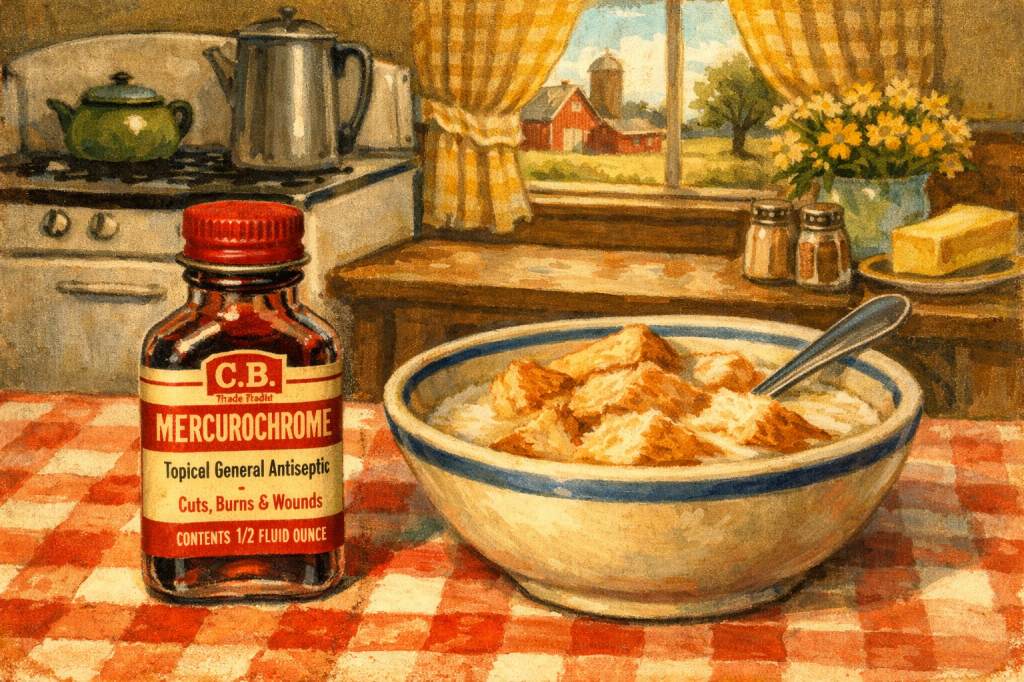
In our house when I was growing up, you didn’t go to the doctor unless you were A. bleeding to death or B. weren’t breathing. Anything else requiring medical attention was pretty much managed at home. I do vaguely remember one visit to our local clinic as a three-year-old after I climbed on the bottom open drawer of a clothes dresser. Mom had turned away from me for just a second, and the dresser crashed to the floor with me underneath. I was fine, but the tip of the pinky finger on my right hand wasn’t. It was missing, and there was blood everywhere, one of the criteria for a trip to the doctor, so off to the clinic we went, Mom driving, and Grandma holding me in her lap, putting pressure on the wound with one hand and holding the end of my finger in a clean dish towel with the other. Turns out the doctor couldn’t reattach it because the severed tip of the finger was so small. So, he tossed the fingertip in the trash, stitched up the wound, wrapped it in a gauze dressing that to my three-year-old self looked like the top of a vanilla ice cream cone, and sent us home. Had Mom known the finger couldn’t be reattached before we left for the clinic, she probably would have kept pressure on it, doused it in Mercurochrome, bandaged it up, and saved the hospital bill. My dad used to say the only place you could find sympathy in our house was in the dictionary. Anyway, I managed to survive my many childhood maladies and mishaps thanks to Mom, mercurochrome, and milk toast.
Children growing up in the 1960s were very familiar with Mercurochrome. This red, syrupy-looking liquid, used as an antiseptic for minor cuts and scrapes, was a standard item in home medicine cabinets. That is, until 1998, when it was banned by the FDA due to its high mercury content. But back then, if I came in the house with a scraped knee, small cut, or bleeding bug bite, out would come the familiar bottle, with its black rubber squeeze bulb jutting out of the screw cap. Mom would grab a washcloth, clean the wound, unscrew the cap, and squeeze the liquid liberally from the glass dropper on the affected area, admonishing me to “stop crying and hold still because it’s a long way from your heart!” Once applied to her satisfaction, she would blow on the wound in an effort to let the liquid dry before covering it with a band-aid. I guess the Mercurochrome was antiseptic enough to ward off any germs from her mouth. Looking back, I really didn’t mind the “red stuff” as we called it, or the orange-red stains it made on my skin. Nor do I remember ever getting an infection from a wound treated with Mercurochrome, so the stuff must have had some merit. But milk toast…That’s another story.
Milk toast was my nemesis. Milk toast was mom’s remedy for sore throats, indigestion, dehydration, and upset tummies. Alternatively, it served as a poultice to draw out stingers, the core of a boil, or pus from an infected wound. In Mom’s book, if Mercurochrome couldn’t fix it, milk toast would. To make this magic cure-all, Mom would toast a slice of white bread, cut it up into small cubes, and place it in a cereal bowl. Then milk, warmed on the stove in a small aluminum saucepan, was poured over the bread. A tablespoon of sugar—or sometimes two if she were feeling generous—would be stirred into the bread mixture and left to soak into the toast until it was a soggy, sloppy mess. Only then would she place it on the kitchen table with the words, “Honey girl, I made you some milk toast. It will make you feel better.” The stuff didn’t make me feel better. It was awful. It tasted like wet paper and paste. In fact, I think the paper and paste would have tasted better. But mom was so sure it was the cure, I had no choice but to hold my nose and suffer it down.
Occasionally, the toast was not for eating but for slapping on my skin as a poultice. The preparation method was the same, but instead of ingesting it, Mom would place the concoction on the affected area as soon as she could safely do so without burning me. Once the milk toast plaster was in place, she would wrap the area with plastic wrap, put a towel over it, and there I would sit, milk oozing out of the soggy toast and running down my leg while I impatiently waited for it to do its magic so I could get back outside.
Thankfully, with new science and a plethora of over-the-counter products available in any drug, grocery, or big box store, Mercurochrome and milk toast are largely forgotten except in the childhood memories of Baby Boomers. My grandchildren look at me in puzzlement when I mention Mercurochrome and in wide-eyed horror when I explain about how we would sometimes eat milk toast and other times slap it on our skin to draw out pus. But I remind them that I am still here, alive and well, due in part, or in spite of, of Mercurochrome and milk toast, depending on how one looks at it.
My 93-year-old mother called me the other day to ask about my childhood friend, who had spent a few miserable days in the hospital suffering from severe canker sores, a side effect of chemotherapy. As I explained to Mom that Sue was still struggling to eat anything because her mouth was so sore, Mom promptly said, “Oh Lori, that’s easy. Just tell her to make some milk toast, and everything will be fine.” I just smiled to myself. Thanks, Mom.
© 2026 Loriann Knapton
Loriann Knapton has been writing since childhood. Having crafted countless rhymes, short stories, and personal essays over her sixty-odd years she has a keen interest in ensuring her family memories are recorded for the next generations. Her writing reflects the humorous and poignant experiences of growing up in 1960s small-town America with her mom and disabled dad.

 True Stories Well Told