
By Marlene Samuels
This January in Chicago, where I feel fortunate to have settled, temperatures have given me a serious “deja vu” attack. Our arctic blast brought to mind a period in my life I’d all but forgotten!
Until my teens, I lived in Montreal, Quebec, Canada. Situated on the St. Lawrence Seaway. The city is renowned for its old-world ambiance, lip-smacking cuisine, and the quirk of French remaining the legal language in one of our closest geographic neighbors. Americans often remark that when they visit Montreal, they feel as though they’ve gone to Europe—France specifically—only much closer and without jet-lag. That’s great except Montreal is also notorious for shockingly brutal winters.
Throughout high school and my first two years of college, I’d saved all my pennies and all my dimes from summer jobs and weekend babysitting. Religiously, I’d walk to our neighborhood bank—savings account passbook proudly in hand—humming as I strolled. The song: lyrics of the 1962 Beach Boy’s song, “Little Deuce Coupe,” “I saved all my pennies and all my dimes…”
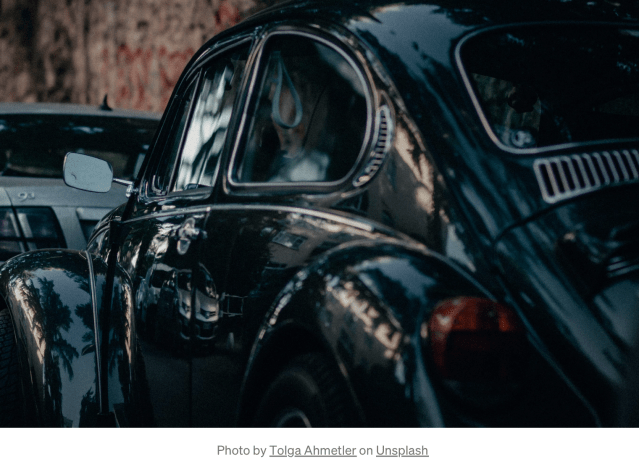
In 1970, the summer before I would enter junior year at university, the administration approved upper-class students having cars on campus. I was beyond ecstatic and intended to do just that. My small fortune, faithfully saved over the years, totaled an amazing $536. With Dad’s guidance, I found a road-worthy 1959 black Volkswagen Beetle for $500. The remaining $36 paid for floor mats and a pre-paid gas card. The car’s odometer read 160,000 miles. The number was of little concern to me since I’d read that due to the Volkswagen’s extreme simplicity of design, the road-bug was destined to run forever.
My black beetle was a four-speed stick-shift on the floor, cute and somewhat other-worldly looking on campus. It sported exterior running boards—a tad rusted and sagging in parts—plus shiny metal bumpers with their share of dents. None of these features soured my love of my first car. But the pure “simplicity of design,” I soon discovered, meant the 1959 VW lacked both a gas gauge and a fan that might deliver heat into the car during the frequently arctic Midwest winters. And seatbelts? Of course not. In retrospect, we didn’t pay attention to them. Given our youth, we perceived ourselves as indestructible, and besides, seatbelts weren’t standard equipment in cars until 1968. But we definitely knew about gas gauges and car heaters! Every car I’d ever been in had them.
My black Volkswagen Beetle was equipped with a “reserve tank.” The metal acorn-squash-sized globe under the steering wheel held precisely one and a half gallons of gas. Should my beloved bug begin to sputter — a sure sign I was running out of gas—I’d flip a lever on the acorn squash. Reserve gasoline would pour into the main tank, the VW shuddered and bucked like a rodeo bull for a few seconds, and then all would be good again, at least for a while. My math wasn’t the greatest but at approximately thirty-eight miles per gallon, the extra fuel gave me anywhere from fifty-four to seventy more miles, depending upon weather, traffic conditions, terrain, and how much coasting in neutral I managed in my search for a gas station before totally running out of gas and getting stranded.
The absence of a gas gauge was simply inconvenient compared with the vastly more serious, even life threatening one: the absence of a heater or fan. During Chicago’s arctic winters, that was the only way to generate heat in my 1959 Volkswagen Beetle. Increasing the motor’s RPM’s (revolutions per minute) by downshifting usually did it but only when the car was warmed up. The racket did make the engine sound ready to explode, however. The method forced hot air from the motor to blow through thin slits at the windshield’s base, the auto designer’s concept of vents.
The first winter I owned my beloved beetle, I quickly learned the importance of never driving anywhere alone unless absolutely unavoidable, and if I did, wrapping a scarf over my mouth and nose to minimize my exhaled breath that reached the windshield was essential. Why? Because condensation from breathing when reaching the windshield created an ice layer at an alarming rate.
The lifesaving task assigned to every passenger: remain as quiet as possible so as to reduce breath that condensed into yet more windshield ice—but also take responsibility for the ice-scraper. Passengers scraped the windshield’s interior ice as it formed—the task’s importance could not be underestimated— since accumulating ice obscured the road’s visibility.
Objectively, I probably overpaid for the car. But the freedom it provided remained unquantifiable. I’d bought myself independence plus the means to distance myself from home and parents at a point in life when such things could not be over-stated. After my first arctic Midwest winter with my 1959 beetle, my friends and I settled in to a comfortable “winter travel in the Marlene-wagon” routine. I was the envy of most of my friends, rarely lacking for passengers eager to assume the ice-scraper job. By the time I graduated university, the running-boards had rusted off and my metal bumpers, beyond dented, had been replaced with rubber strips cut from old tires.
This week, temperatures have hovered at below-zero double digits. Getting into my modern-day wonder vehicle and pulling out of my garage, my steering wheel heats up, my bottom feels warm as the seat-heater turns on, and my toes grow toasty. I exhale a deep sigh without the slightest concern about icy windshield consequences.
My little black beetle may have lacked heat, a gas gauge, seatbelts, and in all likelihood shock-absorbers, but always will retain a spot in my heart as the greatest car I ever owned.
©2026 Marlene Samuels
Marlene holds a Ph.D., from University of Chicago. A research sociologist by training, she writes creative non-fiction by preference. Currently, she is completing her book entitled Ask Mr. Hitler: A Memoir Told In Short Story. She is coauthor of The Seamstress: A Memoir of Survival, and author of When Digital Isn’t Real: Fact-Finding Off-Line for Serious Writers. Her essays and stories have been published widely in anthologies, journals, and online. (www.marlenesamuels.com)

 True Stories Well Told