Cheers! Madison, or Preaching to the Choir

By Sarah White

First rehearsal

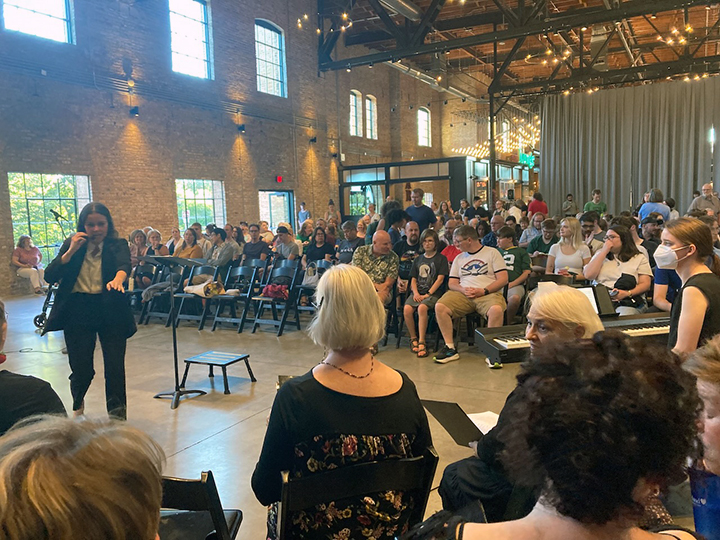
A friend and I have been talking about our mutual interest in getting singing back into our lives. She’s tried one local community choir and heard about another just launching into its summer cycle. It would meet for three rehearsals, then a performance. It met at the Garver Feed Mill, a renovated historic building a short walk from my house.

I have history with the mill, having been part of the citizen group that agitated for its restoration over a decade ago. The opportunity to be part of making music in that vast honey-colored brick hall, that was a graffiti-splotched cavern when I first saw it on a hard-hat tour, cinched the deal. I had the next four Wednesday evenings free. I would celebrate the old feed mill in song.
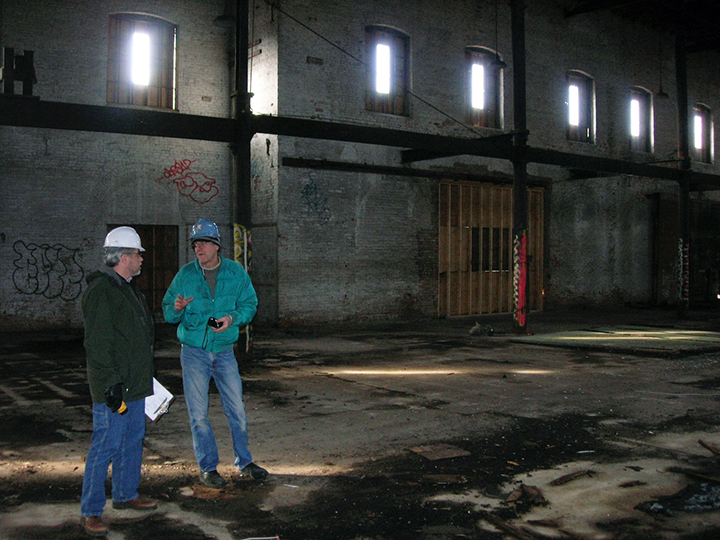
Garver Feed Mill hard hat tour, December 2011

Cheers! Madison is the project of a doctoral music student, Liz, our choir director. I describe it as a drinking club with a singing problem, since she opened every rehearsal with an encouragement to have a beverage from the bar in hand and lift it whenever she randomly cried “Cheers!”

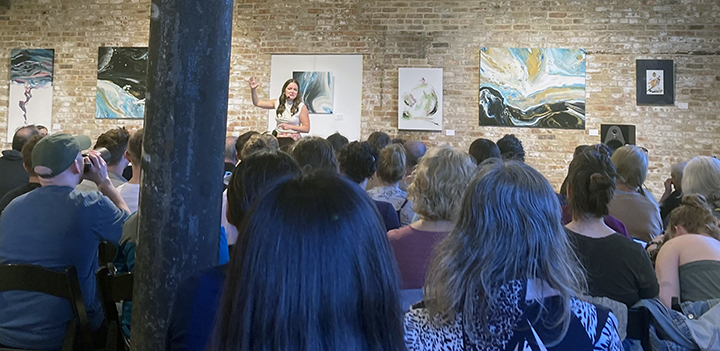
Too rusty at sight-reading to trust myself on alcohol, I brought a water bottle instead. Arriving for the first rehearsal, I was amazed to discover that 160 people had signed up for this! We were directed to our rehearsal room and the quadrant for our voices—Soprano, Alto, Tenor, Bass. I sat with the altos and quickly discovered my vocal range has collapsed by an octave since I sang in the high school choir.

We sight-read our way through seemingly random sections of the six songs we would perform. This was the pattern for each of the three rehearsals. Week by week, we built toward singing all the way through each piece.

It took me about two minutes to figure out that if I didn’t work on the songs outside of rehearsal, I didn’t stand a chance. Turns out choir is like signing up for dog obedience training—the work doesn’t happen in the class, the class just teaches you the work you need to do on your own.

I decided to take “Cheers!” seriously; I searched YouTube and found vocal warm-up videos, plus recordings of choirs performing the four songs I didn’t know—one African anthem, two gospel songs, and a Christian hymn. I did a lot of singing in the car on my short drives to the gym.

The day of the performance quickly arrived. “Are you nervous?” spouse and friends asked. “No, why would I be? This is pretty low stakes,” I replied. My voice among 160 would never be heard. There’s safety, as well as fun, in a crowd.

But that question sent me spiraling back to my high school choir days and the time Jesus saved me from performance anxiety.

The Jesus movement came to Carmel, Indiana in the spring of 1972. I was a sophomore. I followed a friend to a youth revival meeting at the Methodist church (just like I followed a friend to Cheers! Madison). At altar call, I came down. Parishioners circled me and held me on the ground as they prayed for the Spirit to enter me.

“Feel Jesus enter your heart!” There was moaning and chanting and singing all around. Other teens were in similar positions on the ground. One by one the Spirit came and they got up, reborn in the name of Jesus. Only my call wasn’t coming. It was like waiting for an orgasm that just isn’t coming. (Not yet familiar with orgasms, I wouldn’t have made that comparison then.)

I finally faked it just to get on with it. That led to personal confusion; I began reading the Bible, a small bit every night before bed, and praying for some sign of salvation.

Meanwhile, I was singing in the high school’s show choir. We did songs like “Tea for Two”. We had matching dresses of navy-blue polka dot voile, high-waisted, cinched under the bust, supposedly flattering to all figures.  We were given patterns and fabric and sent home to sew. I hated how I looked in mine—egg-shaped.

I was very shy. I found performing, even in the navy-blue polka dot anonymity of a thirty-person choir, very unsettling. I never even had a solo—just standing up in group was too hard for me.

That spring, our choir was booked to sing at the Masonic Temple for the Ladies of the Eastern Star, and I was nervous. That evening, I prayed to Jesus for salvation, again. And something finally happened. My nervousness was replaced by a great sensation of peace. This must be “the peace of the Lord that passeth all understanding”! If so, then I must have finally felt Jesus enter my heart!

I felt a lot better about the show choir after that moment. That feeling of extreme calm was accessible to me for several months before it faded.
Sound check

Now, at the performance in the Garver Feed Mill’s atrium, surrounded by my 160 singing peers, I felt nothing but joy—a light heart engaged in play. There was nothing at stake whatsoever. The thing I’d hoped to achieve by getting singing back into my life had already happened.

At the last rehearsal before our performance, after our usual vocal warm-ups, Liz the choir director threw in a new one. “Play a chord—C Major,” she told our accompanist. “Okay, everybody sing your note—a nice open ‘Oooh’. When I signal you, move down one whole step.” We did—and the atrium filled with a joyful sound.

“Sopranos: Down one!” The harmony grew a bit discordant. “Altos, down one!” The discord grew more dramatic as voices matched and melded, two harmonies competing. “Tenors, down!” The tension became a question groping for an answer. “Basses, down!” The question found its answer and beauty filled the room again. We held that note, following her gesturing arms, many voices but one instrument. Our sound sustained and swelled until she released it. Our “oooh” soared into the vast atrium like a holy dove.

©  2024 Sarah White

Posted in Sarah's memoir | 1 Comment

The Lucky Ones

By Sarah Skalitzky

In the spring of 2009, I didn’t truly understand what was going on in the world. I’d heard the names Bernie Madoff and Fannie Mae in the news but didn’t know who they were. They said the economy was bad, whatever that meant. I knew that people were losing their retirement savings, their houses, and their jobs, but none of that really mattered to me.

I was almost two years out of college, working in my first architecture job, living in a one-bedroom apartment on the East side of Madison, and dating Jeremy. I didn’t have retirement savings or a house to lose, and I was already planning to leave my job and return to graduate school in the fall.

Nonetheless, I was still shocked when I got an email from HR one morning asking to talk to me later that day about my position in the firm. I turned to my cube-mate and said, a little too loudly, “I think I’m getting fired today!”

When my lease was up on my apartment, I moved across town into Jeremy’s house, where I would live for the summer until moving back to Milwaukee for school. My summer of unemployment was lonely – my friends were all still working, and I spent my days broke, in my PJ’s, watching TV on the couch.

The graduate program was only two years, and when I graduated, I moved back to Madison. I wanted to stay in Milwaukee, but it wasn’t a good time for Jeremy to sell his house, and the job market in Milwaukee was still non-existent. I landed a job at a small firm in Madison, a job that, for various reasons, I thought would be my dream job. I was one of the few in my graduating class to get hired before graduation and start working right away. I thought I was one of the lucky ones.

I didn’t know then about the long-term impact the Great Recession would have on the architecture industry, and the effect on my career and my life. As an industry, we lost knowledge when older employees were forced into early retirement; we lost managers and mentors when mid-level architects were let go, often to find work in other fields in order to support their families, and never to return to architecture; young professionals and jobless graduates who also found their way on alternate paths, leaving an enormous hole in the workforce.

I didn’t know that the competitive nature of both my education and the job market at the time would lead me to years of personal scrutiny, perfectionism, internal pressure, and constant stress.

I didn’t know that being one of the few at my level with a job in 2011 meant that I would become highly valuable in a few years, hitting that sweet spot of 3-5 years of experience that every firm was looking for, and there weren’t enough of us to fill. I didn’t know that being that valuable wasn’t actually a good thing, that it meant that you had to do more work because you didn’t have a team to support you. It meant that you would be given more and more responsibility. It meant that you had to advance quickly, and soon enough you’d have your own mountain of work to complete and a new workforce of young professionals that you would be expected to mentor, having little experience of being mentored yourself, and now having to figure out what it meant to be a mentor.

I didn’t know that I would be miserable, that my health would suffer, and that I would decide to leave before I turned 40.

No, I didn’t know any of these things. I just thought I was one of the lucky ones.

On my first day of work at my new job, I wore gray dress pants, a white short-sleeve top, and a cute cardigan. I walked into the office excited to start my life and reboot my career. I was welcomed by my boss, who seemed happy to have me there. After a brief tour, I sat at my desk made of plywood, a computer on one side and a drafting table on the other, and started to settle in. Today was the first day of the rest of my life. Today was going to be great.

© 2024 Sarah Skalitzky

Sarah Skalitzky – Madison, WI
Architect | Writer | Musician | Quilter/Crafter | Gardener
Daughter | Sister | Wife | Friend | Dog Mom

Posted in Guest writer | 1 Comment

Christmas Dishes

By Carrie Callahan

It is mid-December 2023. I have just returned home from a trip to Minneapolis. My son Ryan had just completed a two-year construction management program at Dunwoody Technical College. School had never been a strong suit for him and completing this program with honors was a magnificent accomplishment that deserved a celebration! What started out as a nice dinner out turned into a party for 30 hosted by his dad and wife Sue.

Arthur and I had split amiably many years prior and we had co-parented with respect. However, to have a big party with the extended family of my ex wasn’t exactly what I had in mind. This was crossing a new bridge with him. Of course, this what Ryan wanted, so off Colin (my new husband) and I went to celebrate and support Ryan in the way that he wished.

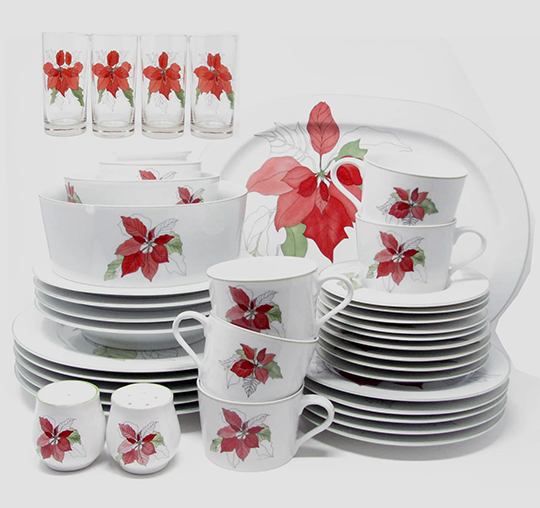
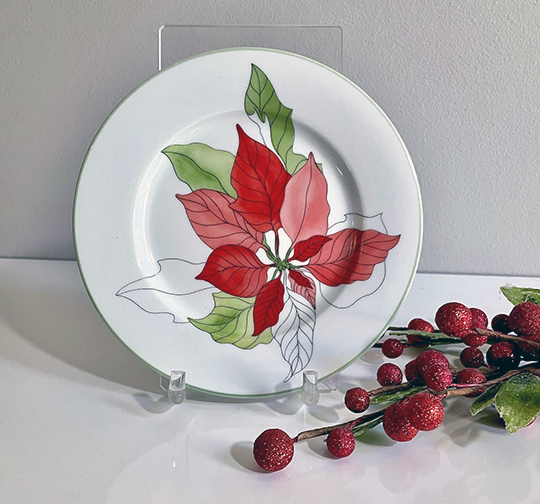
In a much-appreciated text, Arthur let me know that as this was a special party, they would not be using paper dishes. They would be using china — specifically the Villeroy and Boch Sienna pattern that we both shared and the Block Poinsettia Christmas dishes that I surrendered at the time of our divorce.

These Christmas dishes were the one thing around which I still held some regret. At the time, I was so sad that I couldn’t imagine enjoying Christmas without Arthur’s enthusiasm and joy. The dishes were part of that. Arthur wanted them so, I let them go. Now, I was grateful to have some advance warning so I could prepare myself to see them again.

It is November 1990 and I am six months pregnant. Arthur and I moved into the house on Colfax Ave. that September as we prepared to start our family. The house was receiving some remodeling and, as I anticipated leaving my job at the time of the birth, we were being financially conservative.

Cruising through TJ Maxx with the intent of getting my Christmas shopping completed early, I came across the Block Poinsettia Christmas dishes that I had fallen in love with multiple years earlier at an upscale boutique. Part of my Christmas ritual was to go to that boutique to visit them and dream of the time when I could afford to have them for my own. And now, here they were being clearanced. OMG! I wanted those dishes so badly — but buying these dishes now really was a luxury — and yet they were being clearanced! I might never get another chance to have them.

I brought home a place setting for Arthur to see and without much shame asked if he thought there was any way. We figured out a way and purchased what we needed for Christmas dinners. He loved Christmas and had dreams of his own about how he wanted to celebrate with good food, family, and friends. He agreed we should do it and I spent the next few days pushing myself hard after work going to every TJ Maxx in the Twin Cities collecting the pieces we needed to put together a set of eight place settings plus the extras like matching glasses and serving dishes. I was so happy!

So now, here I am at Arthur and Sue’s home, with the table set with those very same Christmas dishes. I’d like to say I had a cringe of regret, but the truth is, surprisingly, I just didn’t.

The house was beautifully decorated for Christmas. The house was full of people with Arthur in their large open kitchen wearing his apron, putting on the last touches to a wonderful dinner, pouring wine and offering charcuterie and cheese. He was in his glory. I could see how Arthur and Sue were putting these dishes to use in the way Arthur and I had originally intended. They were used and appreciated. They had landed in the right place.

I left that night at peace, with a warm heart. The party couldn’t have gone better. Friends and teachers were invited, so it wasn’t strictly a Stickley family affair. Sue and Arthur and the extended family greeted Colin and me with friendly generosity. I felt a deep appreciation for the time and experiences I shared with Arthur, that he gave me Ryan and supported us as agreed with integrity, and continues that support with Ryan now. I left knowing that Ryan is loved by so many and will be celebrated in the years to come by both his families, separately and perhaps occasionally together now, with ease. The intention for my Christmas dishes lives on — just differently than I originally imagined.

© 2024 Carrie Callahan

Carrie Callahan is a creative life-long learner. When she’s not writing, she’s reading, working in the garden, whipping something up in the kitchen for her hubby or making a mess in her studio.

Posted in Guest writer | 2 Comments

Responding to Experience: Writing the Personal Essay

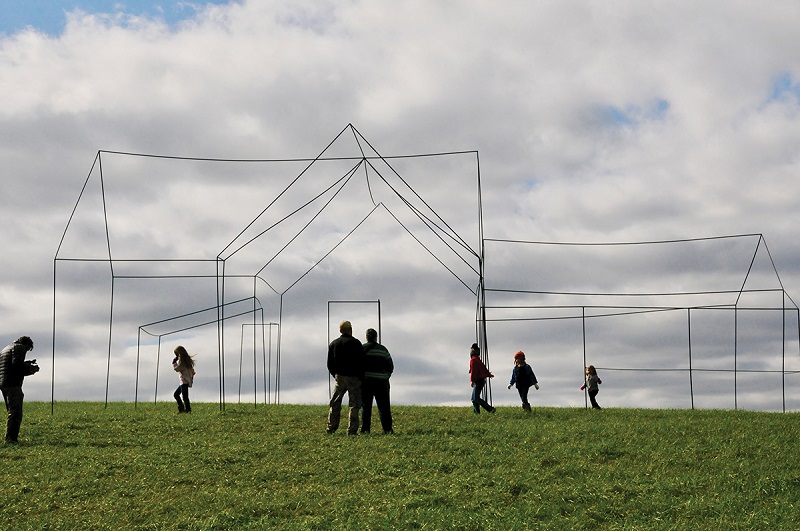
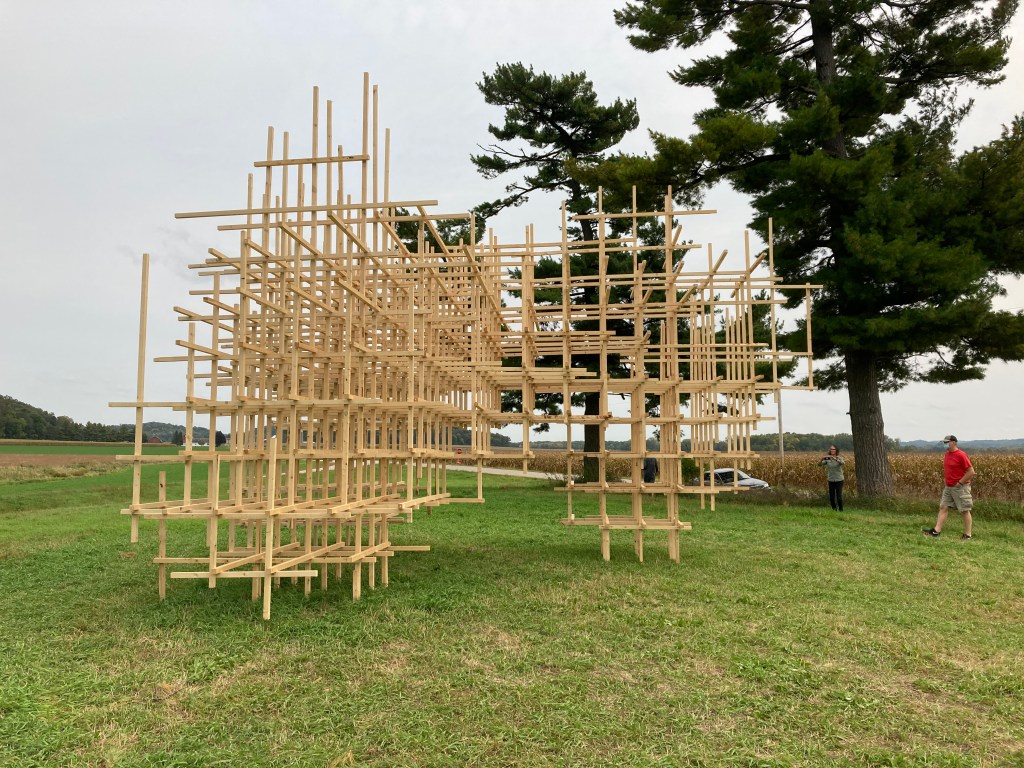
Sarah FitzSimons’s “Field Sketch” was one of the installations on the 2022 DTour.

A writing retreat immersed in the Farm/Art DTour,
October 10-13, 2024

I’ve planned a writing retreat for this fall because I have enjoyed contemplating my response to the Farm/Art DTour in past years and want to share that experience with others. Plus, I know how a small-group generative writing retreat can replenish one’s creative juices. Join me and fill your well!

Immerse yourself in the Farm/Art DTour, a multi-day event produced by the Wormfarm Institute, where rural landscapes meet creative expression. This retreat offers a unique opportunity to explore your personal responses to the site-responsive art installations and performances scattered along a scenic 50-mile route in Wisconsin’s Driftless Region.

Experience the magic of autumn in Sauk County while developing a personal essay under the guidance of an experienced writing instructor–your truly. Limited to five participants, this retreat promises an intimate and enriching environment for reflection and creativity.

What We’ll Do

Our retreat kicks off Thursday evening with a welcome dinner and an orientation to the Farm/Art DTour.

On Friday, after breakfast, we dive into a writing workshop focused on the Personal Essay, with prompts to spark creativity. We’ll prepare sack lunches and drive Loop 1 together, stopping for lunch with a farm host. The day ends with a traditional Wisconsin fish fry.

Saturday begins with solo writing time or a small group discussion, followed by a drive along Loop 2, lunch at the Witwen Food Chain, and interaction with Wormfarm staff and artists. The evening includes a group dinner and reflection.

On Sunday, we share our writings and reflect on the experience before preparing for departure with a sack lunch for the road.

Where We’ll Stay

I’m incredibly excited about the lodging I’ve arranged. I knew that if I couldn’t make our retreat home special, this retreat just wasn’t worth pursuing.

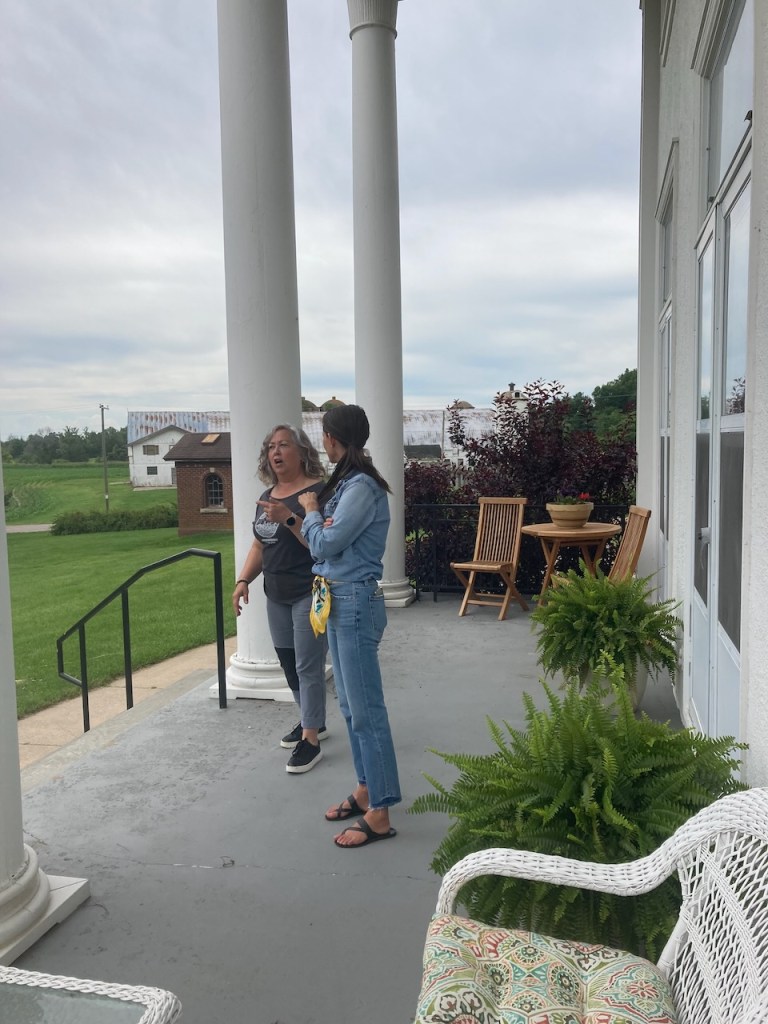
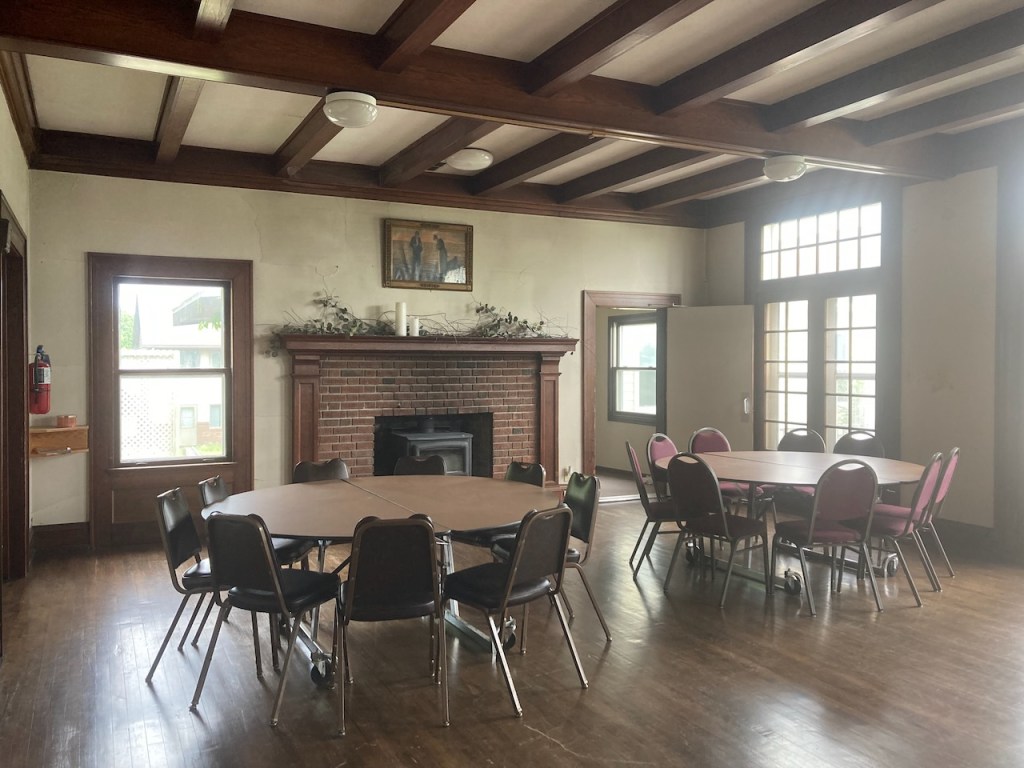
We’ll stay at the Abbey at Otter Creek, a new retreat/event center in rural Sauk County between Sauk City and Baraboo. Your spacious private room features a queen bed and comfortable furnishings, with some rooms offering en-suite bathrooms. The property includes a dining room, porch, kitchen, and the elegant Governor’s Mansion wing with a great room and library. Outdoors, you’ll find patios, gardens, and walking trails.

The Abbey’s land has a rich history, once home to the Ho-Chunk people and later a family farm. In the 1950s, it became a monastery for Cistercian nuns. Under renovation by the Marx family now, the estate blends historical charm with modern comforts. Enjoy the tranquil setting, perfect for inspiration and creativity.

The chapel/dormitory wing in the foreground will still be under renovation–we’ll stay in the Governor’s Mansion and farmhouse, nestled against dramatic bluffs.

You might want to extend your retreat experience by arriving earlier or staying later at the Abbey at Otter Creek. Sauk County has so much to offer!

Your creative spirit is calling. Will you answer?

Follow this link to download the brochure and read more about the retreat activities, lodgings, and what’s included in the price. To enroll, complete the registration form in the brochure and send it to me via email–sarah.white@firstpersonprod.com.


Application must be received by July 15. Places will be reserved on a first-come, first-served basis. I’ll let you know if you’re accepted by August 1st.

Posted in writing workshop | Leave a comment

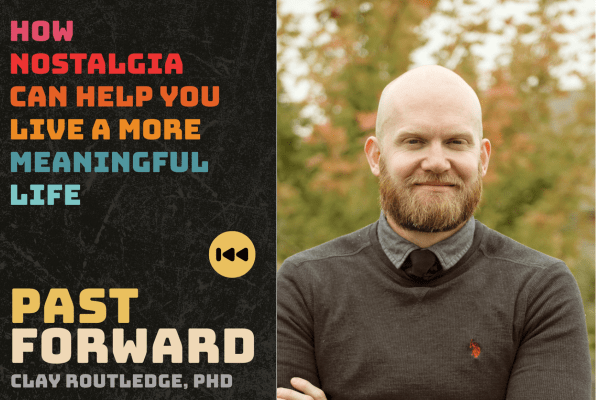
Past Forward: How Nostalgia Can Help You Live a More Meaningful Life

Book review by Sarah White

Published December 2023 by Sounds True

I’ve spent the last twenty-plus years creating the conditions for people to recall, write, and share their life stories, so you can guess my reaction when I heard there was a new book out proclaiming that nostalgia is healthy and useful. Yay!

We are in a worsening epidemic of loneliness; even the U.S. government is concerned about it. “Social connection— the structure, function, and quality of our relationships with others—is a critical and underappreciated contributor to individual and population health …. However, far too many Americans lack social connection in one or more ways, compromising these benefits and leading to poor health and other negative outcomes,” wrote the authors of the U.S. Surgeon General’s advisory paper on the topic.

I believe a highly effective intervention for loneliness is writing and sharing reminiscences in small groups. I respect the Guided Autobiography method as pioneered by Dr. James Birren and developed by “the Birren Disciples” who carry on his work. Chief among those disciples is my colleague Cheryl Svensson, executive director of the Birren Center for Autobiographical Studies. (I serve on its board.)

One of my core beliefs is that looking back over one’s life experiences, drawing insights about what’s worked out and what hasn’t, produces a compass by which one can navigate the future. I also believe that most of us (not all) need purpose and meaning in our lives.

In the reminiscence writing workshops I’ve led since 2004, which are based on Dr. Birren’s method, I see how reminiscence writing in small groups combats social isolation, increases understanding of life experiences, and deepens one’s sense of meaning.

Reading Past Forward would, I hoped, freshen my stock of evidence-based research on the benefits of reminiscence writing—which is nostalgia put to paper. The book did that, indeed.

Evidence for nostalgia’s benefits

Past Forward, 224 pages, consists of thirteen chapters organized into five parts that lead the reader from an introduction to what author Clay Routledge calls “The Nostalgia Revolution” about the scientific background to his research (part 1), followed by sections about how Nostalgia enhances the self (part 2), connects that self to others and increases our prosocial orientation (part 3), makes life meaningful (part 4), and helps us navigate our fast-moving world (part 5).

That’s a good organizational framework and it worked for me; some reviewers on GoodReads have suggested the author should have covered nostalgia and trauma in the subjects he considered.

My “you had me at hello” moment came when, in Chapter 2, Routledge wrote “…a deeper inspection reveals that this trip to the past is really about packing a bag for a journey into the future. The past isn’t the true destination: it’s just where we go to grab supplies for the trip” [page 21*]. Yes! He’s talking about the compass I mentioned earlier!

But oh, how I wish Past Forward had been a more compelling read.

What did NOT work for me was the way Routledge introduced each topic with the details of how he conducted the research that produced the data from which he drew his conclusions. While he states the book is “based on hundreds of studies conducted over the last two decades,” the research he described consisted mostly of having groups (I suspect drawn from his students) write either neutral memories or nostalgic memories prompted with various qualifiers. A major omission IMHO is any clear definition of how the difference between these types of “writing about a memory” was explained to the study participants, or who they were, precisely. It felt a bit like junk science, but I found no criticism of Routledge’s methodology when I searched for it, so maybe it’s just me?

I admit I quickly began skimming the “how we know this” sections that preceded each nugget of insight.

Nostalgia: a changing view

Nostalgia was originally considered a disease when the term was coined in 1688, and until recently was seen as a form of depression. It was only in the 1970s—about the time Dr. Birren was doing his pioneering work in gerontology with the use of guided autobiographical writing—that the view of nostalgia as a mental illness started to crumble. The history is quite interesting, and Routledge writes about it well.

I’ll share a few other insights I noted and encourage you to read the book if this interests you.

How Nostalgia Enhances the Self: It helps us make connections among our life experiences that leads to self-continuity, “the feeling that we have a stable self across time, that the person we were years ago is connected to the person we are now and the person we will be in the future” [page 51]. Dr. Birren made similar observations in his work on self-concept.

How Nostalgia Connects You to Others: “Loneliness is problematic, in part, because it’s self-reinforcing. …the lonelier people feel, …the more likely they are to withdraw from others.” Routledge found that nostalgia eliminated that effect, by helping “people find the confidence … to take steps to build or restore relationships” [page 101-2].

How Nostalgia Makes Life Meaningful: “People are more empathetic, generous, and motivated to connect with others when they feel meaningful. … people who lack meaning tend to be passive and lethargic, whereas people who have meaning are active and engaged” [page 150]. Routledge proclaims that nostalgia restores and increases meaning, and inspires people to more positively impact the world, for example by reaching out to others.

Resource: NOSTALGIA IN AMERICA:
THE POWER OF LOOKING BACK TO MOVE FORWARD

by Clay Routledge, Vice President of Research & Director of the Human Flourishing Lab, Archbridge Institute

Routledge closes his argument with observations about nostalgia’s ability to help us adapt to change, maintain an optimistic attitude, and problem-solve more effectively. “…With our nostalgic memories, we’re reminded that life is full of experiences that make it meaningful and that make the world worth improving and humanity worth fighting for,” he concludes [page 192].

There you have it—if you accept the assumption that batteries of individuals prompted to write nostalgically produce solid quantitative and qualitative data—that nostalgia is beneficial, with the implication that it could address the epidemic of loneliness.

And here I sit, feeling like we—the Guided Autobiography instructor community and others who lead small groups who write reminiscences, share, and receive feedback from each other—have the cure.

If I could wave my magic wand to bring the “vaccine” of nostalgia to the lonely millions, I would create a national—or why not worldwide?—network of teaching opportunities for my colleagues, perhaps based in healthcare facilities, especially in rural and isolated areas, because just about everyone, even those so lonely and lethargic they can’t take the next step on their own, see their healthcare provider.

In the meantime, go ahead—indulge in nostalgia. It’s good for you!

© 2024 Sarah White

*Page numbers refer to the paperback edition.

Posted in Book review | Leave a comment

My Write to Weave

By Joan Connor, May 24, 2024

It is therapy for these arthritic fingers. To string fibers vertically on the lap loom

up around a peg
down around a peg
up around a peg
down around a peg

creating the warp. Already I feel accomplished. I have completed thirty-two vertical warps evenly spaced on the slotted loom. I struggle with the double half hitch knot, rewinding the video again and again.

It will get easier. Some days I have doubts, yet remain persistent. My investment in several small looms, multiple types of yarns, many books, and subscriptions to online classes are inspiring. Assistance is available for questions with these lifetime classes if the instructor remains in business.

Ten years ago

The dawn of this hobby began as I was camping. Across the blacktop winding road in one of many idyllic Idaho State Parks was a woman perched on a stool with a small loom, the shuttle in rhythmic cadence to the fluttering tree leaves’ murmurs above. It was tempting to my senses and created within me a strong desire to recreate her song. I wanted to weave with the trees, my loom on the forest floor, threading nature’s colors as the breeze gently whispered in my ear, “in-out-in-out-in-out.”

I purchased my first loom, a rigid heddle loom, at a large shop in Spokane, Washington with walls of brilliant-colored yarns and a second floor filled with large looms. I was shown this small table loom that had unfinished weaving on it. The young man was nonplussed about me purchasing his project. I brought the loom home and now, ten years later, his project is still on the loom. It is a length of woven plaid fabric, lovely turquoise blocks blended with smaller purple, rectangles and slimmer lines of black and yellow.

Six months ago

I signed up for a two-hour class at the local annual fiber festival, $75 with lap loom and all materials included. There were two of us in her class and my small wall hanging was completed in less than three hours. It was a “create as you weave” project, using a variety of yarns with no specific pattern. I enjoyed the process and was proud of my finished project. I wove horizontal rows with bulky white yarn, raggedy green yarn, various textured gray yarns and gold ribbon yarn. The other participant recognized various yarns, calling them by names all foreign to me. The completed project hangs from a large cinnamon stick on my bedroom wall.
Yes, I can do this!

With this one class piece completed I became more confident and immediately tackled a second small project using yarns the teacher shared plus some I had purchased at a thrift store. This weaving is approximately six inches square, and I call it my sampler. Again, I created as I wove horizontal rows but taught myself how to change yarns in the middle of the sampler. I like the light orange ribbon yarn infused with the sparkly black/gray yarn plus white and gray textured fibers. It is not hanging on any wall yet. I am not sure how to neatly tuck the yarn ends into the weaving on the reverse side.

I then started a third weaving project online. The teacher gave incremental steps over a four-week period. This class included a Facebook page where progress was shared. I couldn’t keep up. It is unfinished, tabled on the table beside me. I quit weaving!

Three months ago

My tapestry of time management began unraveling. Threads of other commitments became untucked and demanded attention. Life’s fabric became a daily commitment here, a weekly foray into various meetings, a flip on the calendar as months passed with no weaving intertwined.

I became annoyed at myself.
I began feeling guilty.
I began to list activities as hurdles, not joys.
I prioritized.
I began designing each day with less ragged edges, less untucked ends.

Today and upcoming

I signed up for a beginning weaving class at the marvelous John C. Campbell Folk School, Brasstown, N.C. In years past I attended this wonderful venue, camped in their RV park, learned the Native American flute, tinkered with the hammered dulcimer. Among the Carolina woodlands I shall reinvent my weaving.

The class is on the rigid heddle loom, bring your own and for five days I will be instructed by a professional. I peruse my rigid heddle loom now nestled in its cardboard box, plaid project still intact. I wonder. Is it possible to teach myself how to remove this attractive weaving while maintaining its composition?

I shall resurrect my lap loom weavings. I am breathing new life into my desirable Harris Highland yarns. I will contact teachers and let them know my weaving is coming alive. Surely dormancy has advantages.

What about writing? Do I just put the accumulated files away? Do I pay no attention to prompts coming monthly from my favorite online writing groups? How can I collate these two interests?

writing and weaving
weaving and writing
pen and yarn
yarn and pens,
looms and journaling
journals and looms

I have a possible solution!
I will proceed with both strong interests.
I will set up a blog about arthritic fingers plying yarn, writing posts after each weaving wonder, a blog from a “bewildered beginner weaver.”
I will encourage octogenarians to begin anew.

Refresh, rejuvenate, realize one’s creative muse.
Give breath to the Innovative Being within each of us.

There is an occasion for everything,
and a time for every activity under heaven. Ecclesiastes 3:1

© 2024 Joan Connor


Joan is currently pursuing an MFA with Lindenwood University, Simultaneously she is taking on this weaving hobby and indulges in various online writing classes, painting by number (or not), learning the fiddle, and RVing with her very agreeable husband and furry four-paws, Ava. 

Posted in Guest writer | Leave a comment

The Auction

By Thomas F. Miller

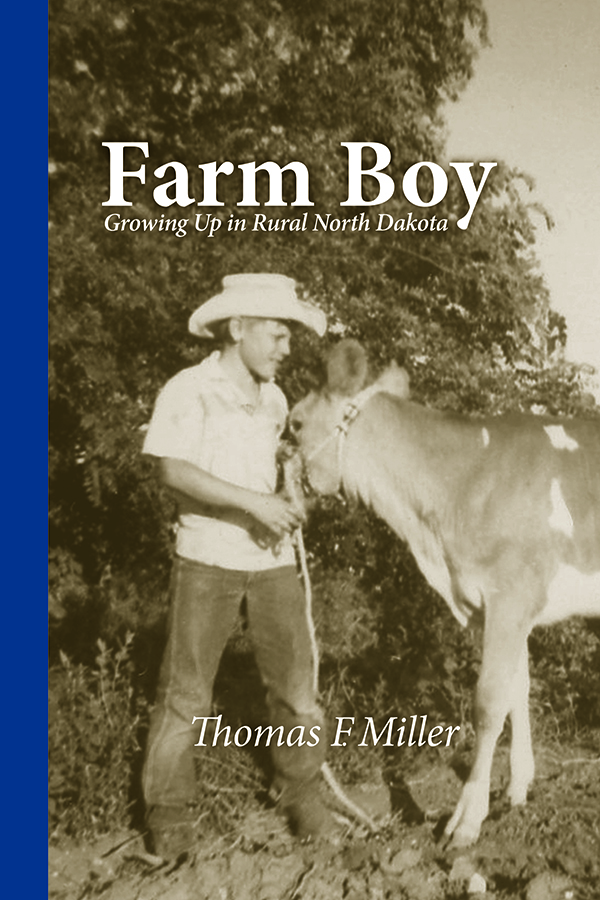
In rural North Dakota lies a farm where a day-dreamy boy lives, plays, works, and learns. Meet Tom, the Farm Boy.

In Farm Boy, he tells a timeless tale of heritage, heartache, hard work, and hope—a test of the resilience of the human spirit. No matter where life leads him, the farm and land are where Tom’s roots lie and the place he calls home. The following is an excerpt from Tom’s book, which can be purchased from Lulu.com, here.

The auction was held on a cool, overcast fall day in 1967. I was a senior in high school and stayed home from school because it was Grandpa Isaak’s estate auction. The previous November, Grandpa died suddenly of a heart attack at age 64. I was the oldest grandchild and very close to him. Grandpa and Grandma’s farm was six or seven miles from our place, so we saw them regularly. They sat in the pew behind us in church; when I was little, if I was good I could sit with them. Every time I attend that little country church with Mom, tears come to my eyes because I can still hear Grandpa belt out the hymns as loud as he could. He didn’t care if he was a little off tune, so was everyone else.

The day of the auction, hundreds of friends, neighbors, relatives, the curious, and the bargain hunters arrived on the farm. Their cars and pickups filled the large yard. They were there to buy household items, tools, and the farm machinery lined up to be sold to the highest bidder. The crowd was mostly men but some of their wives came along to look over the household goods and visit with my grandma. She was moving off the farm in a few days to a new house in town. Almost all the men were dressed in their work overalls, warm jackets, caps with ear flaps, and insulated boots. The air was blue with cigarette smoke and some of the back pockets of jeans sported a worn round circle made by an ever-present snuff can.

The church ladies were busy doing a good business selling coffee, Kool-aid, fresh homemade donuts, kuchen, and sloppy joes in a corner of the round Quonset where Grandpa repaired and stored machinery. There was always a crowd around the concessions at these auctions. The men socialized by talking about the weather, farm prices, and the coming deer hunt. All the while they kept an eye on what was being sold, lest they miss some bargains.

The main auctioneer was Frank Fitzgerald, a longtime friend of Grandpa’s. Frank was a few years older and about the same height and build, six-foot and stocky. Frank wore a big white Stetson hat, a dark wool overcoat, and a pair of shiny cowboy boots. He had big, thick lips that would flap around and jowls that would jiggle when he got into his auction cadence. Frank’s deep baritone voice was well known throughout the area. He was an honest and respected auctioneer, so good that he had been inducted into the Auctioneers Hall of Fame that year. Frank also sold livestock at the Missouri Slope Livestock Auction in Bismarck. On sale day, at noon, they’d have a live report on KFYR radio from the sales barn with the current cattle market update. At our house, everyone at the dinner table had to be quiet so Dad could hear the announcer quote the prices. Then for a few minutes, you would hear Frank auctioning off a farmer’s lot of cattle. It was a big deal to have your cattle sold during this time.

The bidders were crowded around a flatbed hay wagon inside the Quonset hut where Frank was auctioning off Grandpa’s possessions. When he didn’t think the item was bringing enough money, he’d cajole the crowd to bid another buck or two. “We’re at five dollars and still have a ways to go on this nice set of wrenches. Com’on boys, who’ll give me a six-dollar bid? Yes! Now seven, yup, now eight! That’s more like it.”

The singsong of the auction went on for a couple of hours. While I was helping my dad and uncles bring items for Frank to sell, I would occasionally take a break to stand in the audience to watch the crowd watch Frank as they tried to catch a bargain or were just curious how much an item would bring. It was during one of those breaks when my uncle held up Grandpa’s old J. C. Higgins Model 20 12-gauge pump-action shotgun sold by Sears, Roebuck. Frank tried to start the bidding at $50. When there were no takers, he said, “Well, then, who’ll get the bidding started at ten dollars?” Someone quickly raised his hand. Then Frank cried, “Who’ll give me fifteen, fifteen dollars?” Without hesitation, my hand shot up into the air. I’m not sure what possessed me to raise my hand that day, I wasn’t much of hunter and had never fired a 12-gauge before. Frank stopped the bidding long enough to say, “Just to let you know, I took the fifteen-dollar bid from Fred’s oldest grandson. Now who will give me twenty, a twenty-dollar bid, we’re at fifteen now twenty, fifteen now twenty, fifteen now twenty. Going once, going twice, all in, all done, sold to Tommy Miller for fifteen dollars.” I was trembling as I walked up to take possession of the shotgun. The audience clapped their gloved hands. My face turned red in embarrassment. They were happy that I owned a memory of my beloved Grandpa. So was I.

As I walked away with the barrel of the old shotgun pointed to the ground, I sensed the strength of the wooden stock, the ribs of the pump, and the trace of a scent of Grandpa. I think of that day often as it brought me some closure for his sudden, unexpected death. What I have left are my memories of Grandpa and his shotgun.

© 2024 Thomas F. Miller

Thomas F. Miller is retired from a career in public service and small-business ownership. He was born and raised in western North Dakota. He and his wife Donna have lived in Madison, Wisconsin since 1987 and are the parents of two daughters. Tom is an avid photographer and traveler. He writes and shares stories and photographs on his blog site, travelingwithtom.com.

Posted in Guest writer | Leave a comment

Don’t Throw Me Out!

By Loriann Knapton

This is an example of a “braided essay,” one that weaves two or more distinct “threads” into a single essay, that Loriann wrote in my Creative Writing class through Madison College in May 2023. Loriann’s essays have appeared occasionally on True Stories Well Told.

I’m weary of having unsolicited self-help guides turning up in my phone’s newsfeed telling me I need to declutter my life. The algorithms of my search history tag me, correctly, as a Senior Citizen, which I really hesitate to admit unless there is a discount involved. Still, I don’t quite understand why other people, well-meaning people, perfectly nice people, I’m certain, have the need to advise me about what I must purge from my life, or to tell me how much better off my family will be if only I declutter the pieces of me sooner rather than later. The articles instruct readers that getting rid of  “the stuff” will not only liberate me, but more importantly, liberate my family, by making it easier when I am gone. They advise that children and grandchildren have no interest and really don’t want “the stuff” unless they can spend it, drive it, or at the very least put it in the dishwasher. I find this interesting because until now I was clueless that my things were holding my children hostage. The writers of these pieces of wisdom further instruct that getting rid of “the stuff” is really a most positive thing and while I may feel sad at first about donating my mother’s outdated, faded, flowered sofa, that if I take a picture of it before the thrift store folks pick it up, the memory of the many happy hours of my youth spent snuggled into its cushions will be enough. What exactly is the article telling me? That at my advanced age of 65 years my life is no longer significant?   

Declutter from Oxford Dictionary: Verb, Remove unnecessary items from (an untidy or overcrowded place.)

Looking around my house, I’ll concede that there are items that would be better off in the trash or the donation box at Hope Gospel Misson. Old receipts and shopping lists, the menu from a favorite restaurant long closed, the plastic box of hair ribbons and bows that my granddaughters have outgrown, and canning jars that will never preserve another peach, all come to mind. But I am sorely offended when people that do not know my story blithely advise me to discard the very things that tell the story. Well, you know what?  The story isn’t over yet and despite my advanced age I think for now I will keep the evidence.

Purge: Verb:  1) Rid (someone or something) of an unwanted quality, condition, or feeling.

2) remove (a group of people considered undesirable) from an organization or place in an abrupt or violent way.

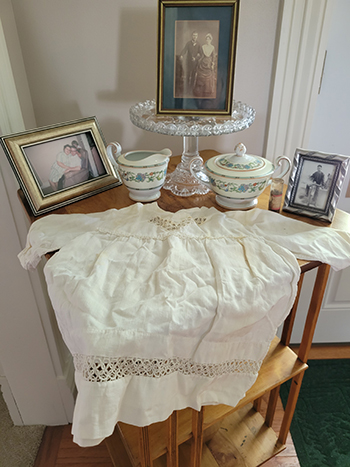
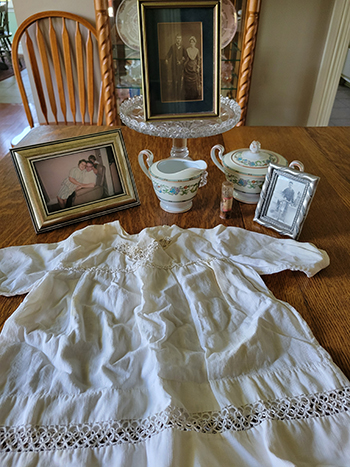
Books, magazines, and internet articles, written by self-proclaimed gurus in how to declutter your life (is this a college degree – Decluttering– a study on what people must dispose of?) advise me that “no one wants; my great grandmother’s 1887 crystal wedding cake plate, which has sat on every child and grandchild’s reception table for over 130 years, the Noritake China with their beautiful yellow and blue flowers, shipped from Japan  by my father-in-law to his mother in 1951 just before he flew to Korea to fight on the front, or my father’s baptismal dress from 1926, handmade by my grandmother from linen handkerchiefs and held together with hand tatted lace because they were so poor she was unable to afford satin. Maybe not – maybe it is true. Maybe my children, their children, or even their children’s children will have no interest in these things. If so they can dispose of them when I’m gone. But for now, I think I will keep them as a testament to my history and as a memorial to those whose lives shaped mine.

Junk: Noun: Old or discarded articles that are considered useless or of little value

Don’t get me wrong. I’m not against getting rid of actual junk. If it’s truly so. I still have, for example, preserved in a glass jar in our granary, my father-in-law’s tonsils from an operation in 1946 when he was fourteen years old. I can’t say why his mother thought to keep them and admittedly they could be classified as junk. I probably should get rid of them. But oh, the stories and speculation that comes forth whenever the tonsil box turns up. The laughter, about why great grandma thought to keep them, the banter, from each kid on who will have to inherit them, and the discussions of the dynamics of our family history truly makes the tonsils, for now, worth their keep.

History: Noun:  1) the study of past events, particularly in human affairs

                        2) The whole series of past events connected with someone or something.

The history of a life is connected to things. Tangible items that tell our story. In 1949 at age 17, my mother trained as a nurse. The white starched cap that was pinned on her head, when she earned her degree in 1951, was unique to the nursing school she attended. Most nursing schools of that time had their own cap design which served as a proud beacon of success when a student earned their degree as a professional caregiver. Many times, during my growing up years, I remember mom before her shift at the hospital standing at the ironing board, sprinkling her freshly laundered cap with liquid starch. If I think about it can still smell the distinct tingling clean scent of the starch as it met the hot iron and the hissing noise and puff of steam it made as she pressed the cap. When my mother retired in the late 1990’s, her cap went into the trash. I am still heartbroken at the loss. While disposing of it was her choice (the article writers would have approved), finding it among her belongings once she is gone, would have been mine.

Love: Verb:  1) an intense feeling of deep affection

                      2) a great interest and pleasure in something

Oh, I’m realistic enough to know that my family will toss much of the evidence of me when I have departed this earth and that’s OK. The antique shops and thrift stores will be richer for it. But for right now, I don’t feel the need, nor will I be told, when to purge my life. Because the physical evidence of living, the items I can touch, see, and feel, surround me with comfort, connect me to my past, and will someday validate that I have lived. My family will just have to figure it out. Decide what to toss or keep. But they won’t be doing it alone. I will be there too, in each dish, handmade quilt and porcelain vase they touch, helping them to say goodbye.

© 2024 Loriann Knapton

Loriann Knapton has been writing since childhood.  Having crafted countless rhymes, short stories, and personal essays over her sixty-odd years she has a keen interest in ensuring her family memories are recorded for the next generations. Her writing reflects the humorous and poignant experiences of growing up in 1960’s small-town America with her mom and disabled dad.

Posted in Guest writer, Uncategorized | 1 Comment

Behind the Scenes, Outlining “Finding Our Place in Cinque Terre”

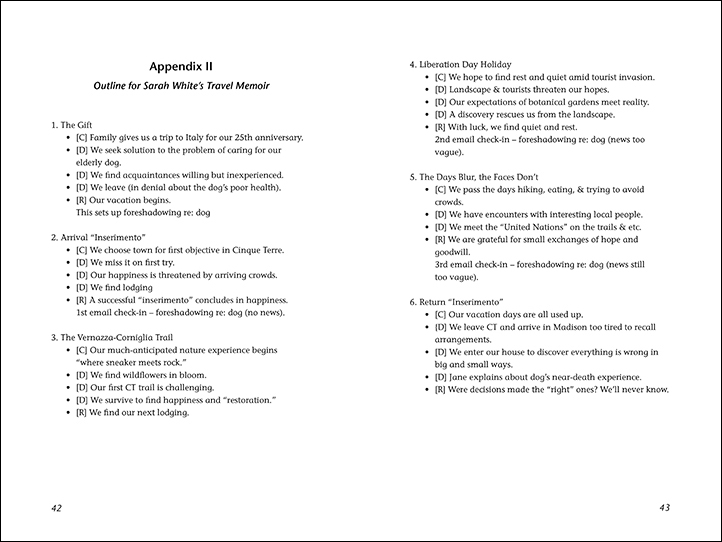
This post REALLY concludes this serializing of my six-chapter travel memoir about a trip to Italy’s Cinque Terre in 2008. In 2010, I self-published Write Your Travel Memoirs: 5 Steps to Transform Your Travel Experiences Into Compelling Essays. It included five how-to chapters and, to provide an example, this memoir. The book is available on Amazon.com.

If you’ve taken a writing workshop with me, you know I’m a believer in outlining. In fact, if you’ve ever been in one of my workshop sessions where we talk about structure, you know how I rely on a very specific framework I learned from Jon Franklin’s “writing for story” approach. Each chapter is based on “a complication, three developments, and a resolution.”

Here’s how I explained that in Chapter 4 of Write Your Travel Memoirs:

Jon Franklin, author of Writing for Story, teaches that a story consists of a sequence of actions that occur when a sympathetic character encounters a complicating situation that he confronts and solves. This is what Franklin terms Story Structure.

The complication raises a problem that will hang there until it’s solved, introduces tension and suspense. Choose for your focus a complication that is basic and universal, and you will get your readers’ attention.

Develop your story along an arc that leads to a resolution. Franklin would say your story must include precisely three developments between the complication and resolution. While I believe rules always have their exceptions, analyzing essays I consider great has given me confidence in the fundamental “power of three” formula I learned from Jon.

Your resolution should show your readers a change in the character or situation you presented in your complication. Complications, developments, resolution—that’s how you stage the action in your story.

I would never suggest that this method is right for everyone, but I find it extremely helpful in my writing practice. I hope it contributed to making this a good travel tale (even if it didn’t end with an enthusiastically wagging tail.)


Below is the same text as shown in the image above, with links to the individual posts reflected in the outline.

Chapter 1. The Gift

  • [C] Family gives us a trip to Italy for our 25th anniversary.
  • [D] We seek solution to the problem of caring for our elderly dog.
  • [D] We find acquaintances willing but inexperienced.
  • [D] We leave (in denial about the dog’s poor health).
  • [R] Our vacation begins.
    This sets up foreshadowing re: dog

Chapter 2. Arrival in Cinque Terre: The Challenge of “Inserimento”

  • [C] We choose town for first objective in Cinque Terre.
  • [D] We miss it on first try.
  • [D] Our happiness is threatened by arriving crowds.
  • [D] We find lodging
  • [R] A successful “inserimento” concludes in happiness.
    1st email check-in – foreshadowing re: dog (no news).

Chapter 3. Where Sneaker Meets Rock: The Vernazza-Corniglia Trail

Chapter 4. What to Do with Thirty Thousand Guests

  • [C] We hope to find rest and quiet amid tourist invasion.
  • [D] Landscape & tourists threaten our hopes.
  • [D] Our expectations of botanical gardens meet reality.
  • [D] A discovery rescues us from the landscape.
  • [R] With luck, we find quiet and rest.
    2nd email check-in – foreshadowing re: dog (news too vague).

Chapter 5. The Days Blur, the Faces Don’t

  1. [C] We pass the days hiking, eating, & trying to avoid crowds.
  2. [D] We have encounters with interesting local people.
  3. [D] We meet the “United Nations” on the trails & etc.
  4. [R] We are grateful for small exchanges of hope and goodwill.
    3rd email check-in – foreshadowing re: dog (news still too vague).

Chapter 6. Return “Inserimento”

  • [C] Our vacation days are all used up.
  • {D] We leave CT and arrive in Madison too tired to recall arrangements.
  • [D] We enter our house to discover everything is wrong in big and small ways.
  • [D] Jane explains about dog’s near-death experience.
  • [R] Were decisions made the “right” ones? We’ll never know.

Epilogue

© 2024 Sarah White

Posted in Sarah's memoir, writing workshop | Leave a comment

Now, What Were You Writing?

Since early February I’ve been publishing my six-chapter travel memoir about a trip to Italy’s Cinque Terre in 2008. That has concluded, except for a bonus peek behind the scenes at the structure of that memoir that I’ll publish next week.

But enough about me! What have YOU been writing?

I’m eager to feature the work of other writers on this blog. I’m looking for brief, true stories from life. I’m also open to book reviews, opinion pieces, questions or advice about writing… follow this link to view my submission guidelines.

I’m happy to receive your submission any way that’s convenient for you to send it–in the body of an email, as an attached document, handwritten on a scrap of paper–if you’re interested, we’ll figure it out. Posts are accompanied by an image (if you don’t provide one, I’ll find something) and a short bio of the author. You retain copyright to any essay you write that I publish on True Stories Well Told.

I started this blog at the beginning of 2011 just to explore the medium. I found publishing a blog to be a great addition to the ways I live my mission, which is to create the conditions for “ordinary” people to share their extraordinary life experiences.

I’d love to hear about yours!

Send your stories to sarah.white@firstpersonprod.com.

-Sarah White

Posted in Call for action | Leave a comment