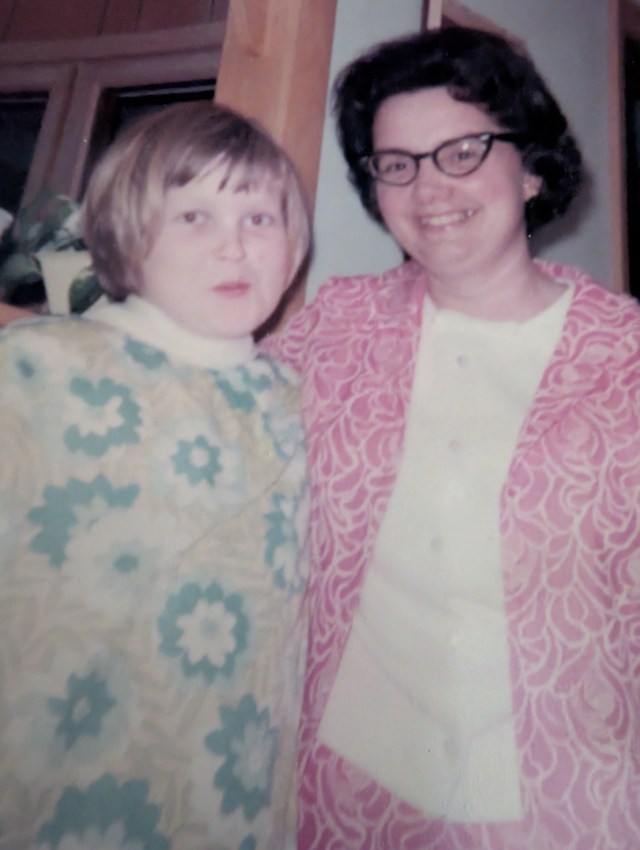
Who Doesn’t Love Halloween?

By Marlene Samuels

from the Ann Arbor Newspaper for October 1966

It’s October once more, and last week, I was visually assaulted by Halloween decorations at my local “big-box-store”. The moment I walked in, memories of my especially unsettling and very awkward first ever American Halloween also assaulted me.

The reality: Halloween hardly qualifies as a holiday in the truest sense of the term, but I did participate in all Halloween-associated activities when my two sons were young, despite my utter dislike for Halloween-associated events. I still loathe Halloween!


 In Montreal, Canada, where I lived in the 1950s and ’60s, kids participated in our version of American Halloween. The difference? We didn’t focus upon collecting candy, dressing up in costumes, or resorting to questionable “tricks” when treats failed to materialize. Kids in my poor immigrant neighborhood anticipated the approach of Beggars’ Night. And like Halloween in the USA, October 31 was the date. We dressed in rags, smeared our faces with grease and coal dust, grabbed paper sacks from under kitchen sinks, and strolled the neighborhood for two hours, from 5:00 p.m. until 7:00 p.m., when all “beggars” were expected home for dinner.

Groups of four, five, sometimes as many as eight of us, descended upon our neighbors. No one was brave enough to knock on the door. Instead, we gathered in a huddle, multiple fists hammering on doors, and when a door was pulled open, we “beggars” began our performances. Hunching over improvised canes, we affected postures of imagined 18th-century London beggars. Thespians among us developed hand tremors or limps, distorted faces, and clawed hands while our chorus of young voices shouted, “Charity Please! Kind Sir, Kind Madam, have pity! Charity please!”

No “trick or treat” craziness for us. Some mothers sewed satchels with rope draw-strings from whatever shmatta (rag) was available, more preferable than paper bags that, when filled with booty of money and not candy, could tear.

Pennies and nickels clinked into bags that grew heavier as we wound through our four-square-block territory. Occasionally, deep-toned clinks suggested quarters or half-dollars, always reserved for older kids. The assumption among adults: little kids can’t tell the difference between coins, so give them pennies, nickels, and dimes.

When begging-time ended, we rushed home, eager for dinner but more eager to dump our sacks out onto the floor. Carefully, we counted our collections. “Kinder (children), you’ll make two equal piles, yes?” Mom said.“One you must save for your bank account, the other spend on candy or for narishkeiten (silly things), whatever you want, yes?”.

In May of the year, I could have enjoyed a Beggars’ Night of quarters, my parents moved us to the Chicago suburbs, and I began my new high school in September. Throughout October, incessant buzzing among my classmates swirled around my ears. “What are you going as?” They shouted in hallways and during lunch. October 31 grew closer. Now, endless chatter was about costumes, possible pranks that could be played without legal repercussions, and talk of parties. “Anyone know who’s having a Halloween party?” I hadn’t a clue what so much excitement was about, but I also knew that any party that was taking place surely wouldn’t include me. Finally, the year’s second most important event arrived, the first I’d learned was school’s last day.

Our first Halloween in our new country initially felt as though it was a targeted bad joke. Halloween, the day children all across our land anticipated with great excitement, had even infiltrated schools. Most children showed ready for masquerade while adults felt liberated to behave like lunatics.

Night was settling upon our neighborhood. Clumping sounds of young children’s feet and parents’ voices could be heard on the street in front of our apartment above the United States Post Office. Meantime, waves of high-schoolers’ loud voices wafted up from the park across the street. My mother, brother, and I ran to the window for a look. Hordes of various-shaped and sized children, parents in tow, plodded across the village green while others stumbled along sidewalks carrying orange buckets or shopping bags. Mom’s face contorted into worry. Dad set aside reading his Chicago Jewish Star to look for himself.

Seconds later, what sounded like hooves thundered up the hallway stairs leading to our apartment. Dad, who’d been relaxing with rolled-up sleeves, walked to the door, nudging us aside to open it. “Trick or treat!” Bellowed a teenage Mussolini, Stalin, Churchill, Marlena Dietrich, and Hitler in unison.

In Yiddish, Mom said to Dad, “Meyer, you need to give them coins like in Montreal.” He reached into his pocket to extract a handful of change. I cowered behind the door, perspiring with embarrassment, but my brother had gone into hiding in his room the second he heard voices that sounded like older children ascending our stairs. We prayed we wouldn’t see any of our classmates.

“Mom,” I muttered in Yiddish, “don’t give money! You’re supposed to give candy. This is America and they don’t need your money!”

One of the older boys, the tallest among them with a deep man-voice — Stalin, I think he was, noticed my father’s outstretched arm, his shirt-sleeves rolled up and the tattooed numbers and Star of David. In an instant, Stalin began apologizing profusely, “Sir, I’m so terribly sorry!” He said to Dad, his voice catching in his throat. “Please forgive us!” Dad looked unsure what that was about, and then Churchill and Hitler, Mussolini, and Marlena Dietrich followed suit. Stalin leaned toward his comrades, whispering, The next moment, they backed out the door and turned to descend the stairs on tiptoes out into the street.

When he heard the door close, my brother came out of hiding and again, went to look onto the street. There, we saw a huddle of costumed kids, chattering for a very long time. Moments later, a group of parents and their costumed children joined the huddle.

For the remainder of our first Halloween in our new country, our staircase remained spookily silent.

© Marlene Samuels 2025

Marlene holds a Ph.D., from University of Chicago. A research sociologist by training, she writes creative non-fiction by preference. Currently, she is completing her book entitled Ask Mr. Hitler: A Memoir Told In Short Story.  She is coauthor of The Seamstress: A Memoir of Survival, and author of When Digital Isn’t Real: Fact-Finding Off-Line for Serious Writers. Her essays and stories have been published widely in anthologies, journals, and online.  (www.marlenesamuels.com)

Posted in Guest writer | 2 Comments

I want your true stories, well told.

I have just returned from a week in the West Virginia mountains, making memories with my oldest besties–the family of friends I knew from high school/college in the 1970s. Maybe soon I’ll write some true stories, well told, from our week of hiking, cooking, and reminiscing together. Thankfully, this time none of our adventures were of the variety we shared one summer night in southern Indiana, told here: Spelunking.

True Stories Well Told is open for submissions–Here are the guidelines.  I publish writing prompts, book reviews, and stories from my own life, but my favorite content is YOUR stories. 

Send your short, true, first-person stories to sarah.white@firstpersonprod.com and I’ll consider them for publication here.

Posted in Call for action | Leave a comment

The Night Guard

by Donald A. Ranard

The author’s bungalow in Colombo

Clifford, the guard, couldn’t stay awake.

Our house in Colombo, Sri Lanka—an old sprawling colonial bungalow surrounded by flowering bushes and frangipani trees—came with round-the-clock guards. Clifford was the night guard.

One night, a week after we had moved into our house, I came home to find Clifford slumped in his chair, mouth wide open, snoring. I tapped him on the shoulder.

“Clifford,” I said.

He snorted, then resumed snoring.

I lightly shook his shoulder. “Clifford, wake up.”

He woke with a start, jumped to his feet, and drew himself up to his full five foot four. “Sir!” 

I stepped back, startled. It was the first time I had seen Clifford do anything remotely guard-like.

“Clifford,” I said. “You’re the guard. You need to be awake.”

He saluted. “Quite right, sir. It won’t happen again. You have my word.”

But it did happen again. We would have let him go, but by then we’d been in Sri Lanka long enough to realize we didn’t really need a guard. The terrorists rarely attacked private residences—and never those of foreigners: The last thing they wanted was foreign involvement in the civil war. And while petty theft was not uncommon, home break-ins were rare. Clifford may have been an unlikely-looking guard—short and pudgy, he resembled the Pillsbury Doughboy—but he was a sweet, kind man, and we were told that if we fired him, he would never find another job as a guard. So, we let him stay. We were not unmindful of the irony: We were taking care of the man who had been hired to take care of us.

#

One evening I came home to find Clifford sitting in his chair with tears streaming down his face.

“Clifford” I said. “What’s wrong?”

“My brother died.”

“Oh, no! What happened?”

“He had a heart attack.”

“I’m so sorry! When?”

“Ten years ago.”

I found this funny at the time, and it became a story I would tell. But now, years later, acquainted with grief’s vagaries and demands—you may think you are through with it only to discover one day, suddenly and without warning, that it is not through with you—I no longer find it funny or odd at all.

© 2025 Donald A. Ranard

Donald A. Ranard’s writing has appeared in The Atlantic, New World Writing Quarterly, The Los Angeles Review, Vestal Review, The Washington Post, The Best Travel Writing, and elsewhere. In 2022, his play ELBOW APPLE CARPET SADDLE BUBBLE placed second in Savage Wonder’s annual playwriting contest. Before settling in Arlington, VA, he lived and worked in Asia, Europe, and Latin America.

Posted in Guest writer | Leave a comment

Wound Care

By Brenda Miller

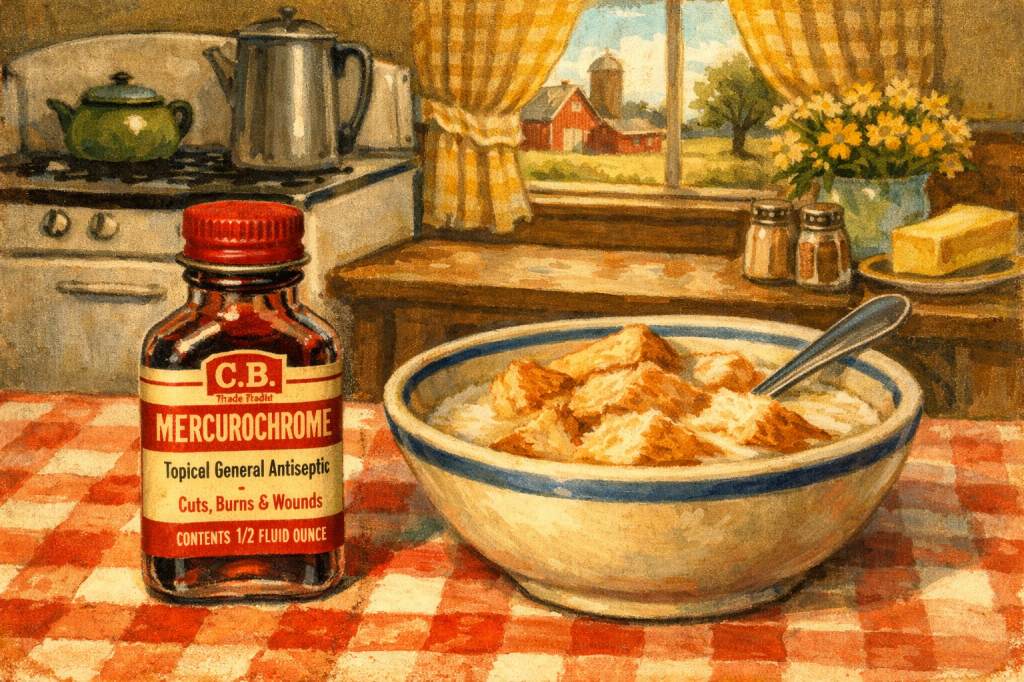
Note, this post is an example of a hermit crab essay, a format Brenda teaches in which a writer adopts an existing form to contain their writing. These forms can be a number of things including emails, recipes, to do lists, and field guides. Of this essay, Brenda says,”letters are a useful form to contain our difficult stories.”

Sunday, July 17, 2016
To: Wound Care Center
Re: Tuesday, July 19 appointment

To whom it may concern:

I am writing in regard to an appointment that was made for my father to assess and treat his pressure ulcer (aka “bedsore”) which has now, in the two weeks we’ve been waiting for an appointment, progressed to Stage 4. They tell us Stage 4 means “down to the bone.” I wouldn’t know, as I haven’t seen the wound firsthand, nor do I want to. It’s at the very end of his tailbone, the coccyx, the part of our bodies where so many nerves converge. All I see is the grimace on my father’s face as he waits for his Vicodin at the nurse’s station. Sometimes he has to wait a few hours. But that’s okay. We understand everyone is busy.

We have filled out the multiple pages of paperwork required for the appointment, paperwork that seemed amusingly archaic in this age of digitized information. The poorly mimeographed sheets, with its checkerboard of boxes and redundancies, provided us a few minutes of activity in his otherwise monotonous morning. I called out the questions and he answered them, and sometimes I surreptitiously corrected the inaccuracies. He has a hard time remembering things now, so while he may think the bedsore began in the hospital months ago, it did, in fact, begin at the first rehab center approximately three weeks ago. I tell you this so that you know the paperwork is more accurate than anything my father might tell you. (He likes to be right, so allow him to be right, if you can.) The five weeks he spent at Mt. Baker Care Center has now evaporated from his mind, leaving a blank that can’t be filled.

I know that this paperwork is a formality, that it will most likely be filed away and the doctor will ask all these questions again anyway. Still, we took it seriously and tried to remember if his own father had high blood pressure and/or a drinking problem. We tried to remember if my father had ever seen a vascular surgeon. We tried to assess his health as “good,” “fair,” or “poor” (It depends on the time of day you’re asking, he said, but there was no spot to append this information). And though you asked several times if depression was one of his symptoms (I wonder sometimes if these redundancies are meant to catch us out), and he answered “no” each time, I would like to point out his progressive withdrawal into himself, the way he sits slumped in his chair, beginning to mirror the other residents who often sit in the hallways, around the nurse’s station, staring at nothing.

He is very anxious about this appointment, eager and scared. So much so that he called me this morning Sunday, at 5 a.m. I think my body knew it before my brain, because I somehow was already reaching for my phone when it rang. His voice sounded clear, stronger than it is by 11. He asked if he had woken me, and he had, but it was all right. I said, What’s up?

I can’t find the paperwork I need for the appointment, he said. I told him my mother had brought it home with her, and why did he need it now?

Because I have to be ready to go by 6. I’ve been up since 4 a.m.

I hesitated a moment before answering. I knew that something had gone wrong in the space-time continuum that is now my father’s brain. I knew that correcting him would be upsetting, but he needed to know. He needed to know that today was Sunday and the appointment was still two days off. He needed to know that he wouldn’t need to get up at 4 in the morning on Tuesday for this appointment, that it would not take him three hours to get ready for the transport van, which would be there at 7:30, since there is really very little to do: have the aide get you up, get dressed, wash your face. An hour at the most. He is not at home, where it used to take my parents several hours to get out of the house, because breakfast, conversation, and fussing can take a long time.

I sighed and told him all this as gently as I could. I told him it would be all right. He said, with a hoarse chuckle, I must be getting old.

I tell you all this just so you know how important this appointment is to my father. While he may be just one more elderly patient in the stream of your day, we are all eager for an hour where he is getting some personalized attention, where it can feel like someone cares, that something can be done. We want to know what happens when an injury has gone to the bone, if it can ever be fully healed.

With all due respect,

His Daughter

© 2025 Brenda Miller

Brenda Miller is the author of six essay collections, and her work has received seven Pushcart prizes. She co-authored the textbook Tell it Slant: Creating, Refining, and Publishing Creative Nonfiction, and The Pen and the Bell: Mindful Writing in a Busy World. She is Professor Emerita of Creative Writing at Western Washington University. Her newest book, Love You, Bye, a hybrid collection of poetry and prose, is forthcoming in 2026 from Skinner House Books.

To read about Brenda’s writing retreat with Sheila Bender in Italy in September 2026, read this post on True Stories Well Told. I’ll be there.

Posted in Guest writer | 1 Comment

Harrycoos

By Sheila Bender

“Did you see the Harrycoos out to our left as we passed?”

“No,” we told the taxi driver taking us from our ferry landing on the Isle of Skye to Kyle Lochalsh on the mainland in the Scottish Highlands.

“Want me to turn around to show you? We have time before your train to Inverness.”

“We’d rather just keep going,” my husband said. I wondered what outcropping of rocks we missed.

Then the driver swung one arm in circles as he drove, saying they were all around the Isle of Skye, so we thought they might be birds. He said they were usually ruddy or black but also dun, and sometimes white. So, we kept our eyes focused out the taxi window on the lookout for the Harrycoos, until the driver said there were more of them to see through the left side. And there they were, long locks down past their eyes and over their necks and chests, even down to their tails, the original Highland species before interbreeding with cows from Europe, the hairy cows.

My husband and I had argued that morning as we did more than several times a week, because of conflicting travel strategies. My husband said the long hair must have protected the cows from rain and cold. I looked at the unshaved whiskers crawling up his cheeks, thinking how much his autism requires for protection from precipitation in the valley of our differences. Might we learn to call time-outs with a word and laugh at the circling birds of our misunderstandings? Harrycoos, I could say. Harrycoos, he might answer.   

© 2025 Sheila Bender

Sheila Bender founded WritingItReal in 2002 to facilitate those who write from personal experience. Her current books include Writing Personal Essays: Sharing and Shaping Your Life Experience and Since Then: Poems and Short Prose. She enjoys her role as an instructor for Women on Writing and Il Chiostro as well as with Writing It Real. You can learn about her at WritingItReal.com and sheilabender.substack.com.

To read about Sheila’s writing retreat with Brenda Miller in Italy in September 2026, read this post on True Stories Well Told. I’ll be there.

Posted in Guest writer | Leave a comment

Have you ever dreamed of writing in Italy?

By Sarah White

If you’re a reader of this blog, then you’re all too aware of my fixation on travel to Italy. I go as often as my budget and project work allow.

The idea of combining travel, writing, and the company of fellow writers has grabbed me and won’t let go. I was the first person to put down a deposit on Sheila Bender and Brenda Miller’s “Writing It Real” retreat in Lake Garda, September 26 – October 3, 2026. Shall we make it a party?

Some of you were familiar with writing instructor Sheila Bender before you found my blog. One writer whose posts you’ve read here–Marlene Samuels–has even traveled with Sheila’s Italy retreats in the past.

I had been thinking about organizing something similar, but was daunted by the prospect of managing all the details. Sheila and Brenda used to organize their own retreats, but now partner with Il Chiostro, a firm that designs travel experiences specifically crafted for instructors and their students. You can expect attention to every detail from the team of Brenda, Sheila, and Il Chiostro.

When I discovered that their retreat checked all the boxes I’d want to deliver, I realized that instead of being the workshop leader–I want the luxury to be a participant!

What’s on offer

“Writing It Real” retreats are guided by Brenda Miller and Sheila Bender, two acclaimed teachers and authors known for helping writers find their truest voice. In the next weeks, I’ll post essays here, written by Brenda and Sheila.

Through daily workshops, you’ll explore multiple genres—memoir, poetry, fiction, and the lyric essay—while receiving generous, individualized feedback. Their combined expertise creates a supportive space where you can experiment, take creative risks, and return home with fresh pages and new confidence in your craft.

Click here to see details about the writing retreat. By the way, there’s an option for non-writers as well, If you have a friend or spouse who’d enjoy the trip.

What’s the setting

The retreat unfolds on the shores of Lake Garda, Italy, in the village of Gargnano. You’ll stay at the family-run Hotel Gardenia al Lago, surrounded by lemon and olive groves with sweeping lake views. Afternoons are yours to wander cobblestone streets, visit vineyards, ride ferries across the water, or simply sit at a lakeside café soaking in the beauty. Evenings bring shared meals and lively conversations that deepen the sense of community and inspiration.

To read about a typical day at the Hotel Gardenia on their website, follow this link.

Dream now, decide later

Advance deposits are due in July 2026–that’s more than nine months to sleep on it (although I suspect this will fill up fast). I’ll occasionally post here about the availability of slots in “Writing It Real Lake Garda 2026”.

In my opinion, this is the kind of journey every writer deserves. It would be a joy to find myself there with members of my writing community at my elbow. Dream on it!

© 2025 Sarah White

Posted in writing workshop | Leave a comment

A Pizza Expert Can Always Improve

By Sarah White

To download Bruno’s pizza recipe, see link at end of story.

Skyline, Ascoli Piceno

About travel, T.S. Eliot famously wrote, “We shall not cease from exploration, and the end of all our exploring will be to arrive where we started and know the place for the first time.”

I would add that we hope to arrive better than when we left—to have learned something, realized something, or simply become energized. For my husband Jim, that hope was realized in Italy last spring, and the beneficiary was our regular Thursday night pizza.


In March, 2025 I enrolled in a language school in Ascoli Piceno for a two-week course. My husband Jim, while not motivated to study the language, did enroll in the extracurricular activities offered, which included visits to historical and cultural sites and several cooking lessons. One evening, an activity took us to a pizzeria, Da Bruno’s, located right around the corner from the palazzo that housed both the language school and the apartment we rented from it.

Jim—a retired chef—has been making pizza ever since grade school, when on Friday nights he’d stay up late watching horror films and making pizza from a box mix. He now cooks from ingredients, not a box, and his methods have shifted over time—rolling pins, hand-tossing, back to rolling again—but the result, to his taste, was never quite right.

We met up with our classmates at Da Bruno’s an hour before the restaurant’s opening time of 7pm. I expected a demonstration kitchen. Instead, the seven of us crowded into a hallway and craned our necks through a doorway into the tiniest kitchen I’d ever seen.

Bruno worked methodically in the cramped space, his hands dropping already-prepared balls of dough into a machine that flattened them into disks that he then stretched by hand. An assistant behind him prepared toppings. In the hallway, we took turns at the doorway, thrusting our phones into the room to capture photos of Bruno pivoting, hands flying between trays of dough, his work surface, and the mouth of the oven into which he slid his loaded peel. An eighth body joined us in the hallway—young Tahar from Turkey, the language school’s social media intern. His job was to document the rest of us receiving our pizza lesson. As Bruno worked, he explained what he was doing. Tahar filmed video. Jim hung back from the scrum. “I felt like I didn’t really need to be there, so I was fine on the side, half listening,” he said.

Bruno’s peel disappeared again and again into the half-round oven door, each time with a dough circle bearing a different assortment of toppings. Bright aromas of garlic, tomato, and onion wafted around us. A darker must bloomed in the air—Bruno grating a knob of black truffle as big as a child’s fist over one of the pies.

We took note of Bruno’s artistry. Some pies were very spare with just truffle, parmesan, and coarse salt and pepper; others, judiciously topped with meats and cheeses.

Once Bruno had assembled six or seven pizzas under our gaze, he paused to scribble his formula in metric units on a sheet of graph paper. We students dutifully leaned in to photograph the page. Bruno told us he uses only hard flour from Alberta, Canada. The other ingredients were water, oil, and a bit of sugar and salt.

Then came the moment that mattered: Bruno said, “L’impasto dev’essere morbido e liscio come il sederino di un bambino —The dough must be soft and smooth, like a baby’s bottom.”

After an hour of watching Bruno, we gathered with our classmates at a long table and enjoyed the fruits of his labor, ending with a pie folded over calzone style, filled with Nutella, dusted with powdered sugar, and served in thin strips. Each crust was uniformly thin but stood up to the task of supporting whatever topping it carried. Each was delicious.

For Jim, da Bruno’s pizza lesson was a revelation.

“I’ve been disappointed with my pizzas for a while,” he admitted. “So firm that it had to be rolled out, although I went through a period of hand tossing, then back to rolling. I wanted a thin crust, but it either got too thin in the middle or burned at the edges. It just wasn’t what I wanted.” I found this admission surprising. We had shared countless pizzas together in our forty-plus years of marriage, and to me, they were fine. Amazing, even. But for Jim, no.

Softness was the missing piece. With enough water in the mix, the dough could be stretched instead of rolled. That made for a better crust in a number of ways. The softer dough rose more, giving it a more bread-like tooth. While hand-tossing is dramatic, the centrifugal action thins out the center, leaving it vulnerable to leaks and tears. Stretching instead creates a solid center ringed by a ridge that keeps the sauce contained and yields a classic, browned border.

Back home, Jim had me pull up the photo of the recipe. He converted the measurements, adjusted down to what seemed right for one pizza, and gave it a try. He nearly reached for the rolling pin, then stopped himself. “This dough is soft enough,” he said. “I should just try stretching it.”

He pressed the dough flat, then used the edge of his hand to push it outward. One hand anchored, the other nudged and turned the circle of dough. Gradually, it grew thinner and rounder. There were uneven spots at first—holes even—but his technique quickly improved.

 “By the third try, I was getting a decent crust,” Jim said.

The changes didn’t stop there. The class had impressed on him the balance of Italian pizzas—restrained toppings, flavors that left space for the crust to shine.

“I quit using canned pizza sauce,” Jim told me. “Now it’s just fresh tomatoes, oregano, garlic, and a pinch of pepper flakes.”

He also cut back the cheese. Once, he would have spread eight ounces across a twelve-inch round. Now he stops at six. “You can taste everything better this way,” he said. “It’s lighter. More balanced.”

Watching him refine his method, I thought again about Eliot’s line. Travel changes us most when it sends us back to what we already know, with fresh eyes. Jim had been a pizza-maker for decades. All it took was one phrase in a crowded Italian kitchen to unlock the crust he had been searching for all along.

The secret wasn’t a wood-fired oven, imported flour, or exotic toppings. It was softness. Simplicity. A willingness to stretch, rather than force.

Now, on Thursday nights, our kitchen counter holds a ball of dough resting under a towel. Jim works it with the edge of his hand, turning, stretching, coaxing it wider. Fresh crushed tomatoes sit nearby. Grated mozzarella waits in a small bowl, not an overflowing mound.

I watch him assemble the pizza, place it in the oven, and bring it out with a proud grin. The crust is thin and crisp, the flavors bright.

Our pizza nights are better than ever.

© 2025 Sarah White

Posted in Sarah's memoir | 2 Comments

A Vision Proves True

By Donna Roger

Image by ChatGPT from prompts

In the mid-1980s, I began working in a large reputable company, starting my career in the administrative assistant field. During its heyday, this company employed over 10,000 employees, and it was actively hiring to support its rapid expansion at various locations throughout New England. Prior to my working there, a former co-worker, whom I will name Helen, also began working there, and our starting dates were closely similar and in the same building. And as time went on, Helen’s daughter, whom I will name Julie, began to work in our building. These women are the characters within this true story.

Although Julie and I were not close friends, we were familiar enough, mostly waving and saying hello to each other each morning as we passed in the hallway coming and going to the cafeteria. I remember this one morning when Julie and I passed by each other. We waved and said our usual hellos, yet I noticed that her face seemed a little pale, while she did not respond with her usual polite smile. Her behavior was noticeably different, but because I did not know her that well, I chose not to ask her any personal questions. I shrugged it off and, with my coffee mug in hand, I proceeded towards my desk station, which was located on the first floor. And to further add to this story, Julie’s desk station was located directly above mine on the second floor with a similar desk station and office layout.

During that afternoon, while sitting at my desk, a sudden vision of Julie popped into my head. To better describe this vision, it was like a movie film clip. I could see Julie quickly rise from her chair, turn around to her wastebasket, and bend over to vomit in it. The vision vanished as quickly as it appeared. This stopped me in my tracks as I questioned what I had just experienced. I had heard about psychics having visions, yet never fully understood what they meant exactly. I believe I may have experienced something similar that day.

I now became preoccupied with what had just happened to me and decided to take a work break and visit Helen, who also worked on the second floor. She and I were closer because of our previous workplace relationship, so I visited her often to check in. I believe I had planned to mention to Helen that Julie did not look well to me that morning and see where the conversation went. But no sooner did I step up to Helen’s desk than she began, “Oh, you would not believe what happened to Julie. She recently became ill and threw up into her wastebasket. She went home a little while ago.” 

I stood there looking at Helen and didn’t immediately respond, while I silently asked myself, “Did I just hear her correctly? No way!” I eventually said something to the effect, “Poor thing. I did see her this morning in the hallway, and she did look a little pale to me.” I never shared my vision of Julie with Helen, and our chat eventually ended. I went back to my workstation and was very preoccupied with the idea that what I visioned really did happen. I rationalized somehow; I was just hypersensitive to Julie that day. And several days later, I heard that Julie learned she was pregnant, which explains it must have been morning sickness she was experiencing.

When I review my life these days, I can pinpoint other instances where my gut intuition has always guided me with choices that I have made. To say that I have psychic abilities is a stretch. But it is true that we all have some type of psychic ability or strong intuition. One thing is, Helen and Julie have never heard me tell this story. And because their names have been changed and our workplace company name is not revealed here, they will never know of this. But the desire to share this story has been growing in me over the years. Life is full of mysteries, and I do believe this is one of them.

© 2025 Donna Roger

Donna recently retired after a long career in administrative and clerical work. She and her husband of 44 years live in Florida. Choosing not to have children, Donna focused on financial independence and steady employment in administrative work. Years ago, she took a creative writing course and enjoyed it, but didn’t pursue writing until later in life. As retirement approached, she began reflecting on unusual life events—moments that might have ended badly but didn’t. Her fascination with these experiences led her to write them down. This is her first story published beyond Facebook.

Posted in Guest writer | Leave a comment

Drift

By Ez Siegler

Image source: https://www.imperial.ac.uk/news/236934/engineers-uncover-secret-thinking-behind-dandelions/

Ah!  The much-maligned dandelion!  So spikey sleek in its youthful yellow attire, dotting, or, more often filling whole landscapes with their community.  The energy and frolic of an early spring bloom of all those yellow buttons certainly sets an annually memorable tone.

These resilient, determined, and persistent spots of sun give us an example of strength, hope, positivity, and survival.  As a consequence, the dandelion has accrued folklore status with myths and stories about dandelion chains and necklaces, the “tell” of holding a bloom beneath someone’s chin, the taste of dandelion wine, or the sun, moon, stars phases attributed to the dandelion life cycle. 

Some lawn-owning species wage war against the lowly dandelion, digging out the plants or chemically eradicating them to achieve a uniformly green lawn.  Other lawn-owning species are content to just mow the dandelions down.  I’ve observed that despite the eradicating and mowing, a colossal number of dandelions still are out there in Mother Nature’s yard.

It feels like the dandy yellow blooms are worn in a rush and soon yield to the attire of maturity.  Now, we see ancient bending stalks topped with a nucleus platform holding fuzzy seed helicopters, all configured into a white ball.  Ah!  The hairdos of the ancient.  It is the choice of their species, however.  An inadvertent brush or a little puff of wind sends the fuzzy seed helicopters into an airborne drift.  Their movement is a slow, aimless, continuous current-controlled drift.  If they are tumbling and sliding along and bump into an obstacle, the liberated fuzz creates a dandelion drift that may stay captured at that spot, or move en masse with the next whimsical wind.  And, still standing out there are some bald stalks.  A life cycle.  The dandelion life cycle.

My life cycle has had some similar “touch points” with the dandelion. Youth was filled with vibrant energy-filled “like journeyers.”  Lots of us!  Full of hope and determination!  Tincture of time diluted or diminished some of this fervor.  But connections weakened with less frequent interactions that I tend to recognize as “drift.”   Life paths diverge.  Community and relationship feelings slip and drift quietly sideways.  The well of energy required to hold all this together evaporates to a low water level.  I reflect on the many times I have experienced “drift.”

This may all be an experience called “dandelion syndrome.”  It is insidious and may happen over a lifetime.  With some awareness, choices can be made to avoid the diggers, the eradicators and the mowers.  We can love community.  We can find comfort in a breeze.  We can be fully present as we appreciate the “drift.”

Ah!  The joys of the ancient!

© 2025 Ez Siegler

Ez lives in Stoughton, WI with his wife.  Ez participated in a Sarah White Reminiscence Writing Workshop in 2009. Currently, he shares at the Stoughton Senior Center and the Rogue Writer’s Group at the Stoughton Library.

Posted in Guest writer | Leave a comment

Home Economics Fiasco: Justice Served

By Marlene Samuels

This is the second post of a two-part series. Read Part 1 here.

photo from publicly held New Trier Township School Board Meeting —public records 1968

My high school was infamous for mean girls from wealthy families and an archaic gender-biased curriculum. Senior boys crafted items from wood—bookshelves, coffee tables, trays and more—in woodworking shop. Senior girls convened in the second floor kitchen and sewing room for Home Economics, testing recipes and sewing clothes or accessories to make a house a home.        

On the day of the “fiasco,” I’d missed class because of my dentist appointment. I walked into the Home Economics two minutes before the final bell rang to deliver my Authorized Absence Permit to Mrs. Putznick.

After the disappearance of “Queen of Mean” Peggy’s purse and its mysterious discovery in my sewing-supplies basket, Mrs. Putznick had commanded me to stay after class. Poking her chubby finger into my chest, “You do understand stealing won’t be tolerated in our school under any circumstances, do you not? I have a responsibility to file a disciplinary complaint, so you and I are paying a visit to the principal’s office.” 

Each girl glanced my way with something resembling pity as she left, except for Peggy and MaryAnne, that is. They lingered in the doorway, smirks inhabiting their faces.

Mrs. Putznick led me to the elevator— flaunting her cherished key— for our visit to the fourth-floor administrative wing and Mr. Gould, the principal. I sat on a bench outside. Mrs. Putznick strolled in, approached his desk and the two engaged in extensive muttering and whispers. But then I heard Mr. Gould’s booming voice identify himself on the telephone with words that sank my heart.

“Mrs. Bernstein, I’m afraid Marlene has been involved in an incident and unfortunately, there’s no choice but to suspend her for three days while we investigate. She’s required to appear before the Disciplinary Board with a parent or guardian before she’ll be readmitted.”

When I arrived home, Mom’s suspicion was unmistakable. “Didn’t I teach you better than to do such dishonest craziness?” She shouted, angry and hurt.

“I didn’t do it, I swear! Those two mean girls set me up. I wasn’t even in school when it happened because I was at the dentist. You dropped me off, remember?”  She’d been so stunned by Mr. Gould’s call, she’d totally forgotten. Within seconds, she regained her composure, launching a string of Romanian expletives, a mother bear defending her cub. I imagined my hearing would prove entertaining.

The Board were a scary bunch! The Principal, Vice-Principal, Dean of Senior Girls, School Psychologist, Social Worker, Mrs. Bischoff my alcoholic homeroom teacher, ingratiating Mrs. Putznick and —more terrifying and intimidating than all of them combined, my mother—had assembled in the dining hall for my 3:00 p.m. hearing.Despite Mom’s initial embarrassment over my suspension because some of her clients had kids in my class, she arrived punctually, stoked for battle. 

Debris from two lunch periods had been cleared. Three tables had been arranged at the front of the cavernous dining hall, one short table faced two longer ones. From the double-doors, the setting had the appearance of a television courtroom drama.

 Mr. Gould first read Mrs. Putznick’s complaint aloud then announced,  “We’ve called this meeting to hear Marlene Bernstein’s appeal about her suspension and to receive an apology. Theft, as noted in our student by-laws, carries a three-day suspension. The complaint filed by Mrs. Putznick states that Marlene stole Peggy’s purse during Home Economics.”  I listened attentively, anxious to tell my side but especially eager to witness Mom decimate the committee. Queen-of-mean Peggy’s purse was found in my cubby, the result of an “all-hands-on-deck” search and was, no doubt, incriminating evidence.

Mom and I faced the committee. “Marlene, we want to be clear that you understand stealing isn’t condoned. You owe everyone involved an apology for your shameful conduct.” Mr. Gould boomed, his glare intense enough to pierce my forehead. The committee nodded agreeably. “Marlene, please stand to make your apology to everyone.”

He’d barely finished speaking when Mom sprang from her seat, burst into action and shocked everyone present. “Marlene, you will do no such thing so don’t you dare move!” And she let loose.

 “How dare all of you! You’re the ones who owe my daughter an apology for your negligence and disrespect, your favoritism and discrimination, not to mention the embarrassment you’ve caused her and me. You have it on record that Marlene wasn’t even in school when this so-called theft occurred.” But she wasn’t done yet. “And Mrs. Putznick, shame on you! I want you to tell me when Marlene stole that purse if she wasn’t even in school?”

Everyone froze. After a long moment, Mr. Gould addressed the vice principal. “Margaret, contact Peggy and MaryAnne’s parents the instant you get to your desk. I’ll expect them in my office tomorrow promptly at 9:00 a.m.! It’s clear, we’ve suspended the wrong student. And Mrs. Putznick, I’ll see you before you leave.

“Marlene, on behalf of our entire school, my apologies for the shameful, unfair treatment you’ve received. Be assured, we’ll get to the bottom of this travesty. We don’t tolerate theft, but neither will we tolerate lying and bullying.”

Epilogue: Peggy and MaryAnne were suspended for the remainder of the semester. The partners- in-mean failed to graduate in June and because they graduated in December, also missed first semester of college.

© Marlene Samuels 2025

Marlene holds a Ph.D., from University of Chicago. A research sociologist by training, she writes creative non-fiction by preference. Currently, she is completing her book entitled, Ask Mr. Hitler: A Memoir Told In Short Story.  She is coauthor of The Seamstress: A Memoir of Survival, and author of When Digital Isn’t Real: Fact-Finding Off-Line for Serious Writers. Her essays and stories have been published widely in anthologies, journals, and online.  (www.marlenesamuels.com)

Posted in Guest writer | 2 Comments