
I had my first immersion in Italian culture when I traveled with Rotary International’s Group Study Exchange program in Spring 1991. Because of the intensity of that experience, (which I wrote about here), my language acquisition was rapid. However, it ran deep in some veins–the kinds of conversations you have while visiting Rotarians–and shallow in others. I have spent the intervening years intermittently filling the gaps and increasing my overall command of the language in its three modalities–heard, written, and the most difficult, spoken.
I contemplated revisiting my favorite city from that long-ago tour, Ascoli Piceno. I found out they had a language school. I spoke to its founder/director, Dottoressa Antonella Valentini, PhD., and a dream was born–to one day attend a program there to work on my ability to actually converse in Italian. Earlier this month, that’s just what I did.
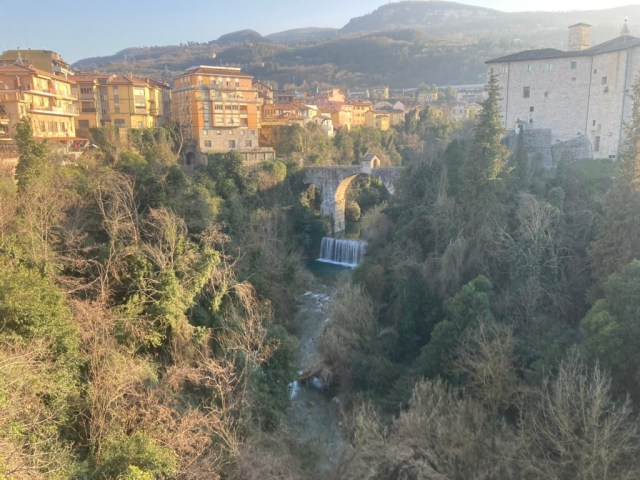
For two weeks in March, I became a student in the medieval-yet-modern town of Ascoli Piceno, Italy, halfway between the Apennine mountains and the Adriatic coast.
Lifelong learning isn’t just about staying busy or padding a résumé. It’s about remaining curious, flexible, and open to surprise. Learning keeps the mind agile and the spirit engaged. Language learning, in particular, engages memory, logic, listening, and empathy—all at once. And when it happens through immersion, it engages the whole self.
The two-week special course offered by Accademia Italiana was timed to coincide with the town’s Carnivale season, a period of celebration when everyone—from toddlers to grandparents—gets into costume and goes out to see and be seen in the public piazzas. In other words: a perfect moment to be an outsider invited in. Antonella was our cultural guide, stopping individuals and groups and asking them to explain the significance of their roles. Ascoli’s Carnivale, she explained, was both less formal and more satirical than Venice’s elegant and better-known festivities. Any person or event in the preceding year that smacked of hubris was fair game for a Carnivale take-down, from the never-ending construction to the mayor’s publicity-chasing to patriarchy (represented by Barbies). (Here’s a link to a Facebook reel of the beginner class’s Carnivale walkabout).
Two Big Questions
I arrived in Ascoli Piceno with two questions that went deeper than grammar or “concordanza”—my nemesis, the fine details of agreement between parts of speech that Latinate languages like Italian requires..
First, I wondered: How do the elderly fare here? I’m courting the idea of spending my 70s—and perhaps my 80s—as an expat, and the city of Ascoli Piceno, population 45,000, is on my short list. I brought up the question for discussion in class, and what I learned was moderately hopeful. The cost of living appears to be roughly half what it costs me to live in the U.S., and access to healthcare is comparable. For those who need it, daily caregiving is available through hired badanti—professional caregivers, often from Eastern Europe, who live in or visit regularly to provide support.
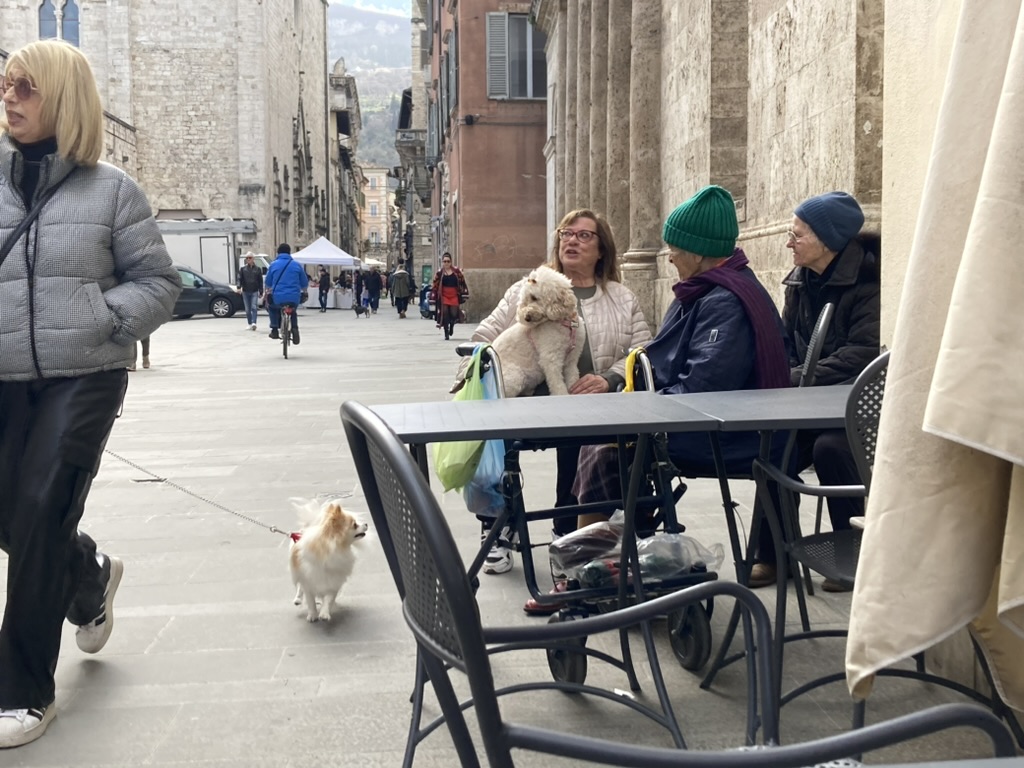
The rhythm of life in Ascoli seemed gentler, the infrastructure manageable, for the elderly. I saw plenty of older people getting around with their electric scooters or rollators.
Second, I asked myself: could a reminiscence writing instructor find Italians interested in my classes here? Over dinner one evening I posed the question to Antonella. Her answer, though kind, was candid: “Everyone here has the same story. Their parents and grandparents were born here. They would find nothing of interest in writing their life stories.”
That answer surprised me—two siblings can grow up in the same household but experience entirely different families, as I’ve frequently seen in my writing class. But if I were to continue teaching, it would likely be classes for expats living in Ascoli, or more broadly, offering online workshops for people anywhere in the world.
A Day in the Life
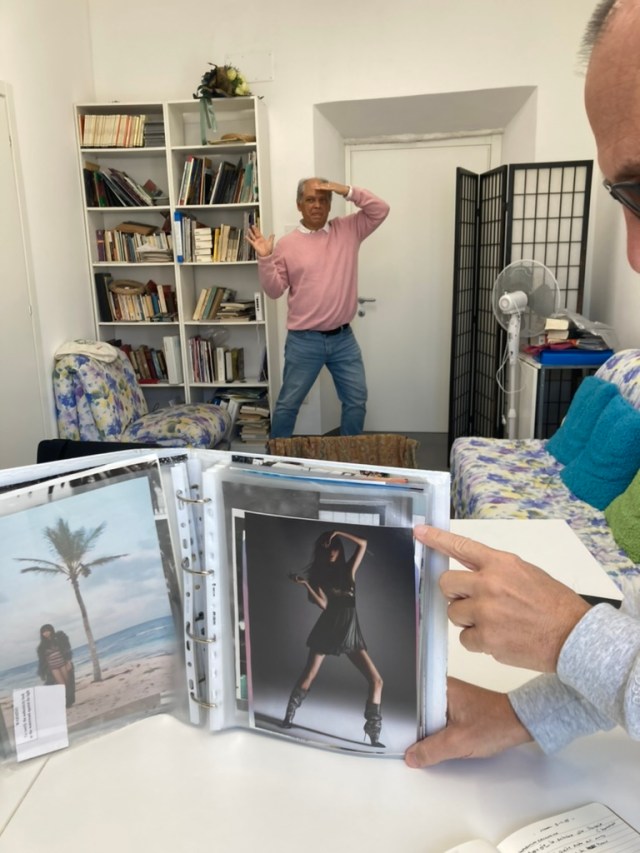
Each morning, we gathered from about 9 to 12:15 for Italian language lessons. The curriculum balanced grammar, idioms, and plenty of play—proverbs, slang, and games that helped us build our confidence using the language.
My fellow students in the advanced class were generous in helping each other with suggestions to improve our language acquisition, sharing tips on apps and podcasts.
But the learning didn’t stop at noon.
Afternoons and evenings were filled with cultural excursions and shared meals. We joined the locals on Carnival walks through town, attended talks on Ascoli’s legends and history, dined with our teachers, and took part in two cooking lessons—one focused on the traditional Carnivale ravioli, the other led by a chef who shared the secrets to his pizza dough.
There was a riverside walk with a local ethologist to learn about the region’s flora and fauna. We explored the seaside town of San Benedetto del Tronto, accessed by bus, and visited a ceramics workshop. Outside of class, we had time to shop, relax, or simply soak up the street life over a cappuccino or gelato in the piazzas.
Lessons Beyond the Classroom
Speaking a new language in real life, whether it was “shopkeeper Italian” useful for ordering coffee and asking directions, or diving into the deep end of vocabulary to discuss comparisons of home cultures —was humbling. It required listening closely, responding slowly, and accepting imperfection.
There was joy in that struggle. We didn’t just learn words—we felt our way into a culture that is tactile, expressive, and rich with history. While my “concordanza” was not noticeably improved by the program’s end, my motivation to continue acquiring this beautiful, musical language had deepened.
When Learning is a Shared Table
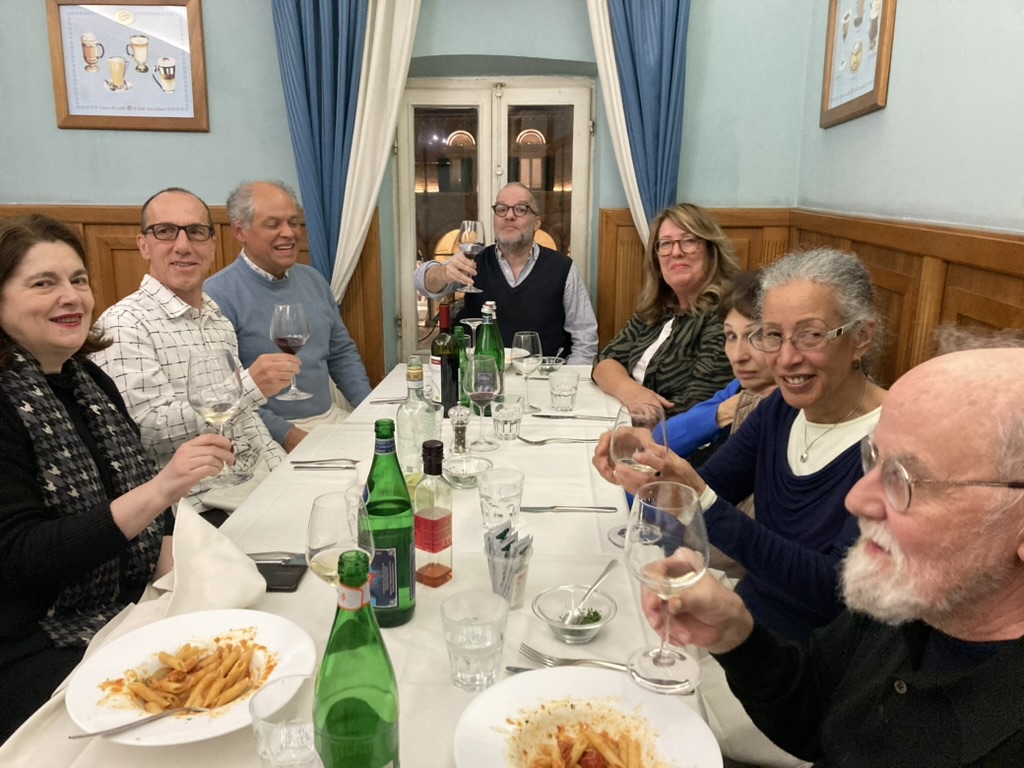
Some of the richest moments came over meals. Whether making fresh ravioli side by side or sharing seafood at a coastal trattoria, these experiences blurred the line between teacher and student, between learning and living.
One night, as we sat around a long table with as our guest, an author and friend of Antonella’s in town to talk about his newly released book, I realized: this is what lifelong learning looks like: Not a classroom, but a community. Not a test, but a conversation around shared interests.
This two-week immersion in Ascoli Piceno reminded me that learning doesn’t need to be lofty or abstract. It can be joyful, messy, and grounded in real life.
Here’s what I’ll carry forward:
- Comfort with discomfort. Being bad at something is daunting—but invigorating. Growth happens outside the comfort zone.
- Curiosity is contagious. Our group fed off each other’s energy, discoveries, and small triumphs.
- Connection is the goal. Language is just the vehicle. What we’re really learning is how to understand each other.
- Reflection shapes the path. The right questions can turn an experience into insight.
Lifelong learning isn’t just a habit. It’s a way of living. And in Ascoli Piceno, I found a place—and a pace—that made me want to keep going.

 True Stories Well Told
Hi Sarah: I have been attempting to leave you a comment. Hopefully,I succeeded!😀It’s my challenge with WordPress, I think!🥴 Joan Connor
LikeLike
I replied to your email and now see that the reply shows up on your blog.
Now I am responding on your blog site. I love hearing that you are considering living abroad. May I inquire about your short list? What countries are you favoring?
I am looking into the Birren training. I missed paying in time to be included in a training this spring so now must wait until fall if I decide to commit.
Joan🥰
LikeLike
what a lovely experience, captured deftly!
LikeLike
Hi Sarah,
It is with great pleasure that I read your description of student and a visitor’s life in Ascoli Piceno.
Your days were filled with acquiring new language skills and living the “Bella vita.”
This town appears to be more like the “old world Italy” of 3 generations back.
Brava Sarah!
LikeLike