
By Josh Feyen
This is part two of a two-part series on a topic we don’t talk about. (Click here to read part one.)
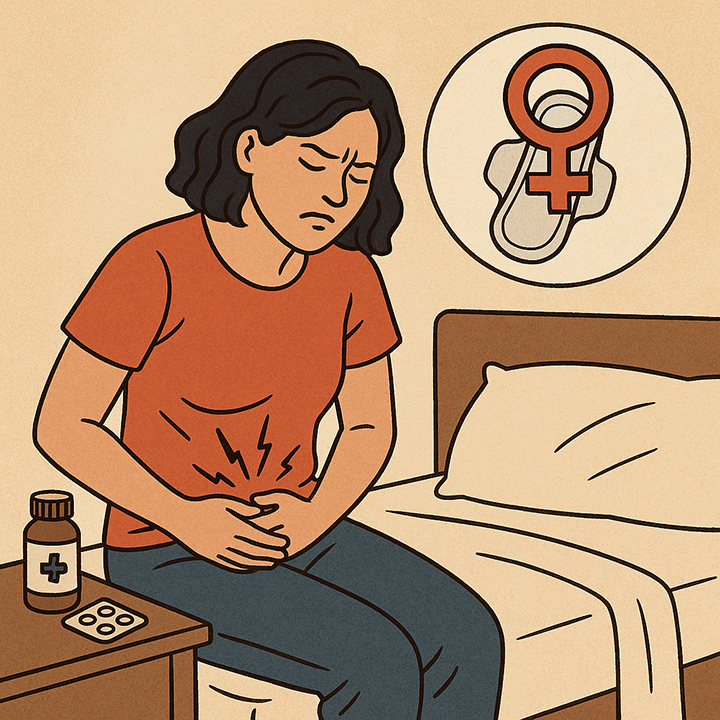
Now, I’ll be the first to admit, as a man, I can’t speak from personal experience on this topic. But I can tell you what I’ve learned from the women in my life, and why half the world’s population dealing with something every month means the other half needs to pay attention. Dudes, I’m talking to you. Women, we’re sorry this can be painful, and we’re going to get better at talking about it. And for those of you who menstruate—you shouldn’t have to hide something this normal or suffer in silence.
Growing up on a Wisconsin farm in a conservative school district, I learned about periods approximately once, in health class. I was in 7th grade, and we were taught by our visibly uncomfortable gym teacher who I imagined drew the short straw to teach the class. Health class was big into talking about the Reagan-era “Just Say No” to drugs curriculum, but we rarely talked about bodies and reproduction. When we did, the boys and girls were separated; the girls got a lesson in menstrual products and the boys were warned about wet dreams. I filled in the rest with encyclopedia entries on genitalia, and whispered conversations when one of the girls in our group spent an inordinate amount of time in the bathroom. This left me woefully unprepared for actual human biology (except now I knew about wet dreams. Sheesh).
Here’s what I wish someone had told teenage me about periods: they’re not just about bleeding. Menstrual cramps can range from mild discomfort to pain so severe that women vomit, faint, or can’t get out of bed. Some women experience mood changes due to hormonal shifts—and before you roll your eyes about “PMS,” understand that hormones affect everything from pain tolerance to emotional regulation to sleep. It’s not “being dramatic.” It’s biology.
Let me tell you about a time I actually got it right, though it took a friend’s obvious pain to teach me. I was spending the day with a close friend when I noticed her wince. Then wince again. Waves of pain kept crossing her face, and she’d go quiet for a moment, her jaw clenched, before trying to continue our conversation as if nothing was wrong. “Are you okay?” I finally asked. “Do you need some pain reliever or something?”
She gave me a look that was half gratitude, half frustration. “You have no idea,” she snapped, louder than she probably intended.
She was right—I didn’t. But I could see that her pain was real and intense. I didn’t take the outburst personally. Instead, I asked what would help. She needed a nap, some privacy, and for me to stop asking questions. So that’s what I provided. Later, when she was feeling better, she thanked me for not making it weird and for just helping.
That experience was a crash course in empathy. Menstrual cramps aren’t just “a little discomfort”—for some women, they’re debilitating. Offering help matter-of-factly—not making a big deal out of it, not acting squeamish—is exactly what’s needed. And sometimes people snap when they’re in pain. Don’t take it personally.
I learned how crucial it is to handle these situations calmly when I was camping with my nieces and nephew one weekend. I kept noticing the four girls—ranging from early to mid-teens—disappearing together just outside camp for little conferences. This happened three or four times over the course of the afternoon. Finally, I pulled my oldest niece aside.
“Hey, is everything okay? You all keep heading off together. If something’s wrong, I need to know.”
She looked relieved that I’d asked. “My sister just got her first period,” she said quietly. “We’re trying to figure out what to do because we only have tampons, and Mom doesn’t want her using those yet.”
Here was a moment where I could have made it weird, or awkward, or acted like I couldn’t possibly help with “girl stuff.” Instead, I treated it like the practical problem it was.
“Okay,” I said. “First, she should call your mom. This is something she’ll want to know about. And your mom can give her advice about what to do. Second, I can drive to the store right now and get whatever supplies she needs. Just tell me what to buy.”
The relief on her face was immediate and she returned to the group to relay my suggestion and offer. My niece called her mom, who talked her through things. By the end of the call the girls had everything handled among themselves, but knowing I’d been willing to help without making it embarrassing clearly mattered.
What struck me most was watching those four young women support each other. They’d created a little circle of care, making sure this first period didn’t feel scary or shameful. My nephew, on the other hand, spent the afternoon playing with the fire. He was either oblivious to their conferences or ignoring the girls’ disappearance. I suspect he, like me, hadn’t been adequately prepared to participate or talk about what was going on.
This is exactly what we should all be doing—treating periods as the routine biological function they are, not as some shameful secret. I’ve watched close friends miss important events, and I suspect some of my coworkers miss work—because the pain was too severe. And I’ve learned that “just part of being a woman” is a dismissive phrase that ignores real suffering.
So what can you do, especially if you’re a guy who feels awkward about the whole topic?
Be prepared. Keep a small supply of pads and tampons somewhere accessible—your car’s glove box, your backpack, your bathroom cabinet. Not as a weird statement, just as a practical courtesy. I learned to do this the hard way. I help organize a weekend workshop each year that brings together men and women, and one year I was in charge of buying supplies—unscented soap, hand sanitizer, and menstrual products for anyone who might need them during the weekend. Simple enough, right? I walked into the grocery store with confidence, and on finding the menstrual products aisle I was immediately unsure of my mission.
There were so many options. Pads with and without wings (wings?), thin, thick, overnight, regular, light. Tampons in different sizes with different applicators (applicators too?). Menstrual cups. Liners. I stood there flabbergasted, realizing I was totally unqualified for the task, having no idea what anyone might actually need. So I did what seemed reasonable: I called a friend who talked me through finding variety packs of both pads and tampons, figuring that in a pinch, having options was better than having nothing.
It worked—people were grateful to have supplies available, and nobody cared that I hadn’t selected the perfect brand. That experience taught me two things. First, it’s okay not to know exactly what to buy. Variety packs exist for a reason. Second, the awkwardness I felt standing in that aisle was nothing compared to the relief of someone who needs a product and doesn’t have one. My momentary discomfort was worth it (and my friend was truly impressed that I thought to call her).
Don’t make it weird. If someone mentions they’re on their period, don’t act shocked or grossed out. Just respond like they told you they have a headache—with normal human empathy. “That sucks, do you need anything?” works infinitely better than nervous laughter or changing the subject. Offer practical help. A heating pad or hot water bottle, pain reliever, chocolate, or tea aren’t stereotypes—they’re things that genuinely help some people. So is just asking, “What would make this easier for you right now?” Sometimes the answer is “nothing,” and that’s fine too. The asking matters.
Never, ever use periods as an insult or excuse. Don’t ask someone if they’re on their period because they’re angry or upset. Don’t joke about PMS. Don’t dismiss someone’s legitimate feelings by attributing them to their cycle. This is basic respect.
The most significant lesson about periods? Respect and empathy. When your partner, friend, or sister says she’s not feeling well because she’s on her period, don’t dismiss it as “girl problems” or suggest she’s overreacting. Believe her. Offer help. And if she snaps at you because she’s in pain, remember my friend’s words: “You have no idea.”
She’s right. You might not. But you can still show up with compassion.
© 2025 Josh Feyen
Josh is writing a book titled “Out With It, The Things We Don’t Talk About” he hopes to publish in 2026. Subscribe to his Substack for a weekly dose of his writing. https://joshuafeyen.substack.com
He was raised on a farm in southwest Wisconsin, went to college in Milwaukee, lived abroad for four years on three continents, and now finds himself with stories to tell. In the middle of 2021, Josh set about writing 50 short memoir stories in his 50th year. Today, the main focus of Josh’s 50 in 50 writing journey is to share what he’s learned with his four teenage nieces and nephew. Josh lives in Madison, Wisconsin. Find his other blog posts for True Stories Well Told here.

 True Stories Well Told
What a beautiful, compassionate, helpful story! I am beyond that time of life, but can think of many things I observed over the years that your simple, understanding and helpful approach would have been so meaningful to various ladies. Keep up the good work!
LikeLiked by 1 person
Love this! Currently I am one of the managers of the Kotex brand and our entire campaign has been centered around “normalizing” periods. The struggles and shame women have to hide around periods is crazy. We have a big push next year to promote education and normalization of periods with both men and women, as well as school outreach to try to change the conversation. Great article!
LikeLiked by 1 person