
By Sarah White
This was inspired by a prompt: “Write an apology to a place.” Try it and see what comes to you!
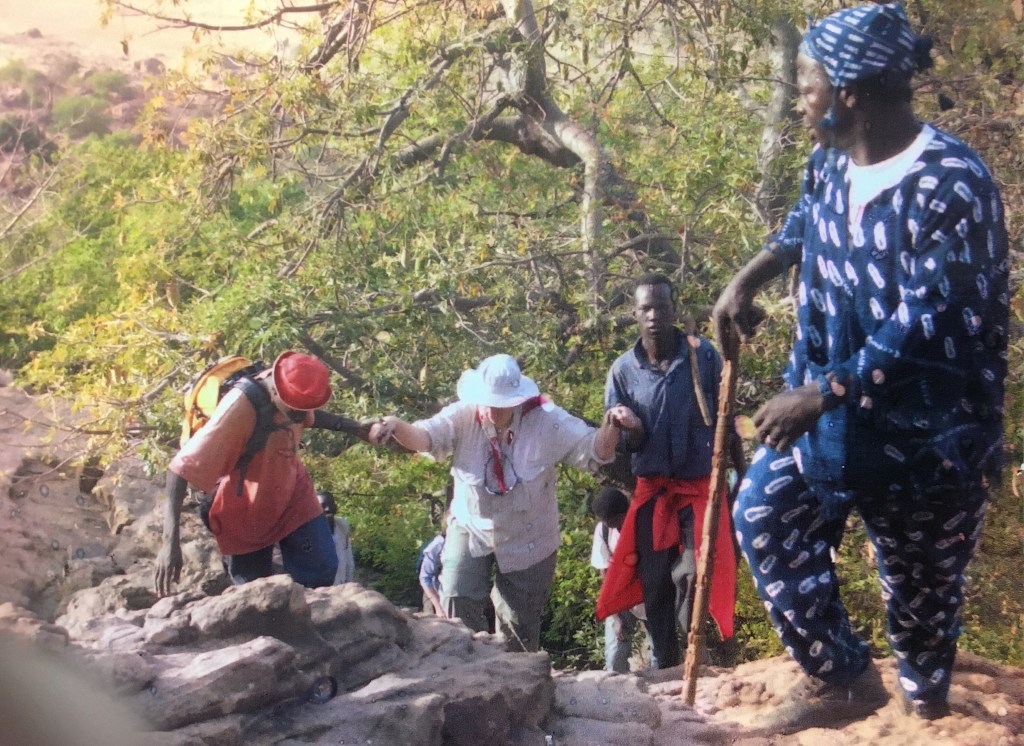
Dear Blue Creek Village, I’m sorry I haven’t been back to see you. It has been almost twenty years. I loved so much about you—your people, your landscape, the effort it took to get to you, high in the mountains. I wished I could know the story behind everything I saw. And yet, I never got back to ask you.

The little girl I interviewed for the story about “Life in a Mayan Village”? She is all grown up, probably a mother with children of her own. Her older sister, who was 19 when I visited in 2004, already had a number of children. That’s the custom among the Mayan villagers, we were told.
The people who ran the guest-house coop where we stayed—I apologize. I haven’t been back to bring more tourist dollars to your pockets. I will never be able to find out why some of your neighbors didn’t want to join the coop. Did they not want to put on traditional costumes for us? Did serving us meals in their homes embarrass them, asking us to sit on the plastic buckets that were chairs in their one-room homes, eating under their hammocks, hooked high out of the way?
Did they feel like zoo animals, having us pay to see them in their native habitat? But we provided jobs to the guides who came to take us to see the howler monkeys, or guide us on a rainforest medicine walk, or take us to swim in the caves. You gave us visitors a card like a menu in a sushi restaurant and we checked off what we wanted to do. We never knew who would appear when, to take us to do what, but it was always fascinating. And each experience we checked cost about $2, just like sushi. Have the villagers who joined the coop kept that business going?

Blue Creek Village, I’m sorry I made up so much of that article I was commissioned to write. You see, my tape recorder was stolen out of my bag on the way out of Belize. I didn’t have the source interviews. Then my editor told me the story should have been about teenagers, not a little girl. So I pretended as if I had interviewed her sister. That was the closest I’ve ever come to a breach of journalistic ethics. (Let’s admit it, I crossed the line.) That story appeared on a credit union website for kids. I hope no one in Blue Creek ever found it, after the Internet came to your village.
The Internet came with the electricity, after Hurricane Iris hit so hard in 2001. The international relief dollars flowed in and that’s what brought electricity. When I visited in 2004, you were still getting to know what electricity could be used for. You had streetlights now, that kept the roosters crowing all night. Your school and your little health clinic had electricity. But mostly, electricity brought power for boomboxes, so the men could listen to Mexican radio all day while they worked their milpas, and power for your little store so that it could sell ice-cold Cokes. No electricity reached the homes; your women and girls still did their chores by hand, cooking over gas cylinders and washing laundry on stones in the creek.
Blue Creek, I’m sorriest of all about the missionaries. They were probably there before the electricity, but on my visit, it seemed the greatest use in Blue Creek for electricity was to amplify their message. Their rock band powered up every night after dinner. The bass booming through the dark attracted the villagers like moths to a porch lamp.
Blue Creek, I am sorry I haven’t been back to see you, but unfortunately, I came home with five different skin ailments that required an emergency trip to a dermatologist. Sunburn, blisters, I’d expected. But not the poisonwood rash, nor the angry-looking bite from the night my hand strayed out from under the mosquito net as I slept. I can’t even remember now what the fifth thing was. I do remember the dermatologist’s words: “You are medically advised never to go south of the 20th parallel again.”
Dear Blue Creek Village, I won’t be back. But I’ll see you in my dreams.
© 2022 Sarah White










 True Stories Well Told
What We Can Learn About Customer Service from Hospice
By Neil Fauerbach
The Hospice movement in this country has provided a wonderful environment for families facing end of life issues with their loved ones. Considered the model for quality compassionate care for people facing a life-limiting illness, Hospice provides expert medical care, pain management, and emotional and spiritual support tailored to the patient’s needs and wishes. Support is also provided to the patient’s family. It is important to know that Hospice focuses on caring, not curing.
My family recently had our second Hospice experience when my 89 year old mother passed away peacefully, with the family holding her hands. Dad passed there in 2007. I have referred to the Hospice experience as “remarkable” and have had to explain myself to the uninitiated.
When it was time to go to Hospice, the ambulance crew showed up to transport Mom to Agrace Hospice near her condo in Fitchburg, Wisconsin. I was pleased that it was Ryan Brothers Ambulance Service, a former Wisconsin Family Business of the Year Award winner. They were obviously part of the chain of care that Hospice provides. They were kind, respectful, humorous (which Mom encouraged), and attentive.
Upon arriving at the center she was wheeled directly to her room and helped into bed. No stops for registration, verification of date of birth, or signing insurance forms. From her door to being comfortable in bed took eight minutes. It was obvious that planning and communication had facilitated this swift intake, but it was invisible to us.
Every doctor, nurse, nursing assistant, and maintenance worker called her by her first name. They always asked permission before entering the room, checking vitals, or administering pain medications. They always asked if there was anything at all they could do for the family. They were always around, but never underfoot. Respect plays a large role in their values.
Their goal is comfort. They make certain the patient’s and the family’s wishes are respected and their needs met. For us, that included finding a corkscrew and clean glasses. Mom wasn’t going to drink wine from a Styrofoam cup!
The conversations with the doctors and nurses were open and honest. Decisions about care and treatment were informed by the passionate insights of those caregivers. But the decisions were ours. The dying process was explained by a social worker. We knew what to expect. We were prepared. Grief counseling was readily available. Being ready was up to us individually.
When Mom died (on our dad’s birthday), we were there, holding her hands, her favorite opera playing in the background. After she passed, we were given as much time with her as we needed. When we were ready, we participated in a respectful procession down the halls of Agrace, Mom covered in a beautiful quilt, her doctors and nurses trailing behind us, and all staff standing along the way as if in an honor guard. They thanked us for the honor of helping her through to the end.
What lesson can we learn from the Hospice philosophy? What can we do to make what we do more meaningful, useful, and graceful? Does everyone on your team know what your clients need, want or feel? How much better would you be at your work if you were able to help your clients reach their goals with passion and grace?
Here are some of my takeaways:
© 2022 Neil Fauerbach
Neil is a retired marketing professional having worked for over forty years for several professional service firms. In his free time he creates videos, photographs nature, chairs committees in non-profits, and is learning to play the banjo.
Share this: