The Numbers

This post resumes a now-occasional series on our experiences under COVID-19, inspired by the realization that “we are all field collectors” in the effort to someday tell the story of what happened in 2020. I welcome your submissions: find guidelines for guest writers here.


By Suzy Beal

“From the strain of binding opposites comes harmony.” 

– Heraclitus

I’m counting my newly sprouted seeds, when everyone else is counting the coronavirus numbers in their town. Fifty-eight little green shoots reaching for the sunlight. I know there will be too many zucchini with eight green and eight yellow plants.  Never too many cucumbers with sixteen plants and ten pumpkins, I plant extras in case some don’t survive the transfer to the garden. Sixteen Arugula lettuce and dozens of other lettuces not yet up will keep us in greens for the summer.

The virus cases continue to mount with 86 in our county as of today, May 11th 2020. 

It amazes me the difference I feel between counting sprouted seeds, which give me joy and hope versus counting the virus numbers that bring sadness and a sense of futility. 

Counting is the connection.  We count deaths, confirmed cases, negative cases after testing, and states numbers.  We count ventilators, hospital beds and gowns needed.  We count money by the billions needed.

We count the masks we’ve made and the ones still needed. I’ve completed thirty-two so far and counting. We count the feet between ourselves for self-distancing; we count the days since the last death in our area. We count the days since we spent time with our loved ones. We count the weeks since we went out to dinner.  Counting becomes an obsession and leaves us tired, grouchy, unhappy, and without satisfaction. 

Our calendars show no appointments, no engagements for entertainment, no movies, no meeting with friends for a beer.  We count the days since our last haircut, but find ways to accommodate new styles. We shop less often and save more money.  Our cars use little gasoline and we spend more time taking walks. We organized our grocery lists for hitting the aisles as quickly as possible, and we go at 7:00 in the morning when they open.

Now, five months later, we are counting the particles of smoke in the air. We are in the high 400s, which is hazardous to our health. We are counting the people lost in the awful fires burning in our state. We are counting the days to clear skies, which the weather person says are coming next week.

We are still counting the coronavirus cases, which have reached 728 in our county.  Our numbers are climbing, as is my anxiety. We only go out for food, gas, and to the post office, but as the numbers rise, I wonder what we can cut out. We are counting the days between shopping at the grocery store.  It was 10 days, now it’s twice a month.

I’m trying to be patient with those who choose to live differently without wearing masks or social distancing themselves, but in this case “binding opposites” is too hard. I don’t understand how a stance on protection for our health can become a political issue. We are more than just numbers.

The numbers continue, I’m 137 masks in and the votes are still being tabulated from our election.

I count… I wait for us to find our harmony.

© 2020 Suzy Beal

Writer and budding poet Suzy Beal spent twenty-five years helping seniors put their stories to paper and this year just finished her own memoir. A portion of Suzy’s memoir has been published on truestorieswelltold.com. She writes personal essays and is currently studying poetry. Her work has appeared on truestorieswelltold. com, Story Circle Network, 101words, Central Oregon Writer’s Guild and recently an essay in  Placed: An Encyclopedia of Central Oregon. She lives and writes from Bend, Oregon.
Posted in Uncategorized | 4 Comments

Hungry?

By Patricia LaPointe

Way back when I was married to my first husband and had four kids under the age of six, we would occasionally be invited to my in-laws for dinner. This was not my favorite thing to do, but I thought it was only right to accept their invitation. Besides, with my parents living next door to them, they saw how often we ate at Mom and Dad’s.

Mother-in-law would greet us at the door dressed in a “hostess” gown, complete with long skirt and chiffon sleeves. Father-in-law in shirt and tie. Husband and I in jeans and t-shirts.

We’d arrive on time, but wouldn’t eat until the adults had their cocktails. No appetizers were served–not even crackers for the kids.

Mother-in-law would always have an elegantly-set table. She would proudly bring the roast and side dishes from the kitchen, announcing, “Hope everyone is hungry.” Duh, what else would we be?

There were four adults and four children at the table. Plastic sheets were always placed under the kids’ chairs.

When the roast arrived, it was sliced into seven rather thin pieces. Each adult received a piece, and the two kids old enough to chew meat were given a half slice each. There would sit the last slice until Mother-in-law would ask, “Who would like a half slice?” Since Father-in-law already had his fork poised to grab the last slice, my husband and I would answer, “Oh no, we’ve had enough.” I suppose if we’d asked for more, Mother-in-law would cut the piece into thirds.

We were left to gobble down the side dishes: cucumber salad, mashed potatoes, and green beans. Each bowl contained about two cups of food. The kids were often left with a tablespoon or so of the potatoes.

Obviously, dinner didn’t take long. Dessert for the adults was usually some Jello concoction. Each kid got a store-bought cookie.

The kids, God love them, would create our escape. “Can we go next door and see Grandma and Grandpa?”

We’d answer yes, perhaps a bit too eagerly.

As we crossed the lawn, we could see Mom peeking out the window. She had a clear vision of the in-laws dining room, and we knew she’d been scoping it out as we sat for dinner.

Entering my parent’s house, we’d be greeted by Mom, clad in her favorite terrycloth “house dress”. She would lead us to the dining room table filled with a ten-pound roast, about three pounds of mashed potatoes, a huge bowl of corn, and announce, “Dinner’s ready. Anybody hungry?”

It always amazed me that no child was trampled on as we raced to the table.

©  2020 Patricia LaPointe

Pat LaPointe, editor of Changes in Life, a monthly online women’s newsletter, is contributing editor of the anthology, The Woman I’ve Become: 37 Women Share Their Journeys from Toxic Relationships to Self-Empowerment.. In addition, she conducts writing workshops for women — both online and onsite. Pat’s essays and short stories have been published widely. Currently, Pat is completing her first novel, forthcoming late 2021.

Posted in Guest writer | Leave a comment

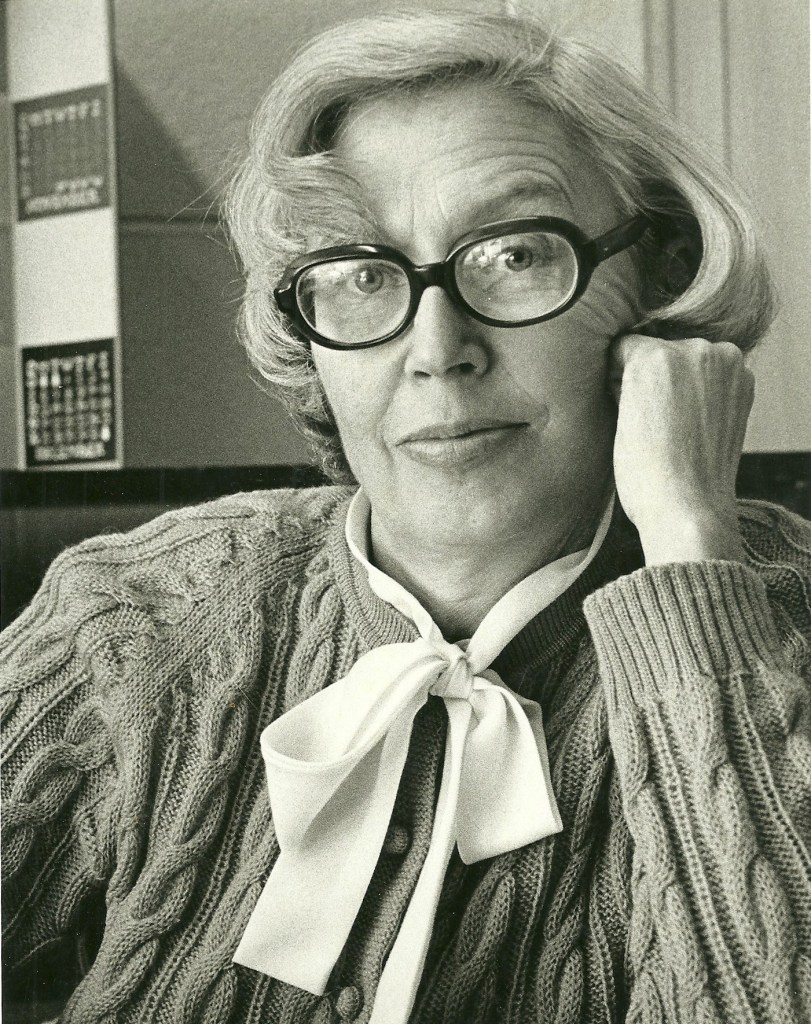
If you’ve been following this blog for awhile, you’ve met my mother

Mother-daughter relationships. A topic so rich whole blogs–hell, whole social media channels–could be devoted to it. I have very occasionally posted about my mother here.

Today I write with the news that on Halloween and a Blue Moon, October 31, 2020, my mother passed away. Here follow four links: Her obituary, and, in reverse chronological order, three posts on True Stories Well Told about my mother and me.

Jean White about 1980, I think

Jean White’s obituary

Revisiting the Sunset Wall

The Dawn Wall and the Sunset Wall

The Mother Trip, set in 1967

Thank you all, who have accompanied me in the experiment of writing true stories about our own messy, complicated, impossible-to-decipher lives. As we go forward, let’s remember to always be kind to one another.

  • Sarah White
Posted in Uncategorized | 4 Comments

Double Date

By “WandrNWayne” Hammerstrom

In my Junior year of high school I was finally licensed to drive my parents’ car and that meant dating my girlfriend was no longer bound by Racine’s city limits. Dating for me, age 16, was more like hanging out with a friend at group events or parties, so the suggestion to double date with another couple was easily agreed to by Kathy and me. Bob and Jamie joined us for a summer night’s double date.

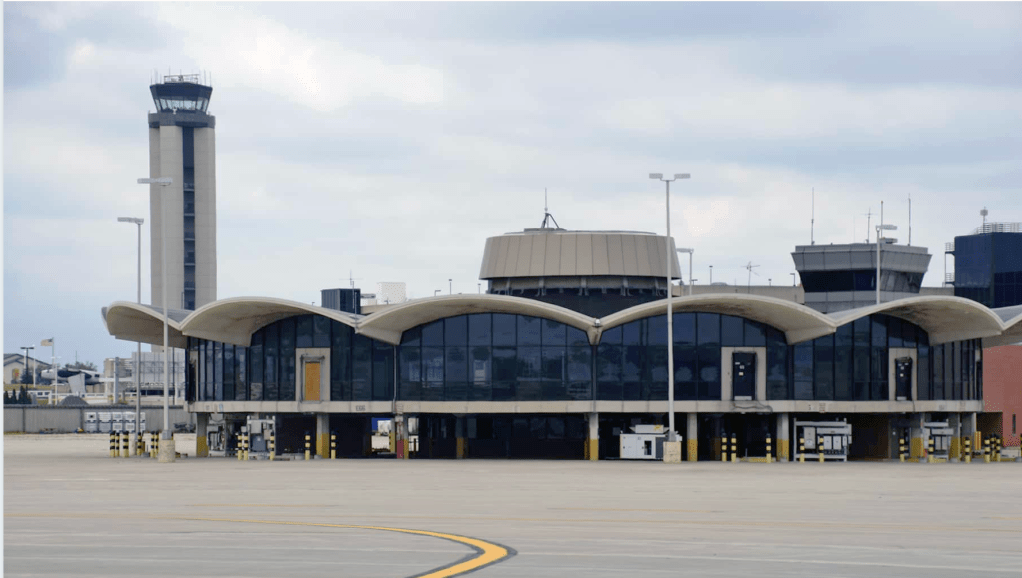
Bob suggested the destination for our out-of-town adventure–a Japanese restaurant in nearby Milwaukee. This would be an exciting new experience for me, both in location and cuisine. The drive to the restaurant located close to the Milwaukee airport took only 30 minutes.

I don’t remember what I ate, but I do remember sitting on a cushion on the floor as I watched a chef chop and prepare our meal at the table. I felt like I was in a movie setting and that these moments would be recorded in memory for later playback whenever I wanted. It also raised the bar for future dating experiences.

We didn’t want to return home so soon after dinner, but we struggled to think of activities that teenage couples could do. (Yeah, I know the word legally could be thought of to finish that sentence.) I suggested driving to the nearby Milwaukee airport. I’d never flown and visiting a major airport would be something cool to do.

General Mitchell Airport, Milwaukee, Wisconsin

Airports in 1962 were not the commercial venues we find today. This airport was merely a place where aircraft departed and arrived. Passengers didn’t need to arrive two hours prior to a flight schedule or shuffle with luggage through TSA portals. There was nothing for us to see or do in the terminal, but my imagination carried my excitement aloft in flight.

I suggested that we try to go up to the flight control tower to see the airfield from above and to learn what happens at an airport. My friends wondered how we could do that and where the door to the control tower might be. I quickly answered that we simply look for a sign that showed which door led to the control tower. We found it! Unlocked.

In 1962 airports had restrictions but not the level of security we have today. We started climbing the steep stairs leading up to the control tower. I became nervous when hearing someone coming down the stairs. When I asked if this was the way to the control tower, he answered yes, and that we should press the speaker phone at the next locked door to explain our desire to enter the control room. Our request was granted and we entered the dark room with banks of radar and display screens. The three men on duty that night talked with us for awhile, seemingly happy to tell us what duties were performed in the airport control tower. We watched them work as a plane descended and taxied on the runway pattern below. We thanked them and began our way back down to ground level.

Next, I blurted out loud that I wanted to try getting on a plane, because I’d never been inside a plane and I wanted to see what one was like. We walked to a terminal gate and I asked if we could go inside the plane that had just landed. We were invited inside to watch the ground crew clean the plane for the next departure.

This was such a cool experience, which impressed my date and my friends. We were just kids having a good time during an era so different from today.

© 2020 Wayne Hammerstrom

Wayne Hammerstrom has been a lifelong traveler who now wanders (WandrNWayne) serendipitously on journeys near and far. He lives in Madison, Wisconsin.

Posted in Uncategorized | Leave a comment

The Malicious Mask Mandate

This post resumes a now-occasional series on our experiences under COVID-19, inspired by the realization that “we are all field collectors” in the effort to someday tell the story of what happened in 2020. I welcome your submissions: find guidelines for guest writers here.

Wisconsin Governor Tony Evers issued an executive order on August 1, 2020 that in part, read:

“Every individual age 5 and older must wear a face covering if indoors or in an enclosed space, other than at a private residence and others who are not members of individual’s household or living unit are present in the same room or enclosed space. Face coverings are strongly recommended in all other settings, including outdoors when it is not possible to maintain physical distancing.”

By Kurt Baumann

Intending to prevent the spread of the Covid-19 virus, an emergency executive mandate, signed by Governor Tony Evers, requiring “residents of Wisconsin five years of age and older to wear face masks indoors and in enclosed spaces” became law on August 1st, 2020. 

The COVID-19 virus has taken over the globe. Besides “social distancing,” staying six feet apart from another person to prevent airborne contagion, assorted face shields have become an everyday sight. At the memorial service of Supreme Court Justice Ruth Bader Ginsberg mourners, viewing her casket outside the Supreme Court building in Washington D.C., were seen wearing black masks.

Tired of this virus bringing changes of unwanted restrictions, a majority of people wish it went away, along with these changes, to get back to the life they knew. Wearing masks has been seen as a violation of America’s constitutional rights. As the increased deaths show, wishing it won’t make it go away–and neither will going without wearing a mask. 

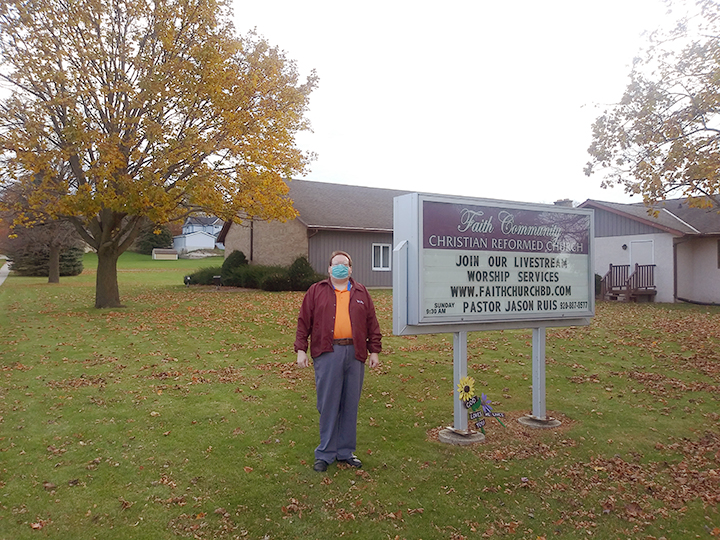
In mid-August, the elders of my church, Faith Community Christian Reformed Church, of Beaver Dam, dealt with this issue by holding services outside the church to obey the mandate and settle any arguments, in the congregation, between those pro- and anti-mask. Satisfying as this decision seemed, a bigger issue was overlooked—the reason church is attended in the first place.

Kurt Baumann in front of the Faith Community Christian Reformed Church of Beaver Dam

Matthew 22:15-21 tells the story of how the Pharisees, the traditional Jewish observers, plotted to trap Jesus with his own words as they asked him whether to pay taxes to the Roman emperor, Caesar. Taxes, paid to Rome, were a stormy political issue at the time. Whether Jesus’ answered “Yes” or “No,” any part of the population would be alienated. He faced this problem by asking for a coin, which He was given, and asking whose likeness was on it. When told that it was the Roman emperor, Caesar, he answered them by saying:

“Render unto Caesar the things that are Caesar’s, unto God the things that are God’s.”

In our nation, the freedom to worship God, a right guaranteed by the first amendment, is too often taken for granted. “We the people” tend to forget just how lucky “we” are. Despite the carnage at religious services and churches burnt here in America, there are nations in this world where people who worship God are persecuted and put to death. 

The issue of our church isn’t about wearing masks, it’s about worshipping God, who created our world, stood by us despite our sins, and is still a part of our lives. Considering all He has done for us, is it really such a sacrifice to wear a mask when we gather inside our church for a worship service?

Governor Evers didn’t enact this law to violate our rights. I like to think his intention was to protect Wisconsin by preventing the spread of the Covid-19 virus and more death. Maybe masks, inconvenient as they are, aren’t as bad as people think. If they help us get through this difficult time and help us fight this virus, then maybe wearing one isn’t too much to ask. 

By covering our faces indoors at church services, we obey and honor both “Wisconsin’s Caesar” (the law) and the God we worship. Let’s not forget that as provocative as this issue is, faith in a Higher Power is one we shouldn’t lose sight of.      

“Render unto Caesar the things that are Caesar’s, unto God the things that are God’s.”

© 2020 Kurt Baumann

Since 1983, Kurt Baumann has lived in Beaver Dam involved in his community theater, church, and contributor to his local newspaper. After working a variety of jobs for most of his life, he has retired to do some writing. He has written one book: The Written Works of Kurt Baumann.

Posted in Guest writer, Uncategorized | Tagged | 1 Comment

Not Like in the Movies

By Pat Detmer

Dad was dying and in Intensive Care, so hooked up with wires and tubes that it made the digital tangle behind my office desk look minimalist. He’d failed to take care of himself and was paying for a sedentary lifetime of smoking, eating poorly, and liking his liquor too much. So on Easter weekend, after a call from his wife, we left our family holiday get-together and flew 450 miles to be at his side.

It was an odd and uncomfortable trip for his three daughters. After divorcing our mother, he’d remarried and had scant contact with us, preferring instead to be with his new, younger wife and her family. Given the lack of response and contact, we believed ourselves to be estranged, but he thought everything was A-OK, this in spite of the fact that we would sent him gifts with no response, and had once, on a rare visit to his home, listened to his wife breezily admit that she swiped addresses of famous people from the database of a well-known confectionary company where she worked and had sent birthday cards to Ginger Rogers, Monty Hall, and Richard Simmons, prompting me to blurt out in a family-packed car on the drive home, “Jesus Christ! Richard Simmons got a birthday card? Anybody in this car ever get a birthday card?” No hands were raised.

We weren’t staying at Dad’s on this trip. We’d squeezed into their home once before, a set piece for “Hoarders” before “Hoarders” existed. My husband and I slept in an extra bedroom filled with cartons of canned peaches, and we had to clear boxes of cereal off the kitchen chairs so we could sit down. The unused treadmill carried three brand-new bread-makers on its pristine running belt, gifts he’d purchased for his daughters but had never mailed. So although our mother had raised us to honor our family and do the right thing even if it was difficult, we took the easy way out and booked a hotel. Besides, Mother wasn’t with us.

The hospital visit was awkward. Sometimes there’s no good thing to be said over a hospital bed. It can be a struggle even when relationships are clear and deep. We sisters had always been able to cut through family tension with humor, impersonations, or breaking out in three-part harmony, but this was Intensive Care, and this was our father and his hovering stranger of a wife. The conversation ebbed and flowed. No. That’s a lie. It only ebbed.

Dad kept trying to say something that started with “M,” and we tried to help. Could it be a question about our mother? As the eldest, I knew better than anyone how she would appreciate that. Her name was “Marian,” so could it be? But no, that wasn’t it. Middle sister Susie figured it out. She shared my father’s fascination with money (which he didn’t have) and his desire to get a lot of it (which she eventually did.) Dad was trying to ask about her stocks, Microsoft, specifically. In ICU, his lungs rattling, he wanted to know how she was doing with it. Youngest sister Barbie and I faded away to the place we always went when numbers were in play. Time for a trip to the bathroom. Anybody have change for the candy machine? What’s in this magazine I thumbed through already? Eventually even that conversation stalled and died, unlike my Dad, and we decided to call it a day.

Wordlessly, we took the elevator to the lobby, pushed through the wide front doors, and stepped out into a lovely evening, walking abreast down the sidewalk and pausing at the street. Now what? He could die tonight or live for days. We were saddened, travel-weary, and cranky, in a town where we didn’t even know how to get to the nearest bar. The sun was setting behind the mountains while 400+ miles away, our families would now be headed home from a warm and lovely holiday together.

Being the eldest, I felt the need to lead. “Well … ” I began. And then stopped. What could be said? Susie was reaching into her purse, digging at the bottom of it. She found what she wanted, popping a cigarette out of the pack. “Seriously?” I cried. “Are you kidding me?” Barbie, the peacemaker, reached for my forearm as Susie dug in again, looking for a lighter. “I cannot believe you! Were you just in there with us? Do you want to end up like that?”

Unruffled, determined, she locked eyes with me as she clamped the cigarette between her lips, lit it, took a deep, deep drag, blew smoke in my face, and rasped, “I’ll dance on your fucking grave!”

For a moment we stood immobile, and then we started laughing like Dad wasn’t trussed up and dying in a room behind us. We howled, double over, hooted, coughed and fought for breath while people turned to look. It was the shared, irreverent laughter that always saved us when things were darkest and we were our most anxious and fearful. This we would always have, no matter who left us.

The eldest leads. I wiped at my teary eyes. “Let’s find a bar.”

©2020 Pat Detmer

Pat Detmer, who turned 70 in this amazingly shitty year, writes a weekly blog for her company, has written humor columns for newspapers in the Seattle area, and appeared in Newsweek’s My Turn when it was a print-only venture. She’s won fiction contests having to do with brevity and speed, and her short stories have appeared in multiple anthologies.

Posted in Guest writer | Leave a comment

Fran

By Katie Ravich

My family lived in Waldwick, New Jersey from when I was about two years old until I was nine.  Waldwick was easy commuting distance to NYC.  Both my parents worked in NYC in educational publishing at the time. When my brother Nick and I were old enough to go to school and needed to be looked after, after school my mom found an in-home babysitter just a few streets over on Roberta Lane.  Nick and I went to Fran’s everyday after school and some of the summer for four long years.  

Katie and her brother Nick, circa 1980-ish

Fran was a no-nonsense working class mother of three who took babysitting jobs to bring in extra money.  Her home on Roberta Lane was within walking distance of both our house and Crescent Elementary School.  What I remember most about Fran, which kind of sums up her way of being, was she wasn’t giving anything away for free because she was no sucker.  If Fran had to pick us up from school because of snowstorms or sudden illness she charged my mother gas money.  If we wanted to eat anything at Fran’s house my mother had to provide it or she charged. If we had to go to say Patterson, NJ to the foam rubber factory to pick up supplies for Fran’s cottage industry (more on that later) during the hours we were in her care, she charged my mom gas money to transport us.

What did Fran look like?  The clearest picture of Fran in my mind is from the backseat of the giant station wagon she drove, her tightly permed head and the comically large frames of her glasses (glasses it seems all middle-aged women wore in the seventies and early eighties) humming along to something like the “Gambler” or “Islands In the Stream” playing on the radio perfectly at ease as unchallenged ruler of her tiny kingdom.  I liked to look out at the world through, what I considered was the magical blue stripe at the top of the windshield, on the boring drives to some industrial place in NJ.  Our cars never had that blue windshield stripe.

Fran was stingy with everything including any encouragement or affection or even adequate supervision though that was supposed to be her job.  Her way of thinking about child rearing (and this included her attitude towards her own three children) was from another era even in the late seventies and early eighties. Fran did not “parent” and she would have laughed herself hoarse at the idea of modern “parenting” because that was for suckers.  Fran’s guiding principle of childcare was the kids should make things easier for the adults not the other way around.  

A common scene I can remember from a Fran afternoon was Fran at a card table in the living room watching her soaps, her hands busy with one of her money making projects.  The most long standing of these gigs was the foam rubber dice. Fran would pick up boxes of brightly colored foam dice from the horrifying but fascinating foam rubber factory in Patterson.  Then she would use her hook rug needle to punch in string connecting a pair of dice so they were ready to hang from a car’s rear view mirror. Nick and I were put to work taking the finished dice and putting a little plastic band around each pair and repacking them in the boxes to take to God knows where.  Fran was paid by the piece so the pace was fierce. 

One or more of Fran’s three children Jamie and Josie (older teenagers at the time we were around) and Bobby, Fran’s youngest a few years older than me and Nick would be slouching around watching TV or being yelled at by Fran to move their lazy asses.  Candy the long-suffering, aged German Shepard was always there usually flopped down, dead-like in the doorway between the kitchen and the living room.  Family members regularly slapped Candy’s morose flank with a rolled up newspaper to try to move her out of the way put she was used to that and remained in her inconvenient place.  Fran’s one-legged, demented father might also be there sitting in the recliner in front of the TV drinking out of a “kiss me I’m Polish” mug and sometimes yelling racial epithets at the TV when Good Times was on.  Nick and I would do the jobs Fran assigned which included the pairing and packing of dice, changing the TV channels for her, getting her pillows for her aching back or helping her identify which colors she needed for the massive hook rug projects she sometimes took on.  

Around 5pm Fran’s husband Charlie would come home from his job at IBM.   There was usually a flurry of activity right before Charlie made his entrance, living room tidied, meat loaf put in the oven, Fran’s kids fleeing to their different corners because there was always something incriminating Fran was threatening to tell their father when he got home.  I liked it when Charlie came home because, in comparison to Fran, he seemed to exert a fair-minded, calming influence over the household with his short-sleeved white work shirts with a pocket protector.  Fran was a bully and a tyrant who ruled her kingdom by caprice and superstition and things were a little more sane when Charlie was there.

The person she bullied the most was my mother. My mom continued employing Fran and eventually both her daughters for childcare, even though my brother and I were unhappy living under Fran’s rule because Fran bullied her into thinking that she had no other options.  Fran took every opportunity to insult my mother to me and Nick.  We were dirty, lazy and fat because our mother neglected our basic upkeep.  We were kind of dirty, lazy and fat but my mother never neglected us emotionally or ground us down with shame and tyranny the way Fran did.  

I had a perverse need to wheedle some kind of affection or acknowledgment out of Fran.  I can clearly remember the rare times Fran was kind to me, in her way, and the outsize gratitude I felt for her miserly attention.  Once I became ill with a fever at school and the nurse decided to send me home.  Fran had to come and pick me up from Crescent Elementary school as my mother was far away working in NYC.  I am sure she charged by mom gas money but she came and got me and when we got back to Roberta Lane she made a fire in the fireplace (something she never did during the day) and let me doze in the beanbag chair with Candy lolling beside me all afternoon.  To be sure she made several comments about how tired I was because my mother was too weak and our household too lawless to enforce bedtimes but I was so warm and comfortable in the beanbag chair, where I stayed, released from my usual chores, until my mom could get there to pick me up.  

Soon before my family’s move from New Jersey to Texas truly ended our relationship with Fran’s family, my bother and I rebelled. Instead of walking home from school to Fran’s we walked to our own house and broke in through the window of my brother’s room.  When we were found, Fran was not worried about our disappearance but pissed as hell. My mother decided that we had made enough of a statement and our after school sentence at Fran’s was commuted! She overcame her own fear of Fran’s displeasure and decided that Nick and I could wear house keys on a string around our necks and be home alone after school.  We still had to go to Fran’s occasionally and Jamie and Josie still babysat regularly at night but Fran’s reign was over and it was truly a golden age.  

© 2020 Katie Ravich 

Also by Katie Ravich: Domino,  The Underpants, Surviving the Kalahari, Raising Sonia, Spirit of the Cimarron, and Fudge Girl

Posted in Guest writer, Uncategorized | Leave a comment

The Ghost Office

This post concludes a series on our experiences under COVID-19, inspired by the realization that “we are all field collectors” in the effort to someday tell the story of what happened in 2020. Let’s turn our thoughts to something lighter. I welcome your submissions: find guidelines for guest writers here.

By Sarah White

I took a part-time job as an office manager for a small video production company in July, 2019, because I wanted an office to go to. I wanted colleagues. As a freelance writer, working alone from home more often than not for the last 20 years, that struck me as reasonable. Besides, I might learn something about video production.

I worked three afternoons a week. As the office manager, I faced down unfamiliar problems—an unscrupulous driveway contractor, a leak that appeared one day and turned out to be a longstanding, unnoticed problem. Both the driveway and the mold remediation project required many hours of phone calls over many weeks. I cheerfully managed them on my to-do list. 

My boss said, “Thank you for taking these off my plate.” 

“Glad to,” I replied. “It’s pleasant to exchange my problems for yours for a few hours.”

His laughter told me we both understood what that felt like.

I shopped for snacks like a den mother, concerned to provide healthy stuff even though the staff mostly ate the salty pita chips and sugary KIND mini-bars and left the dried fruit untouched. I bought plants, had the handyman hang some in the windows, found places for others in the sunny workroom. I really liked the staff, really liked my boss, and was amused to be occupying so nurturing a role, when in my life I have pretty much never nurtured anything.

In between office managing and den-mothering, I occasionally helped with film production. I learned to transcribe and index interviews, helped the producers find the best SOTS—code for soundbites.  I hoped to advance to script-writing, but the opportunity hadn’t come along yet when the coronavirus pandemic hit.

The pandemic. COVID19. Those days that unfolded in early March, dividing everything into Before and What Now. 

One day the staff gathered for lunch in a restaurant where we leaned in close over sweet potato fries to hear about the producers’ filming trip to Cambodia. They described visiting Angkor Wat, the great plazas deserted because of virus fears. The empty airports on the flight home. 

A week later, the office closed. The boss and the boys took their fantastic Apple desktop workstations home to work remotely. I had no office to manage. There were no interviews, so no transcription to do. Miraculously, no one contracted COVID19 despite the boys’ trip and our close contact at the restaurant.

I called my boss. “I guess I’m furloughed,” I said. “I’ll keep watering the plants.” 

I soon learned they could thrive on weekly visits during the summer, unlike winter when the forced-air heat dried them out in two or three days. I checked my office email daily, just to make sure there were no problems an office manager could deal with. There were none.I got paid for half an hour a week. 

Six months later. The office is still empty. The plants have thrived, as if they are happier without us. The levels haven’t change in the jars of pita chips and KIND mini-bars and dried fruit. On my weekly visits I’d see a chair moved, or some video equipment rearranged, and know that someone had been in the office. Or maybe it was a ghost?

The job I took, to have a place to go, to have colleagues, was now a ghost, as well. The weekly visits to water the plants just made me sad. 

I called the boss and told him so. “I have to quit,” I said.

“Thank you,” he replied.

This time it was our silence that told me we both understood what that felt like.

Posted in Sarah's memoir, Uncategorized | Tagged | 1 Comment

Driving Miss Crazy

This post continues a series on our experiences under COVID-19, inspired by the realization that “we are all field collectors” in the effort to someday tell the story of what happened in 2020. Consider this an invitation to write your own stories of pandemic life, and to submit for publication on this blog–guidelines here.

By Faith Ellestad

What are you guys up to?” I asked my friend the other day.

“You know, social distancing,” she replied.

There it was, the world’s newest verb. The grammatical emblem of our new reality. Waving to the neighbors through a tightly-closed car window. Wearing vinyl gloves and a mask to the grocery store. Texting your son in New Orleans “Are you remembering to social distance?” Realizing you are going to smell permanently like a Lysol wipe unless you are lucky enough to score a bottle of Purell, hopefully with Aloe, because it smells less acrid and is somewhat less harsh on the hands, but you take what you can get, if anything.

I quickly realized that I would need an attitude adjustment to help my family through these challenging times. I crafted a “plan of positivity” that included being determinedly chipper, discovering and preparing delicious new recipes, sorting through all the closets, getting rid of all the junk stored in the basement, and organizing the garage. Of course, the others in the house would then take their cues from me as we sheltered supportively in place with a minimum of discord.

What a Pollyanna I was. It’s amazing how quickly a three-bedroom, two-bath house shrinks when three adults are suddenly stuck in it, unable to leave at will to do errands or shop.

And let me share with you my opinion of “open concept”. It’s cruel. Every loud noise or cooking smell or small disagreement is magnified and funneled into the shared space.

We were all finding this new state of affairs much more challenging than we had anticipated but I, author of the grand plan, was the first to crack. It took about two frustrating days. I was annoyed to discover the family found my forced good cheer irritating. Then the pharmacy had neither my prescription (although they had called to let me know it was ready) or hand sanitizer. The grocery store was out of corned beef, bread, lettuce, and frozen peas. I forgot cat food, and all the birthday cards I looked at for my son were either gross or stupid. Later, I realized that I had left my only two surgical masks at my mother’s house which we had sold the day before, so they now belonged to the lucky new owners.

Over the weekend, as my mood darkened, I mostly watched the news and cooking shows. I did parts of three crossword puzzles and decided not to bother with makeup. One of the cats developed a bladder problem. What to do about the vet? Fortunately, the issue resolved while the cat sheltered in place on my pillow, but I was reminded, to my continuing chagrin, how complicated formerly simple tasks would be.

The Monday before St Patrick’s day, I didn’t get dressed until after lunch, choosing instead to slouch mopily around in my yoga pants and pajama top. I was on the edge of tears all morning, and finally in desperation my husband suggested a walk in the Arboretum. I had already abandoned my plan to lead the way with good cheer. Or adventurous cooking. We had frozen chicken pot pies for dinner.

Bootstrapping myself into a version of normalcy the following day, I took a break from the constant barrage of bad news to honor my partially Irish heritage with a savory St. Patrick’s Day meal complete with corned beef, cabbage, potatoes, and Irish soda bread. Even though my husband is ethnically more Norweigian, we felt a touch of family solidarity, togetherness notwithstanding.

On Wednesday, I received a letter from the Minneapolis Nursing Home where my younger brother resides, announcing that due to Covid 19, no visitors would be allowed for the foreseeable future. I’d been planning to visit him as soon as the weather was reliably travel-worthy, but I was too late, and now I won’t see him until the threat is over. The fact that he is in a nursing home, even though he gets great care, is unsettling at best, so I cried. Again. And my husband came to the rescue. Again. He’s been checking a birdwatching site on the internet and suggested we go on a drive to see some migrating waterfowl, something we used to enjoy doing together. A little drive and ray of sun and a couple of white fronted geese helped. Again.

Good news on Thursday. Not about the virus, which had been increasing exponentially, but about my older brother and sister-in-law. I got a text that they had decided to return early from Florida. This had been a huge concern, so one less thing to worry about.

Friday, the gloom returned. I had a headache, and Tylernol Severe Sinus wasn’t helping. My brain was the mental version of a detached retina, half dark, half blurry with diffuse anxiety about my son who lives in New Orleans.

Saturday, I decided not to shower, just have coffee while I watched The Pioneer Woman. A rerun. Geez. Also, one of the cats threw up. Repeatedly. On a bright note, the house smells better, like Woolite Pet Stain and Odor remover, my new favorite scent. Again, my husband urged me into the car for a little fresh air.

Don’t even ask about Sunday. I suspect my family was hoping I would move into the garage, but they refrained from suggesting it.

By Monday, I felt better. I got dressed before noon, ate yogurt instead of chips, and decided I’d probably dye my hair after all. It occurred to me that I might not be the only depressed person in the house.

Now, a couple of weeks into the social distancing, were adapting a little better. On our drives, we’ve found that old cemeteries are good places to stroll around. Very few living souls are there to cough on you, it’s peaceful, and oftentimes a little window into history. Not macabre, as I had feared.

I really am going to try harder, sometimes anyway. I’m learning to shop online, but that may not be a really good idea. You can find ANYTHING on the web. Jeans, kitchen tools, a rug shampooer. It’s hard to stop finding stuff. I even ordered a month’s worth of cat food.

Last night I watched more news. So many brave people, all trying our best to hold things together, dreading the possibility of this horrible virus affecting our families. Stress and anxiety just don’t stop, nor do the tears.

So I’ve decided to stop watching news 12 hours a day. I don’t want to feel like crying all the time. Today I turned off the TV and made chocolate chip cookies. Of which I ate several. Now, I’ll have to hop back online and order more yoga pants (they’re so forgiving), due to the potential weight gain, which could start this depression cycle all over again. It doesn’t take much.

I guess I’ll need to get better at hydrating, because I’m pretty sure I’m not done crying yet. And clearly, my husband, is not done driving Miss Crazy.

© 2020 Faith Ellestad

Faith has been writing to amuse her family since she was old enough to print letters to her grandparents. Now retired, she has the opportunity (and with Covid restrictions, the time) to share some personal stories, and in the process, discover more about herself. Faith and her husband live with two elderly cats in Madison, Wisconsin. They are the parents of two great sons and a loving daughter in law.


Posted in Guest writer | Tagged | Leave a comment

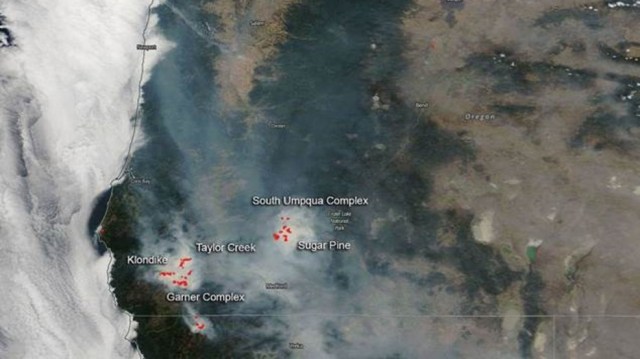
Fire update from Eugene (cough, cough)

We interrupt this series on our experiences under COVID-19 to bring you more apocalypse. The following is adapted from a note sent to former members of the Association of Personal Historians, who have stayed in touch since its closure. Members on the West Coast were asked to check in and let us know how they were faring as fires raged. This is Trena’s response from September 16, 2020.

By Trena Cleland

Last Monday night, Robert and I rode our bikes to a friendly Labor Day block party in a nearby neighborhood. There were musicians jamming, vendors selling boho-chic items such as pottery and jewelry, and a group of young girls making balloon animals for $1 each.

Weirdly, at about 8 p.m., it started smelling like a smoky campground. Oh, and look — there’s gray smoke coming over the trees way down the block. Whaaahhh? Like fog rolling in, the party turned from warm and summery to dusk/smoke.

It’s been like a nuclear winter since then — thick, dense smoke — with only infrequent dashes outside to pick a tomato or buy groceries. Each time, you come back smelling like you’ve been hanging out in an ashtray, and have to wash off the soot. I don’t like to touch anything outside — forget about the coronavirus, I’m talking about the dirty ash on the garden plants and the car door handle. N95 masks are de rigeur, not the pretty cloth masks that are my everyday pandemic wear. (I can’t believe I miss them!)

NASA image courtesy of the NASA/Goddard Space Flight Center Earth Science Data and Information System (ESDIS) project.

Fire-wise, we are well out of harm’s way, and feel very fortunate. The closest fire, the Holiday Farm fire, is about 30 miles east of us. Sadly, it is right along the forested wonderland/playground of the spectacular McKenzie River. Some small hamlets have been destroyed, along with magnificent nature. Someone forwarded a poem that says, “Do not forget that the ashes falling from the sky are all that remains of the pine and grass and thistle and bear and coyote and deer and mouse that could not escape.”

Not to mention that the smoke, while mostly trees, contains some percentage of immolated cars, buildings, tires, fuel, even burnt-up Christmas ornaments from Christmas Treasures, a year-round holiday store.

The Air Quality Index number in our neighborhood has routinely been above 500, which is the highest number on the AQI chart. 500 is beyond ‘very unhealthy,’ it’s ‘ hazardous.’ So, what’s beyond hazardous? Something tells me, if you have to ask, you’re already dead.

Robert wrote the following:

We are at day six of the epic Eugene smoke-in. As of today, the Holiday Farm fire is 6% contained. The slow progress is mainly due to highly inaccessible terrain, and an under-staffing of fire fighters. The fire is mostly burning on north and south fronts. The eastward and westward progression is minimal, which is really good because the cities of Eugene/Springfield lie due west of the fire location.

Our tap water now has a distinct ashy off-flavor. Our water supply is the McKenzie River, and it is the McKenzie watershed which is burning. EWEB (our local water and electric utility) has water and hydroelectric plants potentially in harm’s way, but so far, no imminent threat. Some good fire news, the historic Goodpasture wooden covered bridge, at the Leaburg reservoir, was saved from the flames.

For now, we are sheltering in place — a lockdown within a lockdown. What these last six days have reminded me most of are the ‘snow days’ of youth, when heavy Midwestern snowfall kept us home from school. Rob and I have baked, done arts and crafts, played Scrabble, and watched documentaries. The hope is that either wind and/or rain will arrive by Wednesday or Thursday to move away this dense fog of impenetrable smoke.

We’re so fortunate to have a well-insulated house, with good air circulation. Eugene also has many folks who camp out in parks and along the river year-round, and that’s just unimaginable, to think about their 24/7 immersion in smoke.

We already surmised that the COVID pandemic would lead to more homelessness, poverty, mental and physical illness, and closed businesses; and these fires will only amplify those trends up and down the West Coast. A cousin of Rob’s lost her home in the Boulder Creek fire near Santa Cruz about three weeks ago. Welcome to the rest of our lives, living with the impacts of this world-gone-awry.

Despite the gloomy feelings, I accept that the world is unfolding as it will, for reasons outside my understanding. World history is full of plagues and cataclysms, and it seems logical that our time should be no exception. Soon the fires will stop and the sun will be revealed and the air will clear up, as it always has. The wheel of life keeps turning around and around.

So, we’re trying to stay positive and keepin’ the faith, and are very grateful for our comfort and abundance.

On Thursday, September 18th, the rain came.

Trena Cleland, personal historian in Eugene, Oregon, with one of her books.

© 2020 Trena Cleland

Trena Cleland started her personal history business in 1998, and joined Association of Personal Historians that year. She has produced dozens of heirloom memoir books based on oral history interviews and coordinated many smaller legacy projects. She has also volunteered her time on several community history projects, documenting the lives of homeless seniors and women with HIV. She now lives and works in Eugene, Oregon. www.trenacleland.com

Posted in Guest writer | Leave a comment