Missing the Point

By Sarah White, October 2017

I think I just missed the point—again—of an assignment for a class. (This time, the assignment was for my Big MFA Adventure.) This makes the third time.

Funny, the first two times were in art classes, where I thought I had natural talent that meant I could trust my hunches. And now it’s happened again, only this time in my new field of study, writing creative nonfiction. Another field where I thought I had natural talent.

The first time was in 1972. I was a junior in high school. I was taking an art course that finally interested me, because it was applied, not a study of history or theory. In this class we would create commercial art—advertising designs, album covers, and such.

For this assignment, the class was given a perfume named 4079 and asked to design a package for it. I chose a computerized typestyle and a palette of yellows and greens inspired by sunlight dappling through leaves, intending to emphasize the contrast between the random-number name and the natural environment the perfume’s light, fresh smell evoked for me. The teacher gave me a D. “You totally missed the point,” he said. He expected (and the other students produced) something sleek and futuristic, machined and shiny. I missed the point.


Eight years later, having finished a journalism degree, I was taking art classes part time at a technical school to fill in what I missed in college about composition, design, and materials. This class was basic illustration, and the assignment was about perspective: “Produce a black and white drawing that shows you understand how to represent three dimensions on flat paper.” I chose for my subject outer space, with a spaceship-sized pair of pliers speeding toward the picture plane.

The earlier assignments had been product illustrations, and I carried over to this new assignment my enjoyment of rendering different surface textures. I lovingly illustrated the detail of the pliers, its knurled handles and serrated gripping surfaces. I surrounded my realistic pliers with planets in various sizes, to indicate its enormous scale.

The teacher gave me a D. “You totally missed the point,” he said. “Perspective reveals itself through scale, through seeing the size of one thing compared to another.” This is what the painters of the Renaissance discovered, that lifted their compositions far beyond the iconic representations of those who preceded them.

Space is the one place where we do not know the size of anything. Yes, my pair of pliers was rendered in perspective—you could tell its orientation in the space it occupied. But was it six inches long in a sea of planets the size of marbles and peas, or was it the size of a football field in a sea of asteroids? There was no telling. I missed the point of the assignment again.


And now, I fear I’ve done it again. Assigned a research paper for the MFA program I’ve just begun in Creative Nonfiction, I proposed an alternate to the topics offered by the professor went own way, producing essentially a sales piece on the attractions of ghostwriting. As I began to read the papers produced by my fellow students, in which they industriously explore the academic and professional concerns of writers of serious creative nonfiction, my heart sank into my gut and twisted there. I’ve totally missed the point again. The professor will probably give me a D.

  • Sarah White

p.s. In fact, I hadn’t missed the point, and when grades were issued–I got an A!
Posted in Sarah's memoir | 3 Comments

Pails and Pollywogs

Bang, bang, bang, tap, tap, tap

“Hey guys, Mom is making something.”

We race for the stairs to the basement.

“What are you making, Mom?”

“Be patient.” She has large Maxwell House coffee cans on their sides and is putting a hole in the sides with a nail and a hammer. She strings a wire through the holes and leaves a loop. “There, now we have berry picking pails.”

We kids grab the pails and head out. With thoughts of pies in our heads, we take the path along the slough. There, the huckleberry bushes grow in abundance. This is the spot we found last year when Mom showed us how to pick huckleberries. She grabbed a limb loaded with berries and stripped it off into her hands. The sound of the ping, pinging of the berries filling our pails soon dims as the pails fill. The younger ones stuff their mouths with handfuls of sweet ripe berries, but we older ones know huckleberry pies are on the horizon.

On this hot summer day we head for the slough. We place our brimming pails on the path, take off our shoes, roll up our pants and wade out into the mud flats. The tide is out. The cool mud seeps between our toes. Our feet make a sucking sound as we pull them out. “Hey, stop that,” as a blob of mud hits me. I grab a handful and throw it at my brother. He tries to get out of the way, but he can’t jump because his feet are stuck in the mud. We are sitting ducks. Everyone is a target.

Back home we hose off each other. Showing Mom our full pails, “Dump them into the water in the sink.” The green berries and leaves float to the top and Mom skims off these. Huckleberry pies for dinner tonight!

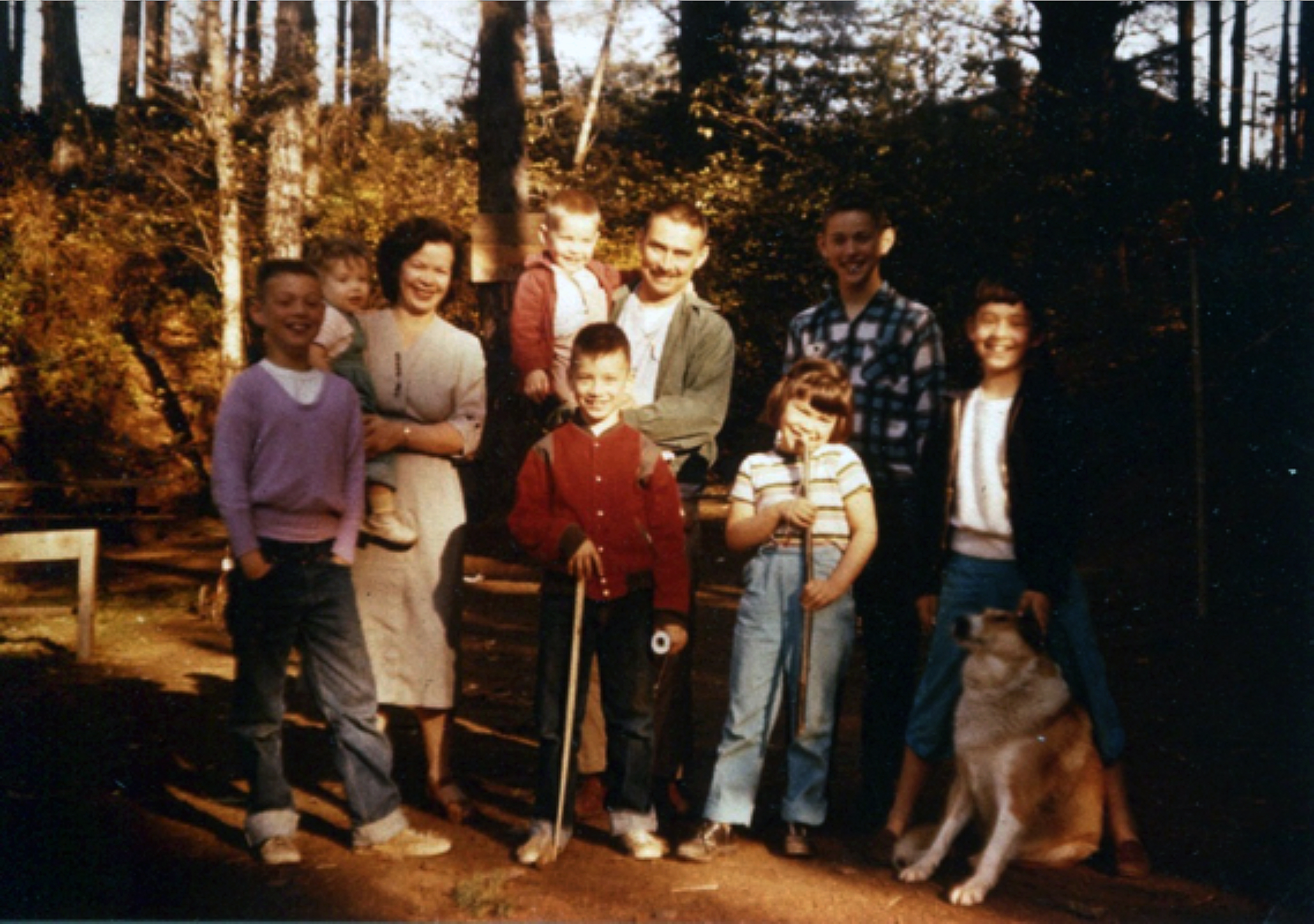
Left to right: Henry, Mom with Baby Frank, Carl (in front), Dad with Conrad, Jan (in front), Tommy (in back), and me with our dog.

Just before school starts in late August, Mom calls out to us. “Go get your berry pails; we are going to pick blackberries, so I can make jelly.” Mom’s blackberry jelly is legendary.

Mom pulls a long plank out of the garage and tells the older boys to bring it. The youngest is in a baby buggy. The rest of us go behind her single file along the county road to her secret place. She holds the plank up on its end next to the black berry patch and lets the plank fall into the middle of the patch. She steps up on the plank jumping up and down as she walks along to the end.   “Okay, come on carefully and line up on the plank.” We take turns standing guard over the baby and walking out on the plank. We feel like pirates. It’s scary out on the plank, but thoughts of Mom’s jelly turn our minds to filling our pails.

“Everybody off.” Slowly we back off the plank. Mom pulls the plank out. We move further along the patch. She repeats the process. With our pails full we head home. That night she surprises us with blackberry cobbler for dessert. “But, Mom, will there still be enough berries for your jelly?” She smiles.

Several days later we kids are walking along the county road to visit Dad. He is working at the boat shop a mile from our house. There are large puddles alongside of the road with pollywogs just beginning to form their hind legs. We need to catch them, but they slip through our fingers. “Hey, somebody run home and bring our berry picking pails,” shouts my older brother. I run back to the house. We figure out how to hold the pail just so, so the water slides into the pail bringing the pollywogs with it. Our pails filled with, soon to be frogs, we run home with water sloshing against our legs. The pails are lined in a row on Dad’s workbench. We check them daily, but two days later we discover that our ducks have made a nest and laid eggs. Pollywogs forgotten, we watch the nest each day.

“What’s this mess?” We hear Dad holler out. We run to the basement. On his bench the five rusty berry pails are reeking with dead pollywogs. Wide-eyed we look at each other and race back upstairs.

© Suzy Beal

Suzy Beal, an occasional contributor to True Stories Well Told, has been writing her life story and personal essays for years. In 2016 started studying with Sheila Bender at writingitreal.com.  “She has given me the courage to begin to submit pieces for publication,” says Suzy. I’m 72 years old and live in Bend, Oregon.  I was born on the Oregon Coast in Newport.  In 1961 when I was a teenager my parents took all seven of us siblings to live in Spain on the island of Mallorca.  There my dad and brothers built a sailing boat onto which we moved and sailed the Mediterranean.  We later moved to the Caribbean and lived and sailed from St. Croix.”


Posted in Guest writer | Leave a comment

A writing prompt from “Your Life as Story” by Tristine Rainer

My Amazon order history tells me I bought Your Life as Story: Discovering the “New Autobiography” and Writing Memoir as Literature by Tristine Rainer in 2004. That makes it about the oldest book in my “write your memoir” library, and I’d say it’s the most well-thumbed, sticky-noted, annotated book in that library as well. It is one of the most complete sourcebooks for writing about a life–in a way that meets the standards of literature–that I have come across.

I remember how daunted I felt when I first read it–an experience akin to being a first grader in a one-room school, listening in on the sixth-graders’ lessons. More than half went over my head, but the less-than-half that stuck was helpful. I just kept working with an exercise or two from Rainer’s pages, then reading the book again, then working with another exercise or two, until I began to feel I understood what she was getting at and could not only apply it in my own writing, but teach it to others.

A highly useful element of Rainer’s approach is her “Nine Essential Elements of Story Structure,” which align with the narrative arc described by Jack Hart in Storycraft and the story structure recommended by Jon Franklin in Writing for Story. The nine elements will probably be familiar to anyone who has studied writing fiction. They are:

  • BEGINNING: Initiating incident, problem, desire line;
  • MIDDLE: Struggle with adversary, Interim pivotal events, precipitating event;
  • CONCLUSION:  Crisis, climax, realization.

Rainer is also excellent on portraying yourself and others. If it’s your story, you’re the protagonist, its hero no matter how flawed. The supporting characters around you fall into roles as allies, antagonists, villains. I think it was Rainer who gave a name to those complicated relationships we have with people who love us, but want for us something different than we want for ourselves: “beloved adversaries.”

I am particularly fond of Rainer’s insistence on “the telling detail,” the use of observations about an individual’s gestures and behaviors as opposed to adjectives that (whether intentionally or not) pass judgment.  “If you call a guy pretentious and uptight, it’s an open and shut case, but if you give details about him… a reader can come to that conclusion,” she writes. To identify specific gestures and behaviors to work into your writing, she offers an exercise she calls How to be… — “Make a list of gestures and indicative behaviors as if you were writing a how-to guide for the impersonation of the character you wish to describe.”

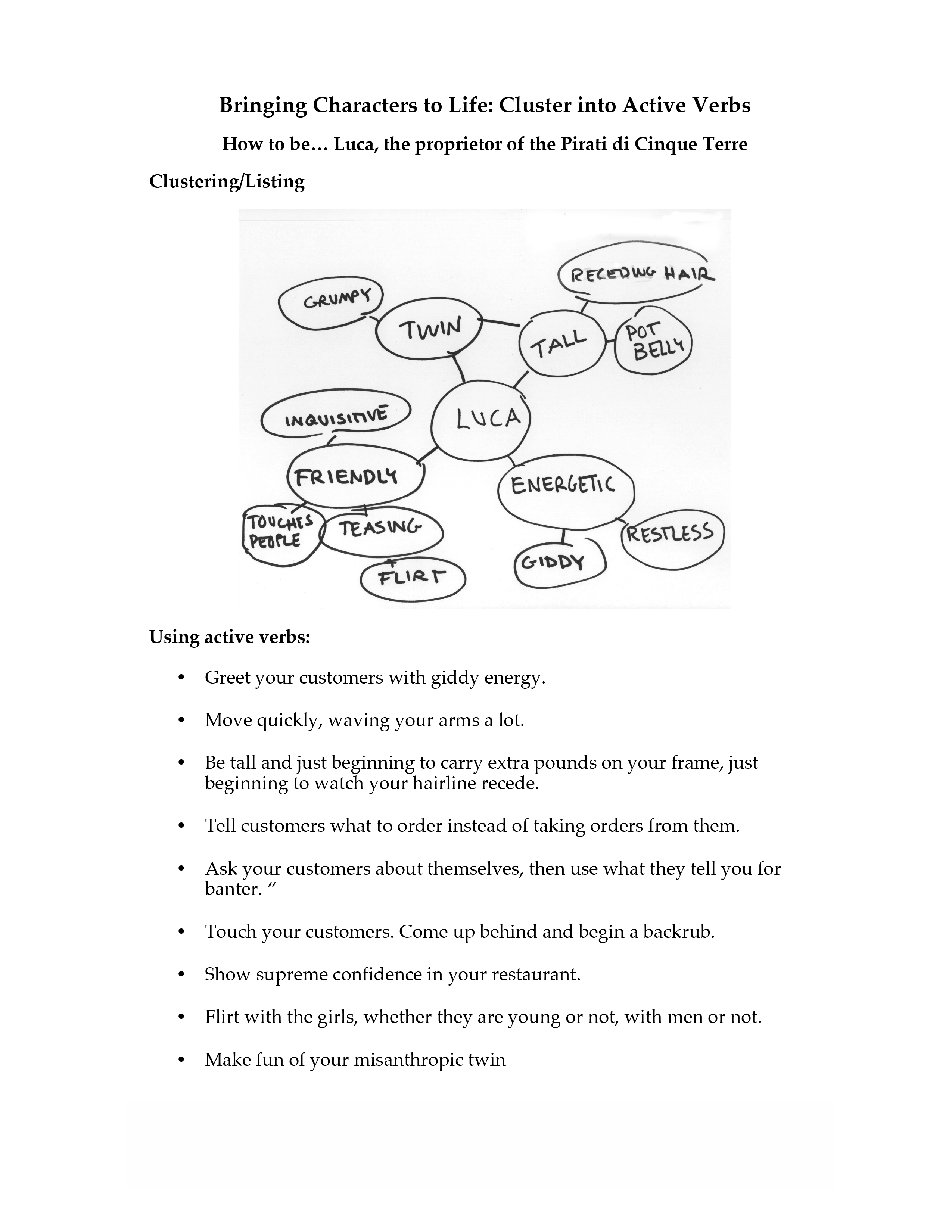
I like to combine this with the brainstorming technique of clustering (some call it mindmapping) to first get some ideas on the page, then turn them into Rainer’s “stage directions” for portraying that character. Here is an example, describing an entertaining restaurant owner I met in Vernazza, Italy.

Pick a character who will appear in your memoir and have a go at this technique–I think you’ll find it challenging but fun.

If you want to deepen your skill as a writer of memoir, autobiography, biography, creative nonfiction–even fiction!–get yourself a copy of Your Life as Story and get started on what I think you’ll find a satisfying long term relationship with Tristine Rainer’s writing advice.


Posted in Book review, Writing prompt | 1 Comment

It’s time to “Throw me somethin’, Mister!”

Mardi Gras is less than a month away, and the Carnival marching season begins even sooner. It’s time to “Throw me somethin’, Mister,” in the parlance of this amazing part of US culture. That traditional call from the crowds to the krewes is going out from True Stories Well Told this morning, and it’s not “throws” I seek, not gaudy plastic jewelry or toys, but your stories, true and well told.

That’s a writing technique called “borrowed interest” and I’m not ashamed to stoop to it to fill the digital pages of this blog. I publish writing prompts, book reviews, and stories from my own life, but my favorite content is YOUR stories.

Here are the guidelines. Now throw me somethin’, Mr.,  Ms., whoever you are! Send your stories to sarah.white@firstpersonprod.com.

Posted in Call for action | Leave a comment

Writing Challenge: Hippocampus Magazine contest, theme: “Keepsakes”

I’m committing to a personal challenge this season related to Semester 2 in the MFA-Creative Nonfiction program I’m pursuing: get some pieces published! It’s time to build what they call my author’s platform.

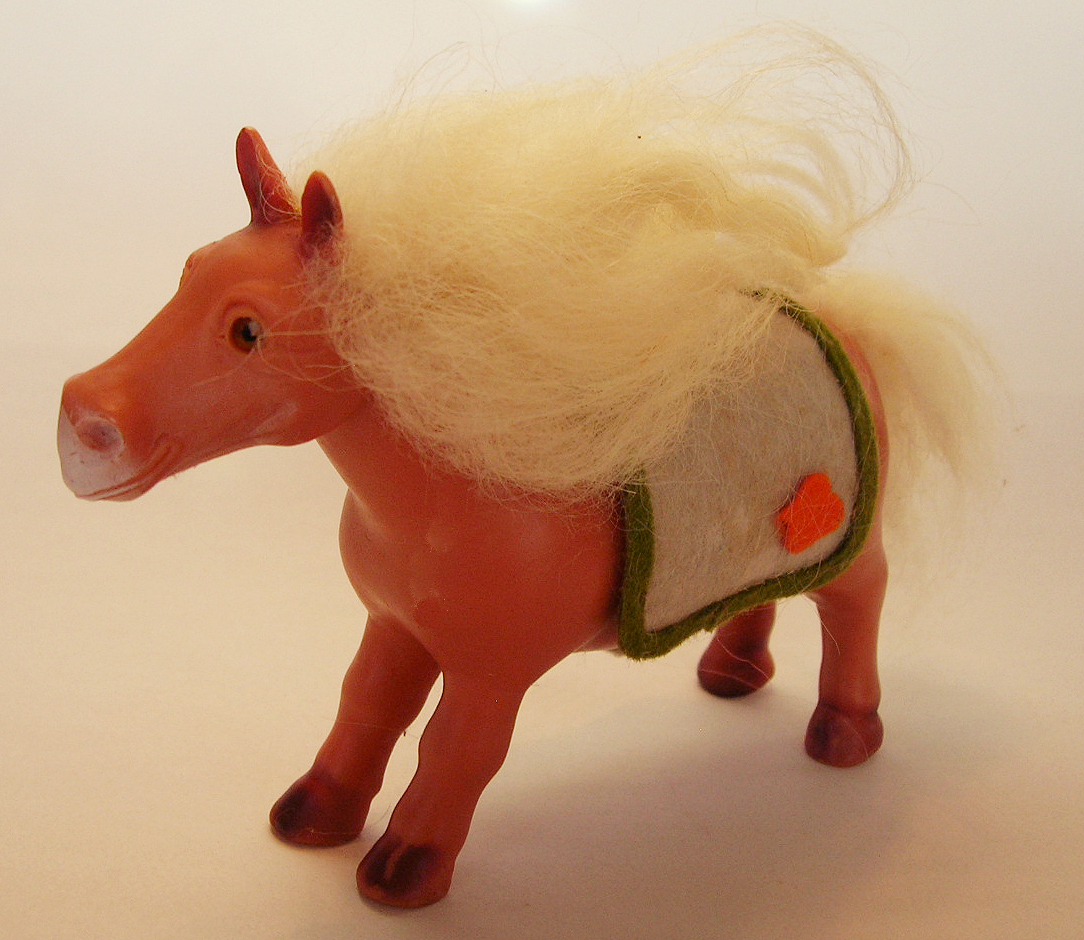
Troll pony from England, 1967

Hippocampus Magazine has a contest on the theme “Keepsakes”, deadline March 15, 2018. Now that’s right up my alley, as a memoir writer who has recently been most drawn to what’s called “object writing”–essays built around concrete images. (Here’s a post I wrote about this a few years back.) Keepsakes are just the sort of tangible objects that give rise to compelling true stories. Here’s one of mine.

Here’s the contest call:

Hippocampus Magazine is looking for submissions of up to 4,000 words for its annual theme issue; this year, it’s Keepsakes.

In a day where we look at photos online, scan in concert or play “tickets” at the door, send texts to thank someone, post happy birthday wishes to Facebook, and other intangible memories or shows of affection and appreciation, we’re starting to mourn personal keepsakes and mementos.

Share your piece of creative nonfiction (up to 4,000 words) about an item that means something to you. Maybe it lives in your attic, a shoebox, or a storage locker. Or maybe it’s displayed on a shelf or around your neck…. Maybe you no longer have it, and long to have it back. Whatever it is, wherever it is, we want to know about it, the story behind it, the meaning it brings.

Or maybe the idea of “keepsakes” has another interpretation for you – and we’d like to see those stories too, as long as the connection to the theme is clear.

We invite you to send your best creative nonfiction piece – and your best interpretation of the theme—to us for consideration for our July 2018 issue.

Please see full guidelines at our website before submitting.

Deadline: March 15, 2018.

Hippocampus Magazine is an online publication with a mission to entertain, educate and engage writers and readers of creative nonfiction (that’s us, True Stories Well Told writers!).

So let’s start writing our “Keepsakes” stories. I want to hear yours!

  • Sarah White
Posted in contests | 1 Comment

Identity

By Ruchi Kahan

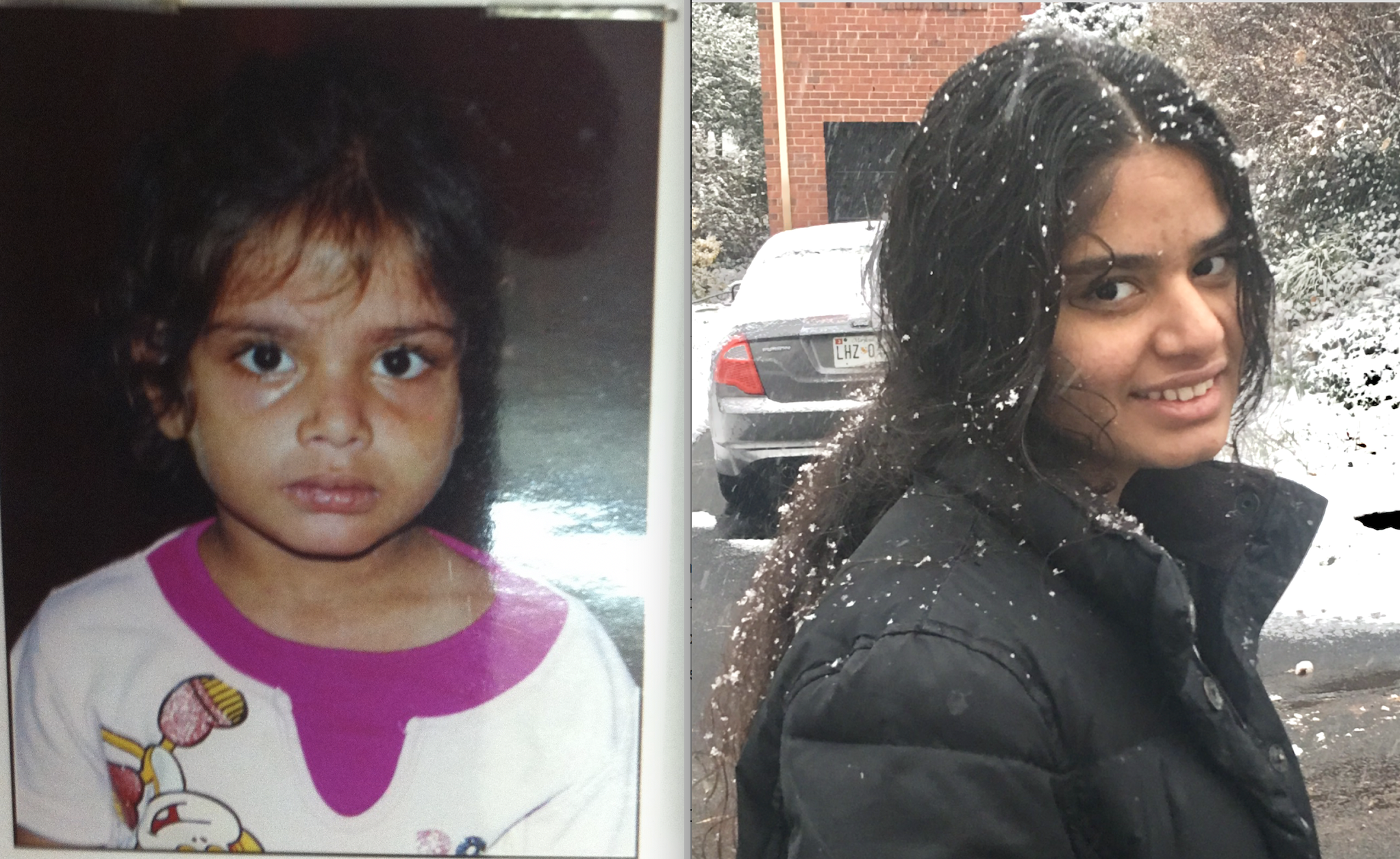
Ruchi entering the orphanage, and today

In the hardest time of my life, when I almost died, my spirituality saved me.

I lived on the streets of New Delhi, India, trying to survive alone starting when I was only four years old. I remember seeing a lot of other people who were homeless, adults shouting at their kids, and huge stacked-up piles of garbage. The cows were also in the garbage looking for food. I was looking for survival. It was an instinct, the only way I could continue.

I remember that everything tasted rotten. Food lost its deliciousness. It was like after someone ate something delicious, they threw away the corpse of their food to wither away. That’s what I was eating.

A lot of people that I saw worshiped the ground they stood on. They took the sand from their homes when they left and put it on their foreheads. I tried to learn from them. I put the sand I found on the streets on my forehead.

When I was six I got captured by the police and sent to an orphanage, the Welfare Home for Children.

I was first taken to the basement. There was a lady down there who made a report about me. The basement was really dark except for the light of her room, and that was really dim. After that, a woman came to get me, who ended up being always with me. She was part of a group of women who took care of us. We called them our Aunties.


During that time I became someone who didn’t see hope or light in my life anymore. My spirit was always strong though, and nothing could extinguish it. I would hear the auntie/caretaker tell tales about gods and goddesses in Hinduism. She regaled us with stories about how God Vishnu, the preserver and protector of the universe, created the other two worlds as represented by Shiva the destroyer, and Brahma the creator of the universe.

Brahma was the god with three heads who sat on a lotus. Shiva had a snake around his neck and would stay on the snowy mountains with his goddess, Parvati, and his son, Ganesha.

The best-known tale the auntie would tell came from the Ramayan, “Vishnu had taken an incarnation as Lord Ram. Laxmi had taken on an incarnation as Sita, Ram’s wife. Lord Ram came to free the Earth from the power of the demons.”

I was so in love with all the tales that were told of Hinduism. We were taught to believe in reincarnation, which means when we die we would be reborn on this earth as someone new, forgetting our old selves. But a glimpse of our old selves will show in our new selves.

When I heard those tales and felt so proud of my culture, my spirit blazed bigger and farther inside me. A glimmer of hope came back.


There would be special holidays to worship the gods and goddess such as Holi, the festival of colors, and Diwali, the festival of lights. Diwali is still my favorite holiday because the houses and streets would be would be lit like a Christmas tree. There would also be presents and fireworks!

Even though I lived in an orphanage some of us were chosen to participate in the festivities. They would pick names randomly out of a box. But first, they took out the names of the kids who were doing badly at the orphanage, either doing bad things or not doing well in school. If you did bad, you could not be chosen to leave and celebrate the holiday.

I got chosen once and I loved it. A lot of kids kept telling me the trip was an opportunity to run away and leave the orphanage. But I didn’t try because I had a hard life on the streets and I could have easily gotten an illness on the street. At least here I had a shelter, a place to live for the time being, a place where I was cared for so I could carry on. I was choosing between horrible and the brink of horrible.


Time after time I would get recurring visions of gods and goddesses inspiring me to be a good person and put everything into whatever I’ve committed to. God Vishnu also gives me the knowledge to see gods or goddesses in every person. Hinduism has a special greeting called “namaste,” which means “the divine in me bows to the divine in you.” All the holidays for the gods and goddesses make me proud and devoted to my culture and religion.

One lesson I learned from Hinduism is this: When anyone you love dies and you pray to your gods to not let them leave this world, don’t blame them if your loved ones go away. Just remember, even though they left their bodies, their spirits will always be lingering around you. They will watch over you from wherever they are. They will be born again to meet up with you in their next life, for you will never be separated from them.

After two years I was taken from the orphanage to a new home in America. I am now becoming someone who believes in the very essence of life. Because of this experience, I became devoted to my culture and life.

© 2018 Ruchi Kahan

Ruchi is a student in the Washington, DC, area. This essay began as a class assignment on Identity. Ruchi wants to become a veterinarian. She loves all kinds of animals, especially horses, wolves, cats, and dogs. This year she plans to visit India with her American family.


Posted in Guest writer | 3 Comments

Watching Mildred

By Suzy Beal

“Give it back to me! I won’t burn myself, I know how to do it.”

“Mildred, let me do this for you.

“No, give it to me, NOW”

Her gnarled fingers are gripping the curling iron so tightly I can’t get back control of it, short of prying off her fingers.

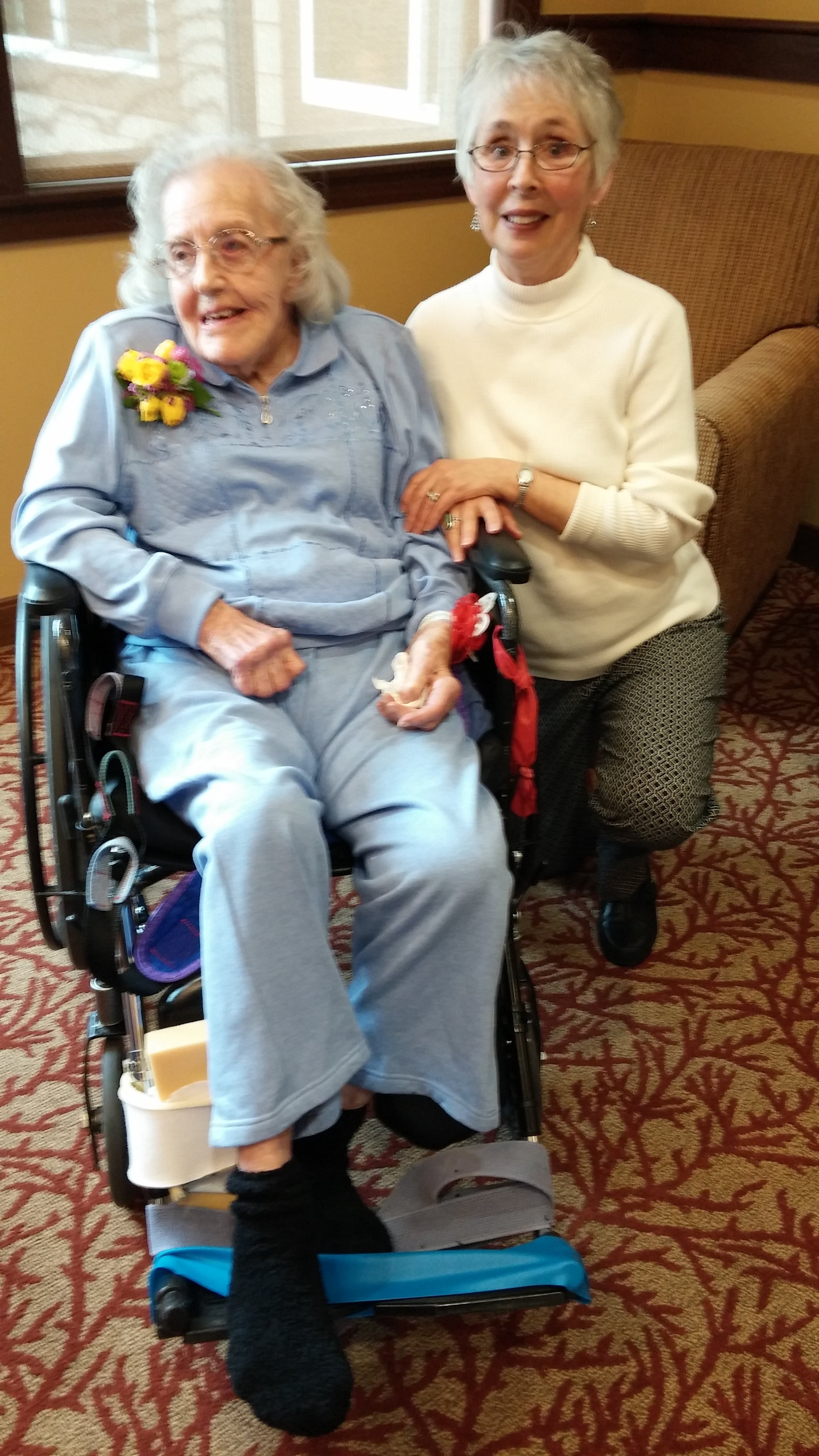
“OK, I will give it back to you so you can do the front, but you must let me to the back.” We reach a compromise, but she refuses to give it back to me even though she is finished curling her front bangs and sides. Her jaw is set, her eyes challenging me. I see in them the new bride in 1942 standing on the docks in New York City waving good-bye to her husband as he goes off to war in Europe.

The phone rings and I pick it up. “Mildred, your son is on the phone.” She has to let go of the curling iron if she wants to take the phone. Indecision races across her face – she will lose control of one more thing if she gives up the curling iron, but she wants to hear her son’s voice. Her eyes tighten and she squints at me and I see the young pregnant mother leaving with three small children her family and friends to cross the country by train to join her husband as they begin a new life together on the Oregon coast. She chooses the phone. I unplug the curling iron and put it out of sight. I feel like a traitor.

At seventy-one, am I watching my future unfolding? Mildred is a friend I have been visiting every week for two years at her assisted-care facility.   This past week she was moved from her assisted-living home to a transitional care facility because she appears to have lost the use of her left leg. Since I’m not family, I’ve not been given the details of her diagnosis. However, I can tell she is unhappy to be here and she is taking out her anger on me today. Only two weeks ago we were stringing beads and making necklaces in her “home.” Now she has lost so much, she is struggling.

Our battle is over for now, but I feel as though there is so much more at stake here. I can see her standing on the bluff over- looking the Pacific Ocean for the first time, terrified of it and the sound it makes. At ninety-seven she can curl her own hair, after all she raised five children helping each one reach a successful and meaningful life. Each day she loses something important to her. She has a smile, when she uses it, that melts the heart, but if she feels that she is being crossed or talked down to, the smile disappears and she clinches her teeth tightly together and just like her gnarled fingers holding onto the curling iron, there is no opening her up, unless I hand her a chocolate.

She is so much more than this old lady tied to her wheelchair. She has the right to be angry, unhappy and sad that her current situation prohibits her from any choices. Her choices have been taken away along with her freedom, but most days she has a smile for me when I show up and when she clutches my hand I know that that strength comes from her heart.

© Suzy Beal

Suzy Beal has been writing her life story and personal essays for years, but in 2016 started studying with Sheila Bender at writingitreal.com.  “She has given me the courage to begin to submit pieces for publication,” says Suzy. I’m 72 years old and live in Bend, Oregon.  I was born on the Oregon Coast in Newport.  In 1961 when I was a teenager my parents took all seven of us siblings to live in Spain on the island of Mallorca.  There my dad and brothers built a sailing boat onto which we moved and sailed the Mediterranean.  We later moved to the Caribbean and lived and sailed from St. Croix.”

Posted in Guest writer | 2 Comments

Got “snapshot” memories? Try writing Flash Memoir.

Memories are frequently more like snapshots than movies. So why not apply the techniques of flash fiction to our own life stories? “Going small” allows us to focus on the moments in which life is truly lived, absorbing lessons that would be hard to find in a larger narrative sweep. 

In flash memoir–stories under 1000 or even under 500 words–we challenge ourselves to develop a story concisely, concretely, with crisp precision. Accepting the challenge of creative nonfiction, we work within the boundaries of emotional and factual truth. Short, sharp, and true–No other rules apply.

I mention this because I have a “write-in” workshop on Flash Memoir coming up in Madison. In my “write-ins,” unlike my other workshops, we dedicate part of our in-class time to writing, and place fewer expectations on ourselves to write between class sessions. This feels like an ideal approach for working on short “Flash Memoir” pieces. I can’t say for sure–this is the first time I’ve tried it.

Want to be part of the experience? Check it out, if you’re in Madison.

  • When: Thursdays, four sessions, Feb 15 through March 8, 4-5:30 pm
  • Where: Pinney Library, 204 Cottage Grove Rd., Madison
  • Fee: Free.
  • To register: follow this link or call 224-7100.

And if you’re not in Madison? I’ve offered this class online before, and I could again. Let me know if you’d be interested in an online “write-in” experience.

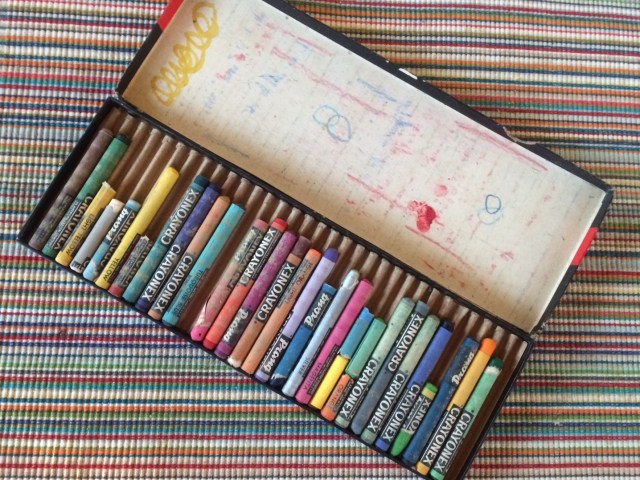
What does this image have to do with “Flash Memoir”? This brevity-focused genre lends itself to object writing–the technique of focusing an essay on a concrete object. (What’s a concrete object? “Something you can drop on your foot,” it was explained to me.) If you want your reader to hold in mind the same image, idea, or emotion that you are having, don’t send abstract words to do the job. Send a specific, memorable, visualize-able object. Then tell a story about it.
The artifacts we gathered through life make great prompts for object writing. This is a box of crayons I have owned since I was 7 years old. I had a dream last night about rediscovering a trove of art supplies and a free day to play with them. This is what I imagine retirement might be like–rediscovering our own treasures and talents from before “the cult of adulthood” intervened, and finally having time to pick up creative ventures again.

When “Flash Memoir” starts at the Pinney Library on February 15, I think I’ll go looking for memories related to these crayons.

As we say goodbye to 2017, I suggest you explore Flash Memoir in 2018! Let’s see your stories here on True Stories Well Told. Submissions welcome–see guidelines here.

  • Sarah White
Posted in Writing prompt, writing workshop | Tagged , | 9 Comments

My Last Car

Dorothy Ross, whose writing has appeared on True Stories Well Told before, sent me this story to accompany her recent essay, “My First Car.”

In 1987 my husband found a new-used Mercedes diesel station wagon for sale and convinced me that it would be a good car for me to drive on the California freeways—safe and solid. I had buyer’s remorse almost immediately. I didn’t like searching for stations that sold diesel—they were mostly truck stops—and I hated pumping that smelly, oily fuel. And then there was the noisy chug-chug of the diesel engine that made me feel like I was driving a truck.

I just didn’t see myself as a Mercedes type of driver. Too showy and too foreign. In the lace curtain Irish neighborhood in the Bronx where I grew up, folks drove Detroit cars like Ford and Chevy, not high-end German autobahn vehicles. If I showed up behind the wheel of a Mercedes-Benz, they’d laugh me off the block.

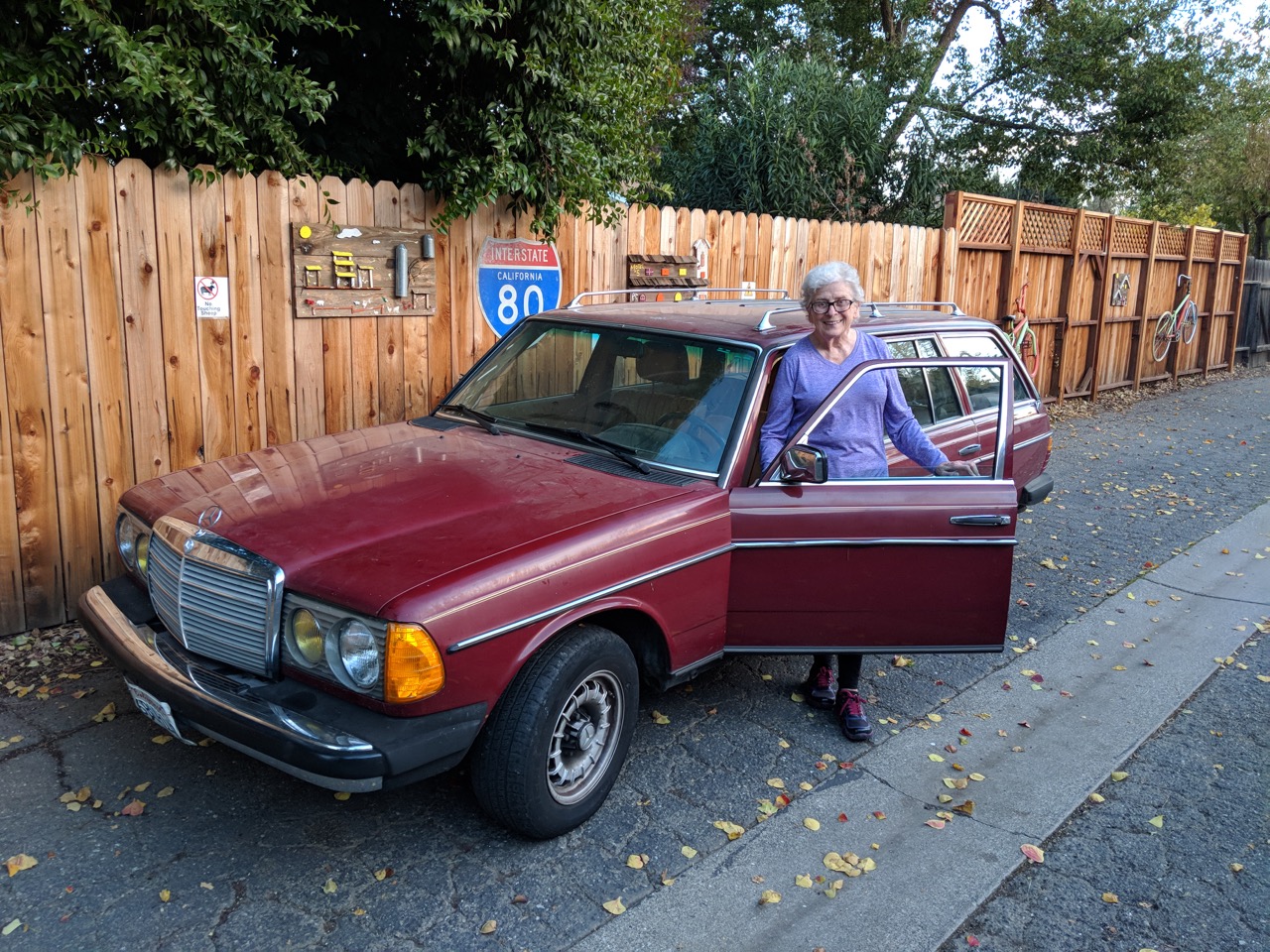
But the wagon was bought and paid for so I drove it—for more than thirty years and over 300,000 miles. Because we’ve lived in the same town all those years, I’ve come to be associated with my car. When my friends see the old burgundy Benz in the parking lot at the library, they know they’ll find me in the stacks.

I can’t say when I learned to love my unique and reliable wagon, but I did. And it turned out Bill was right. When I drove around Northern California in my red wagon, I felt like I was riding in a tank—safe and secure. I drove it up to Seattle to visit a friend, and down to Tucson to see my cousin. Somewhere along the way I started calling my car Betsy. Bill and I often return to the car and find notes on the windshield from people offering to buy the classic wagon.

When our granddaughter turned sixteen, we gave her the Benz because we wanted her to drive an armored car on the highways with the big trucks and SUVs whizzing by. Elly thanked us without any real enthusiasm. She hated the bulbous wagon as much as I had when it was new to me. And I wasn’t too happy with the fancy car we bought to replace it. So her parents let her choose her own car, and I got Betsy back in my garage.

We still own the car, and though I no longer drive due to health concerns, I’ve been having a hard time parting with the old girl. But guess what? Elly has had a change of heart regarding the red wagon. Ten years after turning it down as a teenager, she and her husband would like to have the Mercedes for running around town and taking their dog to the beach. I’m happy to report that we’ll be keeping Betsy in the family.

© 2017 Dorothy Ross

Dorothy is a native New Yorker who worked on Madison Avenue before moving west in 1961. On the Davis campus of the University of California she served as an editor and program director. Diagnosed with Parkinson’s disease in 2007, she often writes about the challenges of living with that condition.

Posted in Guest writer | Leave a comment

Ariel Levy: “The Rules Do Not Apply”

Once in a blue moon the stars align to allow me to read a book practically uninterrupted from first page to last. Usually it requires a long airplane flight to grant me that bubble of space/time I can disappear into, like (I Dream of) Jeannie into her bottle, and nestle there with nothing but a book.

For some reason last weekend was a quiet one. I spent it with Ariel Levy, coming along on her quest to “have it all” in her 2017 memoir, The Rules Do Not Apply, starting Saturday evening after picking it up at the library and ending Monday morning over coffee in bed.

Ariel Levy’s memoir centers on the struggle between her career and personal ambitions that culminated in giving premature birth in a Mongolian hotel room at Thanksgiving, 2012. The baby lived only a few hours.  In the aftermath of that tragedy, Ariel saw the rest of her life come apart like fragments of that Jeannie’s bottle, shattered.

One paragraph sums up the clockwork that puts this tragedy in motion:

I wanted what we all want: everything. We want a mate who feels like family and a lover who is exotic, surprising. We want to be youthful adventurers and middle-aged mothers. We want intimacy and autonomy, safety and stimulation, reassurance and novelty, coziness and thrills. But we can’t have it all.

Levy’s memoir of a white, privileged, feminist 30-something woman’s experience follows normal desires through the looking glass into gay and trans relationships where normalcy is, perhaps, even more sweet, and into professional newsrooms where, for an ambitious young woman, recognition and advancement is also addictively sweet.

Levy is a journalist and her writing has both the strengths and weaknesses of that trade-turned-profession. She writes with clarity and confidence, and turns an unsparing eye on herself as well as others. She does what I’ve always hated about journalism since my days in J101 at Indiana University: sticks the microphone in the tragic victim’s face and asks “how does it feel?” Even when that face is hers.

And yet. In spite of herself, Levy comes across as an unreliable narrator, whose life choices made me squirm, even as she castigated herself for those choices. The unsparing eye can distort even as it regards. The last time I felt this combination of “squick” and “must keep reading” was when I read Marya Hornbacher’s Wasted: A Memoir of Anorexia and Bulimia.

Back to Ariel Levy: Two quotes sum up the push and pull of this sad, true, story. She closes her preface with this reflection: “People have been telling me since I was a little girl that I was too fervent, too forceful, too much. I thought I had harnessed the power of my own strength and greed and love in a life that could contain it. But it has exploded.” Much later, she interviews Maureen Dowd, who tells her, “Not everybody gets everything.”

Levy’s use of language is wonderful, as one might expect of a writer for the New Yorker. Better yet, she found a good structure for this book, and a delightful (IMHO, not everyone on GoodReads agrees) way to end it–not easy for a mid-life memoir. When young (ish) people write memoirs, necessarily, the book ends before the life chronicled winds down. She gives her story three endings, in which she fantasizes about what happens next, leaving you to choose and hope too.

I’ll close with this quote from “Esil” on GoodReads: “I’m not sure I would recommend this so much because of the story Levy has to tell, but more because of how she tells her story.”

Have you read The Rules Do Not Apply? What did you think?

  • Sarah White


Posted in Book review | Leave a comment