Lemonade on the Porch

For the next month or so, True Stories Well Told will feature writers I have met through First Monday, First Person, my “salon” for memoir writers held at the Pinney Branch Library in Madison.

By Sally Young
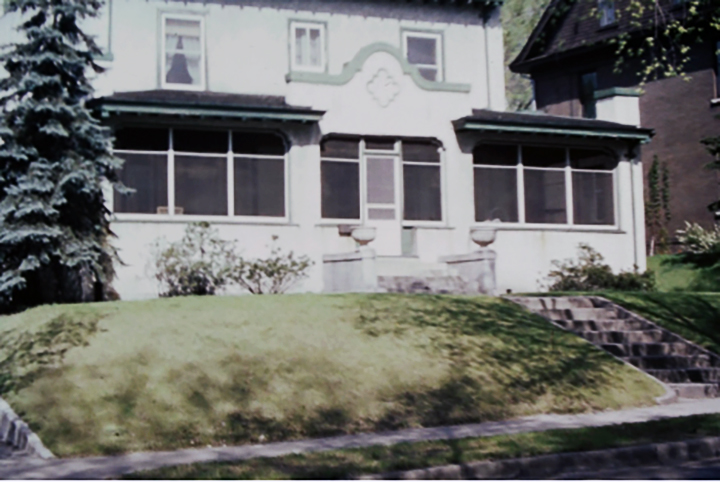
I got an email from a friend saying she spent the afternoon sitting on the porch, drinking lemonade. I wrote back saying, “Oh, that is the essence of a Midwestern summer day.” Lemonade on the porch? Hmmm, suddenly the floodgates of my memory opened.

I grew up in a turn-of-the-century home in Minneapolis. We had a huge screen porch that spanned the width of the house. It had battleship gray decking on the floor and a warm, burnished wood ceiling that looked like ship’s decking. In summer, the porch was the center of our family life. It housed two oversized white wicker rockers with dark green cushions that my mom had made, a picnic table with benches that could seat 12, a stand-alone roaster to keep from heating up the kitchen, a day bed, and a variety of house plants sitting on the wicker end tables along with our ever-present gold and white TV trays.

Best of all, the porch had two eye hooks secured in the ships-deck ceiling. These eye hooks could support any number of hanging or swinging items. When my brother and I were little there was a red rocking horse that had handles on its head and a movable joint between its head and torso. It could be straddled and pumped, much like a swing. Then as we got older, there was a trapeze where I could practice hanging upside down and my older brothers could show off doing pull ups. Later in our family’s life there was the classic oak porch swing.

In the summer, long before air conditioning, we would eat dinner on the porch every night, even though this meant carrying our food, drinks, and dishes all the way from the kitchen on the opposite side of the house. My mother, always working towards efficiency in her efforts to feed the six of us, had drafted an aluminum serving cart not unlike the dessert carts often seen in restaurants. We would load up that cart with as much stuff as it could hold, thus saving many trips of traipsing back and forth between the kitchen and the porch.

Although it was over 60 years ago, I have a clear memory of one balmy summer evening when I was alone on the porch. I was sitting in one of the wicker rocking chairs, reading a book. The night was dark and the crickets were singing. A glass of lemonade sat on the table next to me. In that moment, for some unknown reason, I became acutely aware of myself. And, perhaps for the first time, aware of myself as part of the larger world. As I think back on that moment, a picture comes to mind of me surrounded by the glow of the lamp within the enormous dark circle of night. There I was, safe, warm, and content in my little world.

I think about that time in the larger context of the world today. This was before Kennedy was shot, long before climate change, PFAS, or concealed carry. For some of us, it was a time of innocence. The existential threat of nuclear war felt more abstract than real. We did have a make-shift bomb shelter, but there were no nuclear bombs going off, so it was easy to keep that fear at arm’s-length.

I think about kids today and how their innocence about the world is lost at a young age. They have active shooter drills and climate lessons in first grade. Their active shooter drills are connected to actual events in schools just like theirs and the climate lessons are connected to very real climate events that are part of their everyday lives.

As they grow into adulthood, will they have some long-forgotten memory of a moment when they too felt safe and warm in the world? Will they be able to look back and see themselves as part of a world that is as benevolent as lemonade on the porch on a warm summer evening?

©2023 Sally Young

Sally is a perpetually-almost-retired therapist who works with adults with autism. After living in Wyoming and California, she came home to her roots in the Midwest to attend graduate school. A major part of her dissertation research entailed understanding the value of writing personal narrative. Sally spent several years in the 1980s waging a war with words. Today, she has made a truce, and is now learning how writing her own stories opens the heart.
Posted in Guest writer | 1 Comment

“I Love Wayne”

For the next month or so, True Stories Well Told will feature writers I have met through First Monday, First Person, my “salon” for memoir writers held at the Pinney Branch Library in Madison.

By Sarah White

In the spring of 1975, I was 18 and a student at Franklin College, a tiny Baptist school in central Indiana. It was Dale and Gabi from my circle of friends there who first suggested we should spend the summer in Indianapolis.

I had never seen love like that Gabi and Dale shared. They seemed to have one sole purpose–to delight each other. Whether it was reading aloud to each other from Richard Brautigan’s books, or shopping thrift stores for unusual gifts, every action said love. I proposed to my boyfriend David that we follow Dale and Gabi to Woodruff Place. With David I would mimic Dale and Gabi’s love as closely as I would mimic the life I imagined was Joni Mitchell’s.

I wanted to be Joni Mitchell. Or at least, get started on my romantic Joni Mitchell life. I needed to be with “Michael from Mountains,” who “goes where he will go to.” I wanted to live on “Sisotowbell Lane,” where “anywhere else now would seem very strange.” I was even up for a misadventure, a King in a tenement castle “who painted the pastel walls brown.” I didn’t care if I spent my summer happily in love or not. I wanted to find out what it feels like to feel.

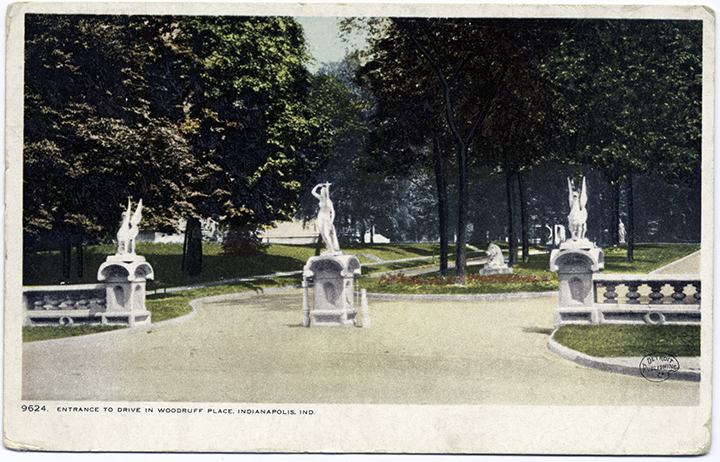
David and I found the place that would be our love nest in an old mansion. Dale and Gabi found an apartment on the first floor of a classic turn-of-the-century apartment building nearby. Woodruff Place had been home to Indianapolis’s most affluent residents in the 1870s when it was first developed. But the city grew and a century passed. By the 1970s when we moved there, it was a neighborhood of run-down mansions divided into single rooms and small apartments occupied by spaced-out hippies and drunken old men.

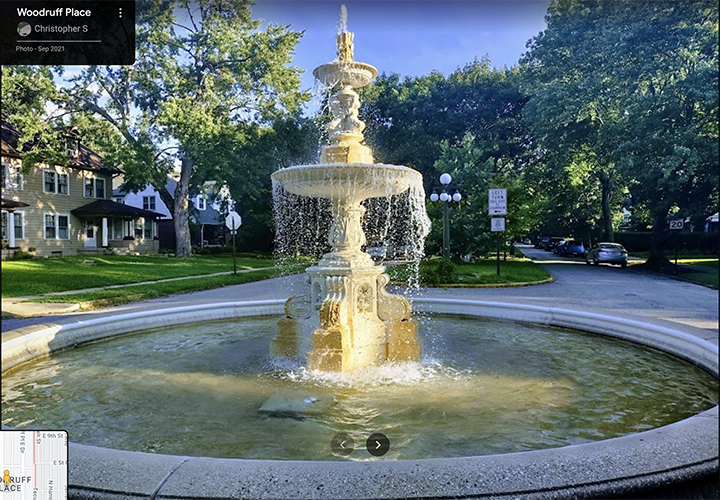
Our furnished apartment overlooked the central intersection, facing the grandest of the ornamental fountains. But the fountain was dry and the cement cracked. What should have been ornamental flowerbeds were littered and brown. The house’s halls smelled of cigarettes and unrinsed booze bottles. But our summer sublet—four rooms if you count the tiny kitchen and narrow bathroom–was elegant.

I found a job within a day, being able to type 110 words per minute at 95% accuracy. The best of the city’s temp typist positions were mine for the taking. I picked an insurance company headquarters. Gabi got a typist job too. David and Dale signed up for day labor through Manpower.

The June days scrolled by effortlessly. We went to our jobs. In the long summer evenings, we smoked pot, and when we could find it, we dropped acid. Sober, stoned, or tripping, we made music, sitting in the defunct fountains where the cement walls made for great acoustics. The Grateful Dead’s “Friend of the Devil” was our best number, with Gabi wailing the lead on the violin and me noodling accompaniment on my alto recorder. The boys strummed their guitars and sang.  I could tell myself I was just like Joni Mitchell, living in Laurel Canyon with her boyfriend and her band.

My parents invented “don’t ask, don’t tell” that summer. I don’t know what David told his parents; I only know that his father agreed to continue paying the monthly bill from his gas card. We lived in a bubble of our own making, and some of it was fine and fun. But even as the paychecks started coming in from the temp agencies, we began to realize how short on funds we were. How had I not imagined that my Joni Mitchell life would bring expenses?

The sex didn’t cost anything, so we had plenty of it. Everything else that summer was cramped by our lack of cash. We explored anything that offered free admittance. On very rare occasions, we went to a coffeehouse that had opened nearby and drank fancy drinks, trying to pretend that Indianapolis was like the college communities we’d left behind. Never bars—we couldn’t afford the drink prices and besides, the drinking age was 21, and none of us were that old.

One evening, all of us gently tripping, we crawled out onto the porch roof in the twilight to watch fireflies. Suddenly we heard wailing and screaming coming from the direction of the fountain. A car gunned its engine and squealed away. At the fountain, a young woman was throwing herself into the empty well for all the world as if she intended to drown herself. “I love Wayne!” she cried, again and again, “I love Wayne!” We scrambled back inside and hurried downstairs to rescue her.

Gabi grabbed Wayne’s girlfriend in a big hug and we coaxed her upstairs, where we put ice on her bruises and passed her a joint. Then we proceeded to hear how her love for Wayne remained strong in spite of the beating he had given her before driving her to Woodruff Place and throwing her out of his car.

We wrapped her in beams of light. We turned on her the glowing flower of our acid-washed love for all mankind. Our connection felt deep and true. When she was ready to tell us the address of a friend, the boys drove her there.

She told us she worked at a coffee shop and promised to buy us all a drink the next time we came in. A few days later, we looked her up. At first, she ignored us. Then she admitted she recognized us, and muttered an insincere thank-you. But she did not offer free drinks or an iota of warmth. In our acid-tinged beatitude, we had mistaken the girl for a new friend; now she mistook us for the enemy, a reminder of a nightmare with Wayne she was probably trying to forget.

Only years later did I realize why she didn’t welcome us. And that was only one of many markers of how emotionally clueless I still was, the summer I was 18 and living in love on Woodruff Place.


Postscript. I am still in touch with Dale. I asked him what he recalled about the night of “I Love Wayne.” Dale remembered that from the girl’s ravings, he identified Wayne as a well-known Indianapolis low-life, president of the Outlaws motorcycle gang. He realized that for our safety, the sooner we could get her away from us, the better. About the visit to the coffeehouse, he said, “She may have called it that, but it was a biker bar. She was a waitress at the Cactus Lounge.” His memory agrees with mine on the discomfort of our one visit there. All this time I’d believed the girlfriend didn’t want to see us because she’d broken up with Wayne; more likely they were lovers again and we were the persona non grata in their clubhouse.

©2023 Sarah White

Posted in Sarah's memoir | Leave a comment

The Shack: Time on the Pine 

For the next month or so, True Stories Well Told will feature writers I have met through First Monday, First Person, my “salon” for memoir writers held at the Pinney Branch Library in Madison.

By Renee Lajcak

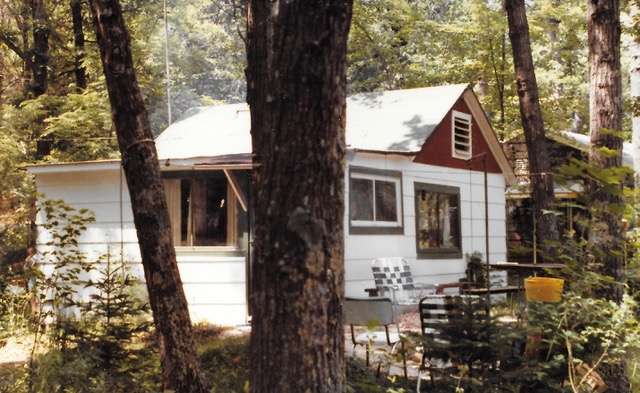
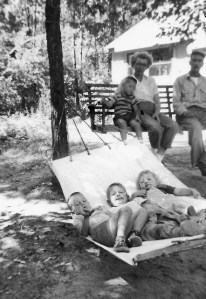
Like many Wisconsinites growing up in the 1960s, I spent weekends at our family cottage, which was known to our family and better described as “the shack”.  My WWII veteran parents had grown up in tiny immigrant cabins in the woods of far northern Wisconsin.  They treasured the parts of their childhoods spent climbing the hills, fishing and foraging.  As adults living in a city, I think they built the shack as a way to return to and pass on those childhood joys, and also to find some peace after the war.

After buying a small lot on the Pine River in central Wisconsin for 100 bucks in the early 50s, my father built the one room shack nearly all by himself.  My mother helped by holding the ends of 2x4s but was also busy taking care of two toddlers and a baby in the “brambles and thorns” as she said. In those hard times, the lumber came from a torn-down church steeple, and my parents furnished the shack with other people’s cast-offs, some even found in the local dump.     The shack later had electricity but no running water, so we brought drinking water from home.  And, of course, there was an outhouse.  We dipped buckets from the river for general washing up, but when we kids were really sticky with summer sweat and dirt, we inner tubed down the icy cold spring-fed river.  

There was a woodstove and a wooden table with a bench for the kids and a big window overlooking Pine River.  Whereas now I watch the comings and goings on the city street in front of my house, in the shack the sparkling river drew our focus with its constant human-like gurgle and babble, trout fishermen wading by, swooping birds, and even a mink sliding into the dark water.  And instead of a TV, there was a campfire nearly every night.  Hypnotized by the flames, we kids listened to family stories, off-color jokes and my mother’s songs that ranged from cowboy tunes to the Marines’ Hymn.  

The shack was full of Dad’s sense of humor.  He installed an old tube radio in the kitchen ceiling. Well, technically, the radio was in the attic and the knobs and speaker stuck down through the ceiling.  As he intended, we could reach up turn on the radio from the kitchen below.    Outside, four car tires hung way up high on several trees.  This was the result of a terrible auto accident his story went.     My father envisioned the shack as a rough and rustic sportsman’s escape with antlers and beer signs hanging on the walls, but though it hosted a few friends during hunting season, it was mostly a family escape from our hot, non-air-conditioned city house.  As our family grew, a second room was added.  Mom painted the second room PINK, much to Dad’s dismay.

The sandy land was poor for farmers, but rich for us.  We picked wild grapes and hazelnuts, searched for puffball mushrooms and wild onions, climbed up onto huge glacial granite boulders, watched meteors and caught fish. In the early days even a bear and a bobcat wandered by.  My older siblings filled jars with lightning bugs, and my father took me out in the night to wonder at phosphorescent mushrooms glowing in the dark. 

Of course, not everything was perfect.  There was poison ivy everywhere at first and plenty of mosquitoes, sometimes too much beer and teenage boredom.  And though the river still runs, the shack is long gone. But the shack served its purpose.  I think my parents gained some peace there in the woods. And their children gained things that we can’t even articulate.  I now appreciate that it was a true treasure to have my childhood framed by those weekends in the Wisconsin woods.

Great!

©2023 Renee Lajcak

Renee is a newly retired English language teacher who has taught in several Asian countries but now enjoys her woodsy backyard the best.  She loves the connections made through storytelling and teaching conversational English, but writing about memories allows her to go inward to contemplate the good, the bad and the ugly.  But mostly the good. 

Posted in Guest writer | Leave a comment

Your Story Here

Have you ever wondered how the stories get here on True Stories Well Told? It’s like this.

Some, I hear in my reminiscence writing workshops. What curriculum I’m teaching influences whether a particular workshop produces stories fit for sharing with a public of unknown readers. For example, “Start Writing Your Life Story” tends to produce a number of funny or frank short essays that are shareable–not so personal the writer wouldn’t want a family member to stumble across their words.

On the other hand “Going Deeper with Guided Autobiography” encourages writers to go into the deeper themes of their lives–gender identity, experiences and ideas about death, spirituality. The writing is marvelous, but often intended only for the writer and the compassionate, curious ears of the people in the room, holding space for each others’ stories.

Other stories come from my monthly writers’ meet-up, “First Monday, First Person,” where people–frequently “graduates” of my workshops, but not exclusively–come to share true stories, well told. (Find my Upcoming Workshops for Fall 2023 here–I’ve got both curricula on offer.)

And the rest? Many are submissions from the people who find this blog online and decide they have stories that would be a good fit. Sheila Bender, of Writing It Real, has a number of participants in her community who have passed the word along about this blog. Some of the stories you find here are theirs.

Your story is welcome here. Have a look at the submission guidelines and then, as I like to say, “Throw me somethin’, Mister!”

Posted in Call for action | Leave a comment

The Nurturing Shop

By Pat LaPointe

Mom passed away on September 11, 2008. For over a month, I sat beside her in the ICU. During the day, I cared for my father, who had dementia, evenings and overnight. I was physically, mentally, and emotionally exhausted.

My husband saw the toll the month’s responsibilities had taken on me and scheduled a relaxing trip to the Oregon coast. For the first few days, I just sat for hours staring at the water. On the third day, he finally convinced me to check out the cozy little town.

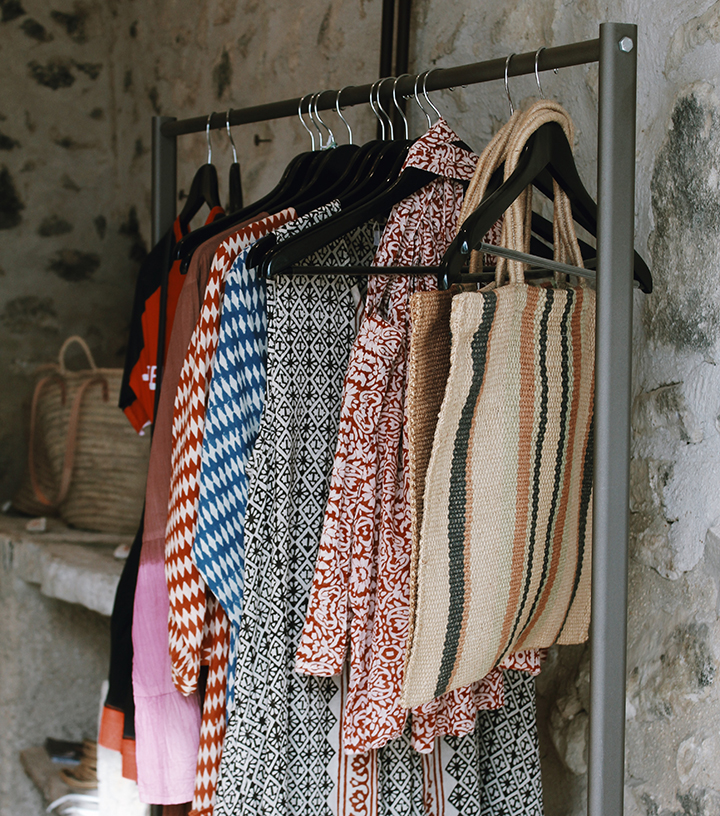
My first stop was at a boutique showcasing some attractive apparel, items I would usually not seek out.

I was greeted by two smiling middle-aged women. I think they could sense my unease. One woman came over and put her hand gently on my shoulder while the other began showing me blouses she thought would “look great on you”. The caring gestures almost brought tears to my eyes.

These women continued to bring me clothes I would never have chosen. When I said I didn’t think the items were my “type,” they responded that maybe it was time for a change.

They had struck a raw emotional nerve. Tears flowed as I told them about the stress of the last few months. As they hugged me, I also believed I needed a change.

I had been caring for others for so long but without much support. The comfort these women gave me felt like the nurturing a mother would bestow on her child. It was the beginning of my focus on my own needs, a time for a change.

©  2023 Patricia LaPointe

Pat LaPointe, creator of Share Your Voice, an online interactive community for all women. She is editor of the anthology; The Woman I’ve Become: 37 Women Share Their Journeys from Toxic Relationships to Self-Empowerment. In addition, she has conducted writing workshops for women — both online and onsite. Pat’s essays and short stories have been published widely in anthologies, literary journals and on Medium.com @patromitolapointe. Currently, Pat is completing her first novel.


Posted in Guest writer | 1 Comment

No Thank You

By Fay McClurg

Fay is in a small writing group that has been choosing prompts from Natalie Goldberg’s “Writing Down the Bones” card deck. This post is her response to the prompt, “No Thank You.”

No thank you to the young woman who came to the door. She came in the late afternoon,
clipboard in hand. Cheeks flushed from the heat of the day, she was wearing her name tag from Planned Parenthood. She was earnest and sincere. She reminded me that the Dobbs decision was handed down by the Supreme Court just one year ago, overturning Roe V. Wade and wiping out women’s constitutional right to abortion. Planned Parenthood is in the vanguard to protect women’s right to health care. We agreed: Yes, it is great that the Wisconsin Supreme Court has a new, but narrow liberal majority, but we clearly need more protection. I told her that I knew the issues and let her know I was on her side. Could I provide financial support to Planned Parenthood on a monthly basis, she asked? I thanked her for her good work, but I said ‘no’ to her request. I uttered something about family changes that made it hard for me to make new financial commitments.

No thank you.

Would it have been so hard to make this financial commitment? The young woman at my door seemed guileless. I believe in the cause, I trust Planned Parenthood. The financial commitment that was being asked of me was minimal.

I’d like to believe that my refusal to commit to her plea was based on my stubborn refusal to give money to anyone who comes to my door to ask for it. But maybe I said no thank you for other reasons?

Maybe I said no thank you because the issue does not have the urgency for me, personally, that it once did? I’m past my child bearing years. I’ve had access to excellent healthcare throughout my life and I’ve been able to take it for granted. Of course I want my daughter and granddaughter and all women – in the US and around the world – to have agency over their own bodies and be able to get the health care they need.

But would my dollars make a difference?

What about other pressing issues? Free and fair elections? Climate change? Food security, affordable housing and child care for families? What about education and literacy? I can’t forget about the songbirds and the feral cats. What about the local food pantry and the back to school drive to get backpacks to kids? What about research to vanquish neuro-degenerative diseases? And the arts – that bring us so much joy? The arts that help us understand the human condition and have the power to create community? Should I do more to help my young adult children? Save for my granddaughter’s future?

I’m overwhelmed. So I just say, as kindly as I can: No thank you.

© 2023 Fay McClurg

Fay’s writing has consisted of heartfelt letters to friends and family, journals, eulogies of loved ones, and essays in high school English class. A year ago she happily discovered Guided Autobiography as a way to capture some of her life stories. Fay is a social worker in Madison, Wisconsin, where she raised her family.

Posted in Guest writer | Leave a comment

Charlie

By Gloria Sinibaldi

 I called him Charlie although I didn’t know his real name. He had poor posture and an unruly beard, an older gentlemen, with tangled hair that grew over his ears and down the back of his neck.  The bulky coat he wore, protected him against the cold morning mist, and it also bogged down his frail body as did the backpack he had slung over his shoulders. Charlie boarded the Sacramento Street bus each morning at 6:30am sharp, along with the rest of us commuters. He was never late or absent.  Charlie was reliable that way. He didn’t speak to us, nor did we speak to him.  But we knew he was a talker for sure. He carried on spirited conversations with his invisible friend who never left his side.  As we headed up hill, he would be shouting at her. “I told you not to go there!” “Why didn’t you give it back?” His conversations were disjointed, each morning a new argument, more angst and frustration. Not many of his words made sense, especially since we heard only his side of the exchange, but on occasion we could make something out. “Next time you should listen to me! “Don’t interrupt me!”  On and on the disputes went, Charlie’s voice reaching high volumes in the quiet hours of the morning as the bus rattled along.  The louder Charlie got, the more subdued we became, shrinking into our seats, pretending Charlie was invisible too.  

The damp streets were dark during winter months and the bus was dimly lit with only flashing neon signs from shops and businesses illuminating the sky in spurts.  The sun had not yet crested the San Francisco hills and thick fog blanketed the city creating a surreal feeling.  We were a captive audience and as the bus jostled and jerked its way up the hill we listened to Charlie and learned about his life. He was from Chicago and didn’t like San Francisco much. He came here because of her and was angry. “It’s crazy here, not home” he’d say. The blank spaces of the conversations were filled in by our imaginations. I tried to piece together clues as I listened.  Charlie’s mood swings would take him from angry to woeful in a quick minute. He never laughed but sometimes Charlie would cry. It was sad to see him so broken. Occasionally, he would sleep using his backpack for a pillow. Those were the good days, when his invisible friend would let him rest.    We knew Charlie was homeless but indifference kept us at a distance.  He never asked for anything. Not once.  He just went about his business, trying to settle the score in this challenging, invisible relationship. Every morning, a new argument erupted.  It was exhausting for Charlie and for us too.

 Polk Street was Charlie’s stop. He’d drag his body out of his seat, step down to the sidewalk and disappear into the day with his invisible friend tagging along.  With the two of them gone, quiet settled in the space around us. You could hear a collective sigh of relief as the doors slammed shut, rambling further up the hill to where I got off, at Van Ness.  During the short jaunt, from Polk to Van Ness and on the walk to my office, I’d think about Charlie. What was he like when he lived in Chicago? I pictured him wearing a suit, sitting in a tall office building, shuffling papers. No, maybe he was a fry cook, working in a busy restaurant, in a steamy hot kitchen.  Then I’d picture him with a family and kids, maybe a dog? Why did he leave Chicago?  Who was his friend? And how did Charlie end up on the Sacramento Street bus? Maybe the next day would provide more clues. I knew I’d see him again. There he would be, waiting to take the trek up Sacramento Street in the drafty, dimly lit bus, at 6:30 am sharp. Charlie was reliable that way.

Since leaving my job in the city I never saw Charlie again. But after years of riding with him on the bus he still comes to my mind on occasion.  “Is there a little bit of Charlie in all of us?” I wonder.  Charlie was a man fighting a battle. Trying to resolve the trials and tribulations of his life and to manage the voices in his head that told him he wasn’t enough.  Like us, he was doing the best he could in a world that could be complicated and cruel.   I hope Charlie found peace with his invisible friend.

© 2023 Gloria Sinibaldi

Gloria Sinibaldi lives in South Lake Tahoe with her husband Ralph and Goldendoodle, Sissy. She is a retired employment program manager who writes as a form of expression and therapy. Her story, “A Means to Survive” was published in the short story collection, “Tahoe Blues, Short Lit on Life at the Lake”.  “Lone Wolf”, a poem, appeared in Perspectives Magazine.  She’s contributed to Writing it Real Anthologies and Story Circle. As a columnist for the Tahoe Daily Tribune, Gloria has written numerous business-related articles and book reviews. Walking in nature, landscape photography, and time spent with her eight grandchildren brings her much joy.  

Posted in Guest writer | 2 Comments

“Excerpts from My Diary”

By Lois Lawler

One of the themes presented in Guided Autobiography is “Gender and Sexuality”. One version of the prompting questions for this theme begins with this observation: “Our ideas about what it means to be a woman or a man evolve and come from many sources, such as family members, friends, reading, and our experiences in life. The history of our sexual development, including our identities as boys or girls, men, or women, is an important aspect of our personal histories.”

Lois Lawler, a participant in my “Going Deeper with Guided Autobiography” class for Story Circle Network, wrote the following semi-fictionalized autobiographical essay. She chose the hermit crab style, in which a writer adopts an existing form to contain their writing. These forms can be a number of things including emails, recipes, to do lists, and field guides. Lois chose the diary format.

Lois, 3rd grade, 1946

“Excerpts from My Diary”

Tuesday May 4, 1943 (First grade)On the way home from school today, Douglas didn’t like something I said—I can’t remember what made him so mad at me. Liz, the oldest one in our group, a third grader, said that she could do something—I forget what—but she said it was as easy as apple pie. Douglas said “I bet you can’t even make an apple pie.” I stuck up for Liz and Doug said, “I could punch you right in the mouth.” I really thought he was joking because I could not imagine someone hitting me. I replied, “You wouldn’t dare.” He said “I would too.” I said, “I dare you!” and he did. I fell to the ground with a bloody nose, and the other kids carried me home. The kids told Mom what happened—she was upset and told Dad.
Wednesday May 5, 1943Today Dad went up to the school and talked to my teacher, Mrs. Lewis. When he came home, he told Mom and me that the teacher would not discipline Douglas because “little girls should learn how to defend themselves.” Dad said he did not think that little boys should go around punching little girls, and Mom agreed. Dad said, “If he were in a Catholic school, he wouldn’t get away with that sort of thing.” Dad explained to me the difference between Catholic and public schools and asked me if I was interested in changing schools. I told him I was because I remember Sister Angela from nursery school when I was three… I really like her.
March 7, 1944 (Second grade)Walking home from Catholic school today some boys ahead of me were fighting. I don’t like it, but the boys seem to enjoy it. I saw boys calling other boys who didn’t want to fight “sissies.” I am so glad that I am a girl because I hate fighting and I’m really scared of getting hurt. And I hate sports—I’m always chosen last. How awful if I had been born a boy… everyone would call me a sissy! I really like being a girl.
July 26, 1945 (Third grade)Fran and Jim and I spent today at the art museum. In the basement we attended the art workshop for children. I finger-painted, and Fran and Jim drew beautiful pictures with crayons—they were so good the teacher posted them on the bulletin board. They are brothers. I wonder if art runs in their family. I’m so glad we are all in the same grade. In the afternoon the three of us went up to the main floor. We spent time looking at large statues of naked people. The men all had a fig leaf over their private parts, but the women had nothing. It’s unfair. On the way home I said so, but Fran and Jim said girls don’t need a fig leaf because they don’t have anything. I told them that’s not true. I’m still angry at them, and I think the woman sitting in a parked car at the curb heard them, too. I’m so embarrassed. Fran and Jim said that she didn’t hear anything. I think she did—the car window was open.
August 7, 1947 (Fifth grade)I spent most of the day playing with Fran and Jim. I told Mom that I really enjoyed playing with boys. She looked out the window at Fran and Jim who were going back to their house and said, “They’re not real boys.” I felt angry and said, “They are too!” She just shook her head and smiled. I don’t know why she said that.
March 14, 1977Flying to Denver from Alamosa, CO today I was seated next to a somewhat intoxicated truck driver. Today was windy, the plane was small, and the mountain peaks seemed dangerously close to the underside of the plane as we bounced over the Rockies. The truck  driver shared his life story and then proposed to me. I thought about it and then declined, telling him that I was a Catholic nun. He looked at me knowingly, nodding his head up and down, and said, “That’s a nun—ain’t had none, don’t want none.” While the first three words were true, I could have set him straight on the last three but decided to leave well enough alone. I suppressed my amusement, but I was also really airsick. I was afraid that just the movement forward to get the paper bag in the pocket in front of me would cause me to throw up, so I asked him to give me the bag. He handed over the bag saying, “Oh, I’m sorry I made you sick with my proposing and everything.” Well, at least I’ve been proposed to!
July 21, 1987Today I attended a meeting of Sanctuary advocates in Denver. I am angry at the way the men monopolized the meeting and put down suggestions of women. This was after a woman had suggested that we go around the circle of about 30 people so each person could respond to the topic under discussion The men vociferously opposed this idea, and then barely gave women a chance to jump in. I started recording in my notes who talked and how many seconds. While the group was 1/3 male and 2/3 female, men used 2/3 of the time speaking and women only 1/3. I made a suggestion regarding our refugee topic, and one man strongly opposed it. Another woman spoke up in my defense, and after that, every time she attempted speak she was cut off by one of the men. Gender differences are far more than anatomical, and I am angry.
July 15, 2003Today I visited Fran at his home. I met his wife and two daughters and admired his artwork. He invited me to a small room for a Japanese tea ceremony where we could talk confidentially, and he told me about his close friend George. I can tell this friendship is more than just two guys “palling around.”
Nov.1, 2005Fran called today, very upset. His wife has divorced him, and he is inconsolable.
February 10, 2007Fran called to say that he realizes he is gay. He has found another close friend and the two of them go everywhere together. He says that they are the envy of the local gay community. I remember Mom’s smile.
Posted in Guest writer | Leave a comment

A Box of Chocolates

By Jan Wheaton

From left: Jan’s maternal grandmother Mary Frances Parkinson, Jan’s paternal grandmother Mattie Cook.

Following my Monday writing class each week, I process and visualize ideas until my subject begins to take shape.

There I was Thursday morning, moving around a bit while waiting at the eye doctor for my husband. Passing a mirror, my subject appears for this week’s theme on family. My grandma Matilda (Mattie). In the photo, seated on the right, next to my maternal grandmother. To give the listener more of a history of Grandma’s surname and birthplace, I would have to dig deep into a Tupperware that proves far too difficult for me to get at.

What I can tell you is Mattie Winsor was born in Iowa in 1887 and married Thomas Cook, four years her senior. Mattie and Thomas eventually settled in Muscoda, Wisconsin, and had six children. Their youngest daughter Barbara was killed in a tragic accident when she was only six years old. My father Darrell, next youngest, was 12.

In the early 1940s, my father and mother met in Richland Center, Wisconsin, and in 1944 they married and moved to the big city of Madison to pursue a dream.

Five years later, Grandpa Thomas died of a heart condition at the age of 66. My grandma was 62 at the time and needed a place to call home. I came along in 1953 and within the following two years, Grandma Mattie came to live with our family–Mom, Dad, my older sister, and me.

Mattie was part of our family for the next 13 years. Mom and Dad were working all the time by now, owning their own restaurant. Grandma was always there, a constant presence, yet most of the time saying very little. Grandma rarely smiled. Never discussed feelings. And warm and fuzzy would not be words to describe her. She was quiet, but her presence in my formative years gave me a sense of security.

The picture tells a pretty good story. Grandma Mattie was small in stature, slightly humped over, teeny tiny around the middle. Grandma ate like a bird, weighing in at 100 pounds on a good day. She was pale, always cold, wore a housedress and glasses, and her hair appeared unattended to. It didn’t matter. She was always present. Grandma loved to tend her Sophia-colored rose bushes along the south wall of our cozy Cape Cod home. Not much of a cook in the kitchen, my fond memory was riding the city bus with Grandma heading downtown for lunch and a fashion show at Manchester’s. After lunch we would ride the concierge-managed elevator up and down, browsing the different departments. Now and then, Grandma had a little extra money in her pocketbook to buy me something.

Mattie was very strict about one thing in her life. You didn’t mess with her chocolates.

Grandma loved her box of chocolates, and she hid them from everyone else in the family. That little bird became a hawk, protecting and guarding her chocolates. Favorite hiding places were closets and drawers. Favorite new game for me? Finding them. When found, I performed the fine art of paring knife skills Grandma taught me. Slice a corner to find the one you’d like. Place the others neatly back in the box, exposed side down.

The difficulty for Grandma and for me came after the move to our new house in 1968. Grandma fell and broke her hip. After some rehab and returning home, something had changed.  Grandma was forgetting things like turning the burners of the stove off. Now I, a teenager, it all seemed to happen so fast for me. Before I knew it, Grandma Mattie was being driven by my father to the Nazareth House in Stoughton. She never returned. I never saw her again.

My sister tells me that my parents were trying to shield me from the pain, a recurring theme that I would not suggest. It hurt me deeply. Grandma died in 1975. I was at her service. Years later, Grandma Mattie came to my bedside in a dream to let me know she was okay.

Today in the mirror, that’s who I see. Mattie. Me. Looking so alike. Me, six inches shorter, pale, always cold, slightly bent over, breasts heading south. Skinny, weighing in at 105 pounds. And on most days, hair unattended to. In homage to you, Grandma. I am smiling, as I stand tall in the mirror, working hard to build strong bones and prevent injury. At the same time, hoping to end the vicious cycle of dementia that ravaged your brain and that of my father. I missed you. I wanted to come and see you. So until we meet again. “Life is like a box of chocolates. You never know what you’re gonna get,” do you, Grandma!

© 2023 Jan Wheaton

Jan Wheaton considers herself a person who writes from her heart. Her concern is not with proper writing techniques, but with documenting an honest reflection of her life in her own voice. The stories she has to tell are generated from a chance encounter, a planned event, or something said in passing. She believes all stories start with one simple thought. When she allows her thoughts to flow from her heart to the paper, something magical happens for her, a cleansing of sorts, a healing.

Posted in Guest writer | 1 Comment

What Do You Want Me to Do, Rob a Bank?

By Carol J. Wechsler Blatter

A scene typical of the camp Carol attended. “The singer pictured, Pete Seeger, came to our camp and taught us many folk songs that are still sung today.” Image source: University Settlement Camp

These were Dad’s words to my mom in her frustration about the lack of money to pay our bills on time and have a few dollars for extras.“Of course not.” Not having enough money is all I ever remember in my growing up. Our apartment felt like living under a canvas tent so shaky it was likely to blow away during the next wind storm. Dad’s income fluctuated depending upon how productive his luncheonette and ice cream parlor had been on any given week. We were on a virtual seesaw. On good-income weeks our moods were sunny, our faces radiated with pride. On poor-income weeks our moods were dark, our faces were lined with worry. Although Dad never said it, I knew he wished to be a better provider. It’s not that he lacked trying. He was a diligent worker. But—he lacked the education and opportunities to have a higher paying job. And having a job which required fewer hours so that he could spend more time with our family.

What if Dad got sick and couldn’t work? What if Mom couldn’t be treated for her heart condition because we couldn’t afford the cost for her care? What if our dreams for a future, a home we could own, enough money to afford a new car, our old one was on the verge of collapse, and that Dad didn’t have to work every day except for every other Sunday, was just that, only dreams.

*

Managing money was one of many major conflicts between them. They rarely agreed on anything. Fortunately, Mom was an excellent money manager and managed on Dad’s meager income to provide as much as she could for us. Dad, in contrast, had very little sense of saving even if there was extra money to save. Mom said that money in Dad’s pocket “would burn a hole,” even a few dollars, and some change disappeared quickly.

*

Despite a lack of money, I was the lucky recipient of extras thanks to Mom’s wise and careful budgeting. I went to a summer camp for several seasons subsidized by the University Settlement House in New York, and also to Girl Scout Camp, subsidized by the Scouts. And from the ages of nine through twelve, I had dance, acting, and voice and diction lessons at the Henry Street Playhouse. These lessons were considerably less expensive than comparable lessons at private performance arts schools in New York.

*

Mom was a clever shopper. Her favorite store was Orbach’s, which had much better prices than the elite stores in the fifties like Lord and Taylor, Saks Fifth Avenue, and Bonwit Teller. And the elitist of the elite New Yorkers shopped at Bergdorf Goodman, a store I had never heard of in my youth. Mom knew how to buy the nicest clothes for both of us by making end-of-season purchases and markdowns. She had an uncanny knack for going through a rack of dresses and finding just the perfect one within seconds. I can’t think of a comparable race winner in any other sports division.

*

Things could have been so different if Mom had worked to add to Dad’s income. Mom, who graduated from Hunter College in New York with a Spanish major and an Italian minor in 1931, couldn’t get a teaching job due to the Depression. She married my dad in 1940. She had her first heart attack, a genetic predisposition in her family, twelve years later, when I was ten years old. Teaching would not be possible when she was infirmed with heart disease. Later, despite her health, when Dad was diagnosed with terminal lung cancer she was able to care for him.

*

Mom needed to support herself. With up-to-date medical care, her health improved and she was able at the age of fifty-four, to start the career she was educated for, teaching. She obtained her college transcript and in the mid-nineteen sixties, language teachers were in demand. She taught High School Spanish for fifteen years before her retirement. She earned enough to travel every summer between school years. In an uncanny way, Dad’s death allowed her to have a more productive and meaningful life. 

*

Since I married my husband, I have been fortunate to live very comfortably and have some luxuries. In addition to his earnings as an engineer, I contributed to our income with my earnings as a clinical social worker in an agency and later in my private practice. We paid for our daughter’s undergraduate and graduate school degrees. Sadly on June 30th, 2023, the Supreme Court outlawed student debt relief. This means that many of those encumbered by huge student debts will have difficulty moving their lives ahead financially. If ever. I am so glad that our daughter finished her schooling without any debt so she could pursue her career and earn well. 

Thankfully, I have never heard these words since my childhood, “What do you want me to do, rob a bank?”

© 2023 Carol J. Wechsler Blatter

Carol J. Wechsler Blatter has contributed writings to Chaleur Press, Story Circle Network Journal, Story Circle Network Anthologies, Writing it Real anthologies, Jewish Literary Journal, Jewish Writing Project, New Millennium Writings, 101.org, and poems to Story Circle Network’s Real Women Write and Covenant of the Generations by Women of Reform Judaism. She is a wife, mother, and a very proud grandmother, and a recently retired psychotherapist in private practice.

Posted in Guest writer | Leave a comment