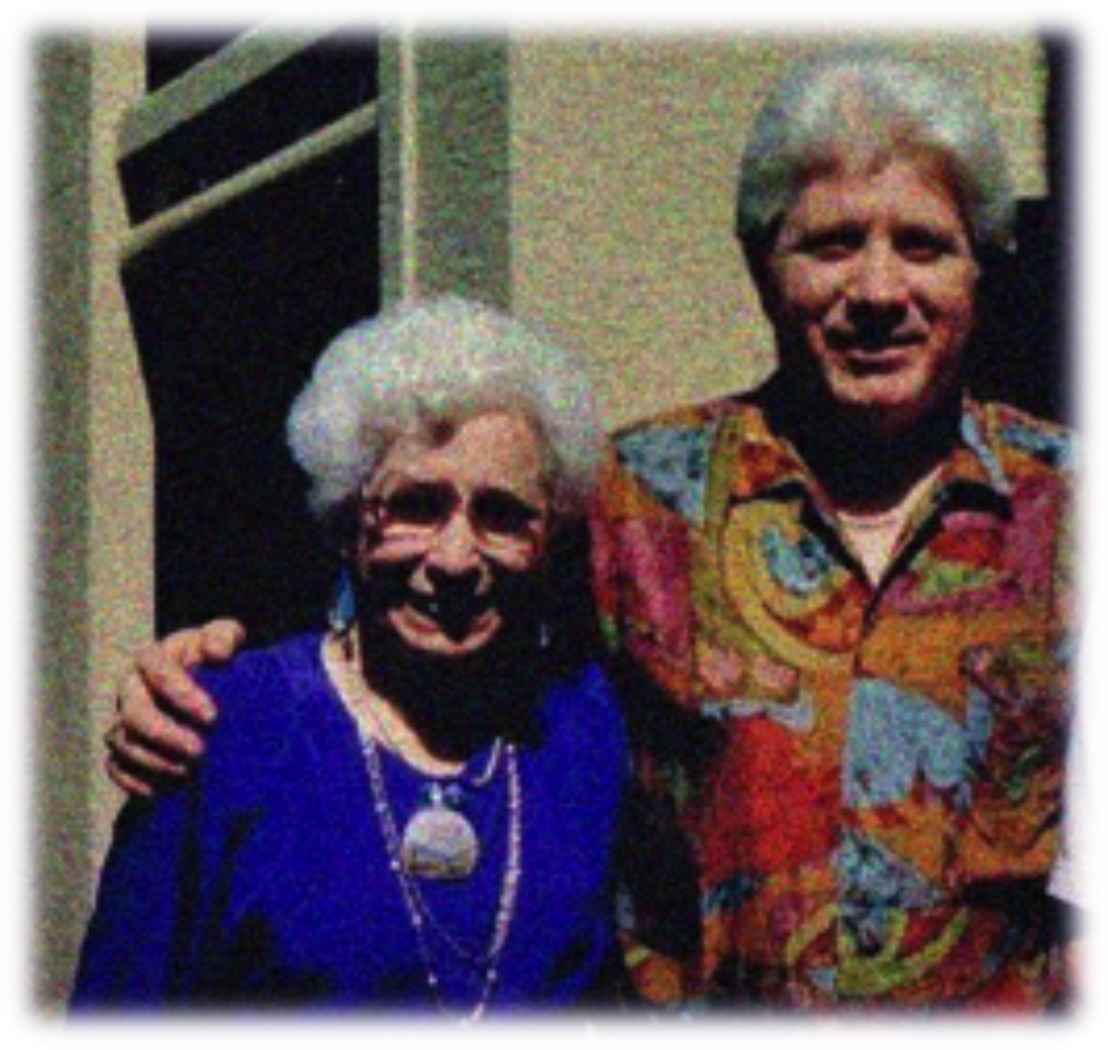
Karma

By Faith Ellestad

You talk about your dirty tricks.  I was stumbling into my dorm late one Saturday night when I felt a tap on my shoulder and saw a finger beckoning me over.

“Past curfew, aren’t you?” asked a cheerful male voice, although it didn’t really strike me as a question. I looked up and recognized Mr. Bell, one of the Drama teachers, standing just inside the door.

“Maybe a little,” I said carefully, trying to sound as though I hadn’t recently imbibed several beers. “Is that a problem?”

This was no idle question. I had just enrolled in my fourth college, the result of a number of flunk-outs and other episodes of non-exemplary behavior in previous halls of learning.  I knew I had few academic options left and couldn’t afford to blow this one. I waited.

“That depends.”

“On what?” I asked warily.

“I won’t report you if you agree to audition for our Spring Play.”

Oh, God! This situation was getting worse by the minute. The Spring Play was the Drama Department ‘s talent showcase, and I had absolutely no desire to be involved. The only acting I’d ever done was trying to talk my way out of trouble.

“But I’m not a drama major, and I haven’t ever been in a play,” I objected.

“Your choice.  I need actors, and you need to not get reported. What do you say?”

I really had no choice. And my head was starting to hurt.

“OK, I’ll do it. When should I be there?”

“Monday evening 6:30 in front of the stage.  I’m counting on you.  See you then.”

“See ya”.

I walked slightly unsteadily up two flights of stairs to my room, relieved that I had dodged a disciplinary bullet.  And since I couldn’t act, Mr. B wouldn’t want me in his play. I would keep my promise, be rejected, my debt would be paid, and I would be off scot-free. I fell into a relieved sleep.

Sunday morning found me at Mass (required), clinging to the pew ahead, suffering from a throbbing hangover –turned-migraine, and consumed by anxious, definitely non-pious thoughts.  What if I embarrassed myself in front of Drama people?  What if he turned me in when I failed my tryout? Worse yet, what if he made me be in the play anyway, just to punish me?  I decided to skip breakfast.  I wasn’t well.  I had been played, so to speak. I blamed myself.

Promptly at 6:30 Monday night I presented myself to the Drama department try-out judges.  The play I was hoping to avoid was nothing I had ever even heard of, a Theater of the Absurd work, The Bald Soprano by Eugene Ionesco. Well, the absurd part was already evident.  All the other students waiting to try out were obviously drama majors with acting experience. Not me.  Except for dressing up as George Washington for the Girl Scout parade, I was experience-free.
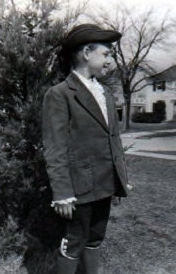
Me in my George Washington attire.

The panel of judges assigned me to audition for the part of Mrs. Martin, the wife of Mr. Martin who, I was told, headed up an unusual British family. Someone handed me a script with my lines highlighted in yellow. There certainly seemed to be a lot of them. Voice-quaveringly nervous, I tried hamming it up to emphasize my lack of talent, but to my horror, the judges were amused by my performance and chose me to play Mrs. Martin. It was then I realized the extent of my punishment.  Mrs. Martin was the lead role.

Deanna, the senior Drama major who always auditioned for the lead, and usually got it, shot me a venomous look as she received the supporting role of housekeeper. Was it my fault that I had discovered my inner cockney, and used that accent to read my lines?  I thought it would be cringe-worthy, but unfortunately, Mr. Bell thought I was hilarious. It was Theater of the Absurd, after all, and he let me know that his expectations were high. I would be at every practice, would learn my lines quickly, appear for costume fittings and help backstage.  In other words, I would have no life but theater for the next month.

I had hoped to perform my punishment without mentioning it to my family, but in a most unfortunate coincidence, the head of the Drama Department was friends with a second cousin of my father.  Cousin Kenny often volunteered as an extra in their larger productions, and when he figured out who I was, couldn’t wait to spread the good news to my parents. At least he didn’t know the real reason I was appearing in a play, but now I was being squeezed from two sides.

Mom had loved being involved in college theater, and Dad, a high school English teacher, had moonlighted as a director for their plays. They were thrilled to think that one of their children had inherited the performance gene, and promptly made plans for the trip up to see me perform.

As rehearsals progressed, I began to realize that I was actually quite competent in my role and that Deanna, the Drama Department Diva, who had wanted my part, was jealous and resentful.  She began to criticize my performances, copy my accent, and attempt to upstage me. More than anything, I didn’t want trouble, but she seemed determined to start something.  I resisted as long as I could, until one evening shortly before dress rehearsal was about to begin, she walked up to me and snapped her fingers.

“Cigarette!” she demanded.

“I don’t smoke”, I replied, which was not true and she knew it. She pulled out her own cigarette and waved it at me.

“Light!” she snapped.  My chain had been jerked for the last time. I took out my pack of matches, lit one and dropped it on the floor.

“There you go,” I said, ground it out, and walked away. After that, she left me alone.

The evening of the play, the cast arrived early, wriggled into our costumes, put on our makeup and received final instructions from Mr. Bell who wished us all broken legs. My parents took their seats in the packed auditorium, the lights dimmed and the curtain went up. It was show time.  Everyone did a great job and Deanna was totally professional.  I forgot one line, but adrenaline kicked in and I made something up on the spot so no one noticed the tiny glitch.  We received a standing ovation, and I got a wonderfully complimentary review in the Campus newspaper.

After my triumphant debut, I could tell that my long-suffering parents believed I had finally found myself. That silly talk of a Psychology major could be discounted, and in fact, always had been by Mom, who was suspicious of therapy as just an excuse to complain about your Mother. Drama, on the other hand, could be a great career!

Man, I wished Cousin Kenny had kept his mouth shut. I didn’t want to disappoint Mom and Dad, but the whole thespian experience had just seemed like a chore to me. Once again, I was a weathervane in the wind when it came to choosing a life path.

Lacking any serious goal, I decided I could at least temper parental disappointment by switching from the contentious Psychology major to Elementary Education. My parents, sister and older brother were already teachers; we could be a teaching dynasty. Besides, they would soon discover they did have a dramatic child. It was my younger brother Thomas, King of the Renaissance Fairs.
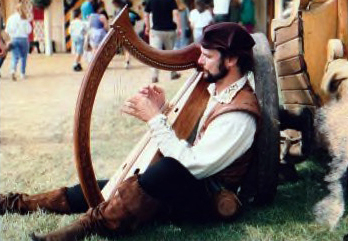
Thomas performing Celtic Harp music at a Renaissance Fair

© 2018 Faith Ellestad

Faith describes herself as a serial under-achiever, now retired after many years as a hospital scheduling specialist.  When her plan to cultivate a gardening hobby resulted only in hives, she decided to get real and explore her long-time interest in creative writing. She’s so happy she did. Faith and her husband live in Madison, WI with Ivy, their beloved old Belgian Tervuren. They have two grown sons, (also beloved), and a wonderful daughter-in-law.

Posted in Guest writer | Leave a comment

“Q Tips”

By Suzy Beal

Let me tell you about my week.  It started early Monday morning at 4:30 am just as my husband was getting up to go to the gym.  He said, “Well, after today’s cleaning of the gas stoves, we will be ready for winter.”

We had completely repainted the exterior of the house, re-stained both decks, painted, and had installed new fascia and gutters. We’d had about twenty trees planted around the house and a new concrete driveway put in.  Robert had remodeled the outside storage and built a small mudroom in the garage.  We were finished and glad to be done with our summer “To Do “list.

The only remaining item on the list was to call the gas company and have them send their maintenance man to clean both gas stoves and make them ready for winter.


James, the stove man, was here. He’d just come in from being on the roof cleaning out the chimney and brushing the soot residue down. He plugged in the vacuum. I was in the laundry room and knew something was wrong when he hollered out, “Oh, no!” I came out to see a large, black cloud hovering over everything.  At first, I didn’t sense what was wrong. Then, as the seconds ticked by, I realized: There was no filter on his vacuum and the soot was pouring out the back into the house.

James quickly pulled the plug, but the damage was done. As he realized the magnitude of his mistake he began to apologize.  I had been peeling and cutting up 22 lbs. of apples to freeze for pies later in the winter. I watched the soot settle on my fresh apples.  Tomatoes and cucumbers from the garden turned dark before my eyes.

I started walking around the kitchen and dining room swiping my finger across surfaces.  They came up black.  What should I do?  How was I going to get everything clean?  James was shaking his head and apologizing.  Finally he said,  “Suzy, I will pay to have all this cleaned up.  Call a cleaning company and see if they can come over right away.”

My mind grasped this idea and I called Merry Maids, but they were too busy and they suggested I call Service Master. I called them and the lady said she would be over at 11:00 am.  It was now 10:15.  James left to get a filter for his vacuum.  I knew then I wouldn’t let him back in the house to do anything, filter or no filter!

I continued walking around the house in a daze.  A Kleenex in my hand, discovering just how fast soot travels when shot out of a vacuum.  I wiped windowsills, papers on my desk, books on the shelves, couch and chairs, my sister’s hand-woven rugs, dishes in the sink–everything was covered in a blanket of black.  I ran to check Robert’s grand piano. Oh please, please–but yes, the white keys were not white and the black keys were blacker.


After the 11:00 o’clock meeting, it was clear that this was going to be a long, expensive cleaning job.  Melissa actually quoted $5,000 to $7,000 for the entire job. How could this be?

James had given her his business card with his license number.  She called her office and they looked up his contractor’s number. He did have a current license, which meant that he did have insurance.

I called my insurance company and they assured me that they would cover the costs if James didn’t file a claim.  Then I remembered we had a $2000 deductible.  This could be the most expensive house cleaning ever!

By 1:00 o’clock there were two cleaning ladies at my house. They started in the kitchen and dining room, which were a direct hit.  As I watched them clean everything with a dry sponge, I began to realize why this was going to take so long

On Tuesday morning they arrived at 8:00 am and around 10:30 I came in from the back deck where I was lodged with my computer.  I found one of the ladies cleaning the bookshelf in the living room. The books on the shelves came out one by one and were wiped. The videos and CDs were treated the same.  All the walls and ceiling were wiped and vacuumed.

She had my little, wooden castles that sit on the shelf in her hand and was cleaning them with Q Tips!  They picked up every little thing on the counters and wiped each down, including the papers strewn around my desk, pencils, pens. The adding machine was cleaned with Q Tips as well.  They used Q Tips to clean the dollhouse furniture in the dollhouse we have for our granddaughter.

On Tuesday morning I got a call from Melissa and she said that she had spoken with James and he had filed a claim with his insurance company.  Thank Goodness!


I had to throw out my apples and all the fruits and vegetables on the kitchen counter.  We ate out that first night because I just couldn’t face the kitchen.  However, as each day passes and they have been cleaning for three days already, I begin to feel as though it will be done soon.  I will have the cleanest house in the county by the time the carpets and blinds have been done.

This is a good thing and I’m beginning to enjoy thinking about it.

© 2018 Suzy Beal

Suzy Beal, an occasional contributor to True Stories Well Told, has been writing her life story and personal essays for years. In 2016 Suzy began studying with Sheila Bender at writingitreal.com.  

Posted in Guest writer | 1 Comment

More on revising your work: Jean Krieg and Sarah White talk writing craft

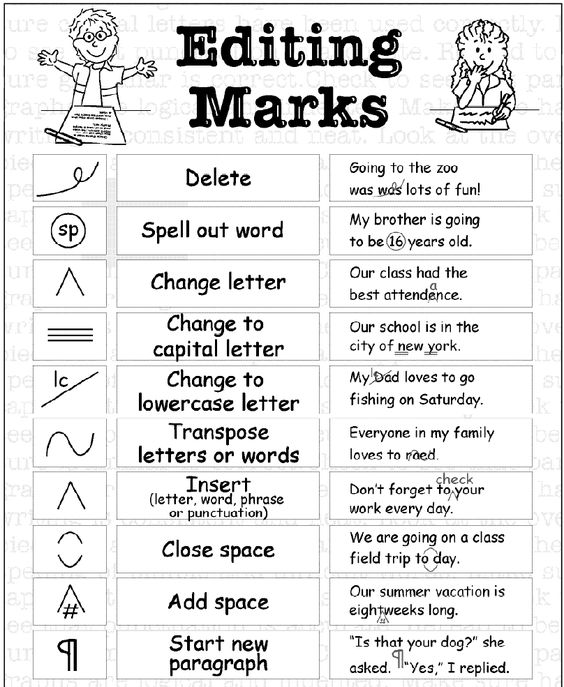
One of the most important things I learned at my mother’s knee was how to use editing marks.

A few weeks ago I posted a dialogue with Doug Elwell about his approach to revising his writing. Jean Krieg posted a comment that led to this continuation of that conversation.

Sarah: Hi Jean, nice to hear from you! In your comment on my blog, you asked—”Can you provide a rough list of the items you recommend reviewing when editing/revising? That’s such a good question! 

Here’s a quick “download” of my thoughts on editing and revising….starting with the two suggestions I made at the end of the dialogue with Doug.

1. “What’s not here but should be?” is really about clarity. Could a stranger understand this story? If you were a sherpa from Nepal, would my story of detasseling corn in humid Indiana summers make any sense to you?

2. “Remove unnecessary words” is obvious—and leads to a more interesting rhythm in the language, mixing short and long sentences,  instead of allowing the run-ons we tend to write in when doing a first “vomit draft”. I just love playing with rhythm via sentence length. For example, I like to start a paragraph with a short punchy topic sentence, then expand with sentences that grow longer, and finally tying it up with a bow at the end with one short summation or zinger.

3. Focus on characters and their motivations—what they hope for, what are they afraid of, what is their relationship to each other—advocate, adversary, it’s complicated, etc? Are those elements as clearly delineated as possible, and are your words conveying what you intended?

4. Focus on creating setting, sense of place—is it clear where we are, what it looks, smells, sounds like? Could that be heightened to good effect, or would that just be clutter in the story?

5. Action—If I were filming this scene for a movie, what would the camera see? What are the most specific, active verbs that could describe that action? Not “he went” but “he strolled”… “he dashed”… “he meandered…”–without taking it into the territory of cliche, of course.

6. If there isn’t a lot of dashing about (active verbs), then am I creating action through dialogue? Does the dialogue sound natural? Have I been minimalist in my use of “tags”–those “he said”, “she muttered” identifiers? (Tag usage in dialogue is worthy of a whole post right there.)

7. And finally, what I call the “tighten and brighten” — go through and remove unnecessary words (again), and search out passive verbs and make them active. It’s amazing how that alone can make a piece of writing better.

Jean: Your list is spot on. There are a few other things that I look for and correct as needed when I edit:

  1. Cliches/colloquialisms
  2. Replace “this/that/it”
  3. If necessary to have passive sentences, make sure subject is before the verb
  4. Replace “thing(s)”

I also read the piece out loud several times and it never fails to highlight an awkward or redundant word or phrase.

Sarah: I’m so glad you mentioned reading the piece out loud. And your #4, “Replace “thing(s)” really takes me back to my home training. My mother–a professional editor–always chided my brothers and me if we used “thing” or “stuff” in our writing–and even in ordinary speech. “There’s always a more precise word than that,” she’d say. “FIND IT!”

Thanks, Jean, for sharing your tips and moving this conversation forward. Readers, anybody want to chime in with your suggestions and experiences around revising your work?

(c) 2018 Sarah White and Jean Krieg

Jean Krieg has published three books: Girl Scouts Camp Alice ChesterMy First Book of Common Wisconsin Birds, and My First Book of Wisconsin Snakes. Visit her blog at: https://mostlynaturestuff.wordpress.com/

Posted in Guest writer, writing workshop | 1 Comment

The Blue Backpack

By Madelon Wise

James brought it out of the trunk of his car each time we pulled up to a parking space at the dog park. He proudly assured me that he got the floppy light blue nylon backpack with skinny corded straps for free.

Short, chubby, and bearded with dark brown eyes and a full head of longish brown hair, James is a self-satisfied 72-year-old man with a conflicted, labile heart that cannot see its own darkness.

“I like routine,” he would remind me frequently, as if I were too childish or thwarted by my genitals to recognize rigidity and control.

Yet our dogs were best friends at the dog park and I enjoyed their delightful wrestling and playing. Out of the doggy friendship emerged our own friendship of convenience and the daily dog park visits. As I spent most of our two-year alliance living with one illness or another, I appreciated the rides if not always the company. I prided myself on my ability to maintain a friendship with a person so different from me.

This is Madelon’s most recent dog, Pluto, a lab-boxer mix, and his favorite shark.

“The first round is freestyle, and the rope comes out on the second round,” he would smugly proclaim.

I introduced the rope when I brought a tug toy hand made from cotton clothesline. James and I got many laughs watching each 80-pound dog tug at an end and growl while they walked.

In typical little man fashion, James then had to go online to find the biggest rope possible. Cut it, knot it at each end, and place the one-inch diameter, yard-long marine rope in the blue backpack for every second trip around the dog park.

I’m sure that big rope came out of the backpack every day that James took my dog to the park while I was recovering from major, nearly fatal surgeries. Because the rope comes out on the second round.

After two months of staying home and recovering strength, I felt increasingly queasy about returning to the daily dog park trips with this man who has spent his entire adult life being told by one of the most misogynistic institutions on the planet that he is the closest thing to God. James acted with an unerring conviction that he was expert in all matters. Kind gestures and intermittent generosity were integral to the father knows best gestalt.

What did I dread about resuming the daily routine? Constant, repetitive patter about planes, trains, cars, buildings, the price of gas, his church, his taxes, his investments. Every trip was painfully predictable, with his occasional lapses into chauvinistic, racist, homophobic, or grossly ignorant comments providing a break in the monotony.

Once I resumed the forced marches to the dog park, I knew I had not been exaggerating in my dread of this routine.

His ceaseless talking was even more boring than it had been before the surgeries. I was exhausted by lack of sleep, unsteady on my feet, and just not in the mood for the entire James show. I did not return from the dead to tolerate bullshit.

As we marched endlessly on the uneven, rutted gravel path, out would come the little blue backpack and the Great Big Rope, and two big dogs wrestled, tugged, and growled at the “snake.” I would go to the left, and the dogs would go to the left. An inevitable dance ensued in which the dogs made certain to get under my unsteady feet every time the damned rope emerged.

“This is annoying you, isn’t it?” he inquired in response to my frustrated struggle, to which I replied that it was immensely annoying and all I wanted to do was be able to walk safely.

The next day, he did not bring out the blue backpack. Ah ha! Does this mean he is capable of hearing something I say? Yes. How wonderful.

But the day after the rope-free day, James deliberately and unexpectedly threw the rope one foot from my walking boots, and 160 pounds of dog flesh immediately pounced.

My shocked brain tried to grapple with how someone who was supposed to be my friend could fail to recognize that he was creating a dangerous situation for me.

“I knew this would annoy you, and I did it anyway,” he smirked. Malice lit his eyes.

Red flags had flown often in the landscape of our friendship, but here was a football-field-sized one that I could no longer ignore. I am slow to anger and have been successfully groomed to tolerate the unacceptable. Shaken though I was at James’s abusive behavior, I am grateful for such clear guidance and for a reason to end a relationship that was sliding inevitably toward sorrow. I will place this experience into my own backpack of life and throw it deep into a trunk where it can do no more harm.

(c) 2018 Madelon Wise

Madelon Wise, a transplant from the Driftless Area, is a gardening grandma riddled with radical biophilia. Writer, editor, permaculturalist, dog mom, musician, and storyteller.

Posted in Guest writer | 2 Comments

Life is Circular (Revisiting your past writing)

My last post (with Doug Elwell) concerned revising your writing. Like Doug, I find it fascinating to go back to pieces written in the past to discover not just how my editorial skills have sharpened in the interim, but also how what I’ve lived through in the intervening time (years, even decades) has changed my perspective on what I had to say.

Doug added this comment, “The key is knowing what it is one wants to say.”

I am in the middle of moving my 95-year-old mother from her home in Sarasota, Florida to an assisted living facility 10 minutes from my home in Madison, Wisconsin. Literally–I am writing this sitting on her front steps, hiding from the blare of her television while I contemplate just what this transplanting means for the both of us.

Sarah and Jean on the beach at Longboat Key.

I am finding out, as Doug put it, what I want to say. I am growing a new, deeper layer of meaning to a small essay I wrote six years ago about watching an elderly neighbor move out of her home. “The Transplanting” appeared on True Stories Well Told in May, 2012.

At the end of that piece, I mused, “This episode is so fresh I don’t know yet what it means to me. This makes it difficult to write a meaningful conclusion. I suspect that in years ahead, I will come back to edit this piece with an eye to creating a stronger closing.”

Well friends, that time has arrived. I’m living an experience that will soon become a new ending to that essay… and the beginning of a new chapter as well–for my mother and for me.

In what ways is your life turning out to be circular? How might you revise the ending-for-now of an earlier memoir essay?

(c) 2018 Sarah White

p.s. If I post less frequently than usual on this blog, please understand–I’ll have my hands full until Jean and I settle into our new relationship.  Your submissions to True Stories Well Told would be truly welcome now! You’ll find guidelines for guest writers here.

Posted in Call for action, Sarah's memoir | 2 Comments

Revising Your Work: Doug Elwell and Sarah White talk writing craft

Let’s talk about revision. In fact, let me invite you into a dialogue I had recently with Doug Elwell, a frequent contributor to True Stories Well Told. But first…

It’s a fact of the writing life that you will likely spend more time on revising your writing than on writing new first drafts. Publishers say a book typically gets revised seven times between contracting for the manuscript and letting the presses roll. Published writers have told me they have revised a piece seven times on average before submitting it for possible publication. Even I can do that math–fourteen edit passes after that first “vomit draft.”

For some writers, revision is hell. For others it is satisfying work, akin (I imagine) to sculpting or metal-smithing. We remove what is extraneous, shape what is integral, until the final object takes on just the right form, its weight and color and dimensions innately satisfying.

Some writers, like Doug and many other older writers I’ve met, have produced a number of essays or articles. With increasing frequency, their creative pleasure in writing comes from improving on words they put on the page months or years ago. Nothing beats discovering you are a better writer this year than last, no matter what your age.

Doug recently sent me some revisions of pieces previously published on True Stories Well Told, which led to an interesting email exchange. Here are Doug’s thoughts on those revisions.

*   *   *

Sarah,

I retrieved my original and revised versions of Beginnings and Reading the Panama Canal. I matched a couple of paragraphs from each version of both pieces and included a short explanation.


Panda today

Beginnings

Original: Example 1

I don’t remember a time when Panda wasn’t a part of my life. He is an Aquarian, but neither of us put much stock in astrology. Comparing Zodiac signs never got either of us very far picking up girls. We are about the same age although he is possibly a few months older than I. But we don’t put much stock in that either. What are a few months one way or another when we have collected so many years?

Revision: Example 1

I don’t remember a time when Panda wasn’t a part of my life. I know he’s an Aquarian, but neither of us put much stock in astrology. Comparing Zodiac signs never got either of us very far picking up girls. We are about the same age.

Original: Example 2

Mother, a registered nurse, sewed his head back on and took an old piece of scrap denim from her rag bag and gave him a new nose. He didn’t look the same, but I loved him anyway.

The lifelong partnership and loyalty had to be acknowledged in revision 2.

Revision: Example 2

Mother, a registered nurse, sewed his head back on and took an old piece of scrap denim from her rag bag and gave him a new nose. He didn’t look the same, but I loved him anyway. No matter what happens, you can’t walk away from your best friend. He wouldn’t do that to me if a dog bit my nose off.

*   *   *

Doug and Mom

Reading the Panama Canal

I have moved toward a more minimalist approach over the years. And yet, there are exceptions. In Reading I expanded the first excerpt in the revision. Because it was fresh, I wasn’t prepared to do so in the original.

Original: Example 1

His stroke rendered him uncharacteristically emotional and by the look in his eyes—a deer in the headlights. I suspect fear of impending death that could sneak up on him at any moment and he would have no control and control was what he was all about.

I had to get rid of the deer in the headlights cliché. Also, since I wrote the original, my thinking about his death and his need for control had matured and I was ready to add some detail I wasn’t ready to add in the original.

Revision: Example 1

His stroke rendered him uncharacteristically emotional and with a fixed look in his eyes—a frozen stare. I suspect it was living in fear of death at any moment that hastened his passing. Knowing him, I’m sure that and the fact he would have no say in the matter if he let nature take its course, kept him awake at night. Because control was what he was about. For as long as he could, he soldiered on and I respected his grit. Then he died—just up and chose his own time and place not leaving it to the whim of another power. On a sparkling April morning before the heat of the day, he dragged his half leg over to a pond a few yards from their place. At the water’s edge, he looked back at his flower beds, then to some geese and ducks paddling toward him (likely expecting some bread crumbs). Instead they took flight at the crack of the .32 caliber round that blew into his temple. He had cheated the dark angel and set his own time and place and left the woman who had devoted her life to him to fend for herself.

Original: Example 2

I went to the kitchen and poured a stiff drink, then went out to the machine shed. It stood about fifty yards south of the house. A large window faced west. It had possibilities.

#1 is too spare. In example 2, I added an old dog. One can never go wrong with an old dog. Or Fitzgerald for that matter.

Revision: Example 2

I mixed a stiff drink, then sat in slanted sunlight while an old dog slept there too. I thought of Scott Fitzgerald’s line—all life is but a process of breaking down. I went out to the machine shed a few yards south of the house. A large window faced west. It had possibilities.

*   *   *

Sarah here again. Notice Doug’s mind at work in the revision process–you might say his left brain is focusing on technicalities like weeding out cliches, while his right brain is focusing on the emotional currents in the pieces, and noticing where the facts may be correct but the TRUTH is not yet adequately captured.

You might even catch Doug fictionalizing–adding a sleeping dog by the machine shed, stating what his father observed even though Doug couldn’t have known, unless he asked, and dead dads tell no tales.

Some people think of revision as the act of cutting. In my first pass or two after a “vomit draft” that is certainly what I focus on–finding where I’ve been needlessly wordy, especially at the beginning of a piece, clearing my throat before finding my voice. But then come the critical review passes–“what’s not here but should be?”–followed by more “remove unnecessary words” passes with a focus on digressions and tangents–maybe there’s another story trying to break free from this one? It’s easy to see how one gets to seven revisions, or even fourteen.

Thanks, Doug, for playing along with me on this! Anybody else want to share their “before-and-after” editing process with readers of True Stories Well Told?

(c) 2018 Doug Elwell and Sarah White

Posted in Guest writer, writing workshop | 4 Comments

“What It Is” by Lynda Barry

Book Review by Rebecca Ahl

I first started reading Lynda Barry in 1990, when her comic strip Ernie Pook’s Comeek ran in Seattle’s free weekly paper, The Stranger. The oddly ugly drawings and scathing observations about childhood grabbed me every week. Later, I picked up her book One! Hundred! Demons! The book stunned me with its naked grappling with life’s painful and mysterious experiences. That book closes with Barry’s encouraging invitation to pick up a sumi brush, and try this kind of writing. What It Is (Drawn and Quarterly, 2008) feels like a full-length continuation of that invitation, offering thoughtful insights and advice for creatives of all types, and especially those looking to write memoir.

In recent years, Barry has taken a deep dive into research into images and human cognition, designing and teaching a multi-disciplinary course at UW-Madison called “Writing the Unthinkable.” What It Is came from these deep explorations into images, writing and memory. It’s an illustrated book for adults, about plumbing the depth of your own memory, and using writing and images to better understand your own life. What It Is is presented as a richly layered multi-media art-journal, that reads as a do-it-yourself guide to inquiry into the self. Barry raises the deep questions she has pondered and researched: What is an idea made of? What is an image? Where do images come from? What is the difference between remembering and imagining? In exploring these questions, Barry offers not only personal observations about imagination, but also precise insights into memory and cognition. She translates these observations into useful exercises for unblocking creative drives and exercising creative muscles many adults have let atrophy with decades of disuse.

Throughout the book, Barry offers practical exercises for writing, especially writing memoir or writing from memory. Examples include writing prompts that start from lists (10 Mothers You Have Known; 10 Cars You Remember), and prompts that begin from randomly selected words from “word bags.” You don’t need this book to make a word bag, randomly draw a noun and a verb, and start writing. What What It Is gives you is broad ideas about memory to explore, as well as step-by-step questions to consider that help you add to those first thoughts that pop to mind from the prompt. Some are easy to answer (What color was her apron?), and some are deeply challenging (Why do you remember that day)?

I’ve learned a lot from Lynda Barry over the years: from specific, simple tips for creativity to broad, life-altering skills. A common theme among all her shared wisdom is a strong message of permission. One of my favorite tips from her is that when she sits down to create something, she first makes a big “X” across the center of a blank page. “There,” she says, “now I’ve already ruined it, so anything else I do can’t make it any worse.” I’ve been encouraged by her to make things by hand, all the time, every day. Barry presses hard on the neurological evidence for greater neuroplasticity and cross-cortical activity created by simply doing things with our hands. Another practical bit of advice from these scientific observations: Barry always has scrap paper available on her workspace; when she gets “stuck”, she can continue moving her hand – with no agenda – on the scrap paper. This manual activity keeps the creative juices flowing, without imposing judgement or anxiety. Like other creatives who’ve worked to bury the notion that “inspiration” randomly strikes, Barry encourages readers to create, create, create, without an agenda or goal, and to be willing to throw the product away. Throughout What It Is, Barry also encourages readers to watch for and use unexpected memories that bubble up. She teaches readers to pay attention to these seemingly untethered images, and to follow them, and gather them, as a means of understanding them.

For me, one of the most memorable pages of the book is one where Barry, as herself, is shown walking and talking with her husband about what’s been troubling her. She can’t figure out why she can’t remember some things, but also can’t stop going back and re-playing something stupid she said thirty years ago. In What It Is, Barry gives herself and her audience permission to pick up these breadcrumbs of memory, to gather and examine them, without judgement, and even to let them go.

Pick up What It Is from your bookstore or library, and let Lynda Barry lead you on an unusual exploration of your memory and your creative abilities. I also strongly recommend Syllabus (Drawn and Quarterly, 20014), her follow-up how-to book that explores even more directly the creative art and writing exercises she developed in “Writing the Unthinkable.” For more, check out all her graphic novels and illustrated novels, and search online for interviews and lectures, and her Tumbler page.

©  2018 Rebecca Ahl

Rebecca Ahl is a mom who likes to explore, make things, and write things. She is overeducated and unemployed. Most days she can be found making things with her kids, near Madison, Wisconsin.

Posted in Book review, Guest writer | 2 Comments

Ice Cream “Sundays”

By Suzy Beal

Full of excitement, we pile into the station wagon and head the six miles into town. We seven kids do everything together. There are no neighbors close by so we depend on each other for everything; entertainment, adventures in the forest, chores, and even picking out the switch with which Mom is going to spank us. It is impossible to do anything private or independent from the others. We never get to choose anything for ourselves. I know that getting a choice means a kind of freedom that my parents, with seven children, can’t afford to let us have, but on Sunday afternoons this all changes.

It’s crowded, the car is warm and the windows foggy.  Mom and Dad seem at peace with each other. All my brothers and sister are laughing and making jokes.  The anticipation of an ice cream cone at Richmaid’s fills me with excitement. Will I choose the same flavor as last time or will I try something different? We each get to choose our own favorite flavor or try something new. It is the best experience, because we get what we want without sharing.

I stare at the list of flavors beside the little window where the ice cream cones come out: chocolate, strawberry, vanilla, rock road, pistachio, licorice. The pressure mounts as everyone calls out their order. Dad always orders pistachio and Mom chocolate. Tom orders licorice, Hank, chocolate, Carl, chocolate – my turn is next. Oh, what do I want… too many choices!   Once I ordered licorice because my older brother did and I hated it, but it was too late to change and I had to wait until next time. Dad doesn’t let us change our minds once we call out what we want, so I need to get it right the first time. Strawberry is my favorite, but sometimes in a moment of madness I call out another flavor.

I holler out, Strawberry!

Mom orders strawberry for Jan and vanilla for Conrad, but little Frankie just gets licks from her cone. I lick mine round and round in circles. The thick, sweet ice cream fills my tongue in scoops. The rich strawberry flavor delights and when I come across a partially frozen strawberry, I chew it slowly so the pleasure will last.

Dad drives leisurely through town, ending up at the Nye Beach turnaround where we park and watch the Pacific Ocean and the surf coming up on the beach. Mom loves this sight, so this is where we come.

This is the same spot where Mom brings us sometimes during the summer when it’s so hot at our home up the river. The northwest wind blows hard in the summer and it sends the sand scudding across the beach. It stings our legs as we run to the ocean. We are only allowed to go out in the surf up to our knees, but that’s enough. It only takes a few minutes for the ocean to turn us blue. It’s so cold.   If we are very brave, we lie down in the surf.

On these Sunday evenings everything seems right with the world, everyone quietly eating their ice cream. The only sounds we hear are the ocean rolling onto the shore and the sea gulls crying out for bites as Mom throws to them pieces of her cone. She throws the pieces onto the front of the station wagon, so the sea gulls will come close and we can all see them fight over the tidbits.

On the way back home Dad stops at the gas station to fill up the station wagon, so Mom will have gas all week. Mr. Peters comes out of his little office to fill the tank. Mom told us that Mr. and Mrs. Peters don’t have any children, but wanted some, so we are always to be nice to them. Mr. Peters leans in Dad’s window to say hi to us. A thought rushes through my mind. I could go live with them and be an only child and all the choices would be mine!

The six miles back home up the river road is dark with no street lights. Mom starts a game in the dark: “I’m thinking of a number between….” or “How do you spell…?”

There isn’t much room in our lives for special wants. We share all our toys. We all eat the same food, play the same games, but on Sunday afternoon we get to select our own special flavor of ice cream. For me the freedom of choosing for myself is more glorious than that special flavor.

© 2018 Suzy Beal

Suzy Beal, an occasional contributor to True Stories Well Told, has been writing her life story and personal essays for years. In 2016 started studying with Sheila Bender at writingitreal.com.  “She has given me the courage to begin to submit pieces for publication,” says Suzy. I’m 72 years old and live in Bend, Oregon.  I was born on the Oregon Coast in Newport.  In 1961 when I was a teenager my parents took all seven of us siblings to live in Spain on the island of Mallorca.  There my dad and brothers built a sailing boat onto which we moved and sailed the Mediterranean.  We later moved to the Caribbean and lived and sailed from St. Croix.”


Posted in Guest writer | 2 Comments

Not Enough Time

By Kaye Ketterer, performed at “First Monday, First Person” salon for memoir writers recently. When Kaye read her essay, I encouraged her to share it with readers of TSWT.


I have no time to write a story.   I’m busy. I have Easter baskets to make, packing to do for a 3-week trip, and a book to make for my granddaughter. After I write the book, I need to take it to my friend who will translate it into Spanish.  I also go to the Y three times a week and take care of my granddaughter, Elena every Tuesday. When my son or his wife is sick, I help by taking Elena to child care in the morning and fetching her at the end of the day.

Those are just the “extra” things that need doing.   There are still the household chores of cooking, cleaning, and doing laundry.   Oh, and then there are the que of books to be read.   I take long lunches and read while I eat and sometimes for another half hour when I’m done eating. And what about the cotton rug I’m crocheting, and the locker hook table runner?   They are my winter projects and they’re not done yet!!

I have friends I want to have over, friends I’m going to have coffee with, and friends I go out to a dinner with.   The Oscars are over and there are even more movies I want to see now! My piano always needs practicing for my weekly volunteer gig at a nursing home, and every once in a while I like to scour local thrift stores for any “new” music they may have.

Why aren’t there more hours in a day?   I just can’t do it all!   I have no time to write a story!   Besides there is nothing to write about anyway.

© 2018 Kaye Ketterer

Kaye lives in Monona, Wisconsin, and keeps her country roots close to her heart. Along with writing, her interests include music, traveling, children, and the elderly.


Posted in Guest writer | 1 Comment

Happy International Women’s Day on March 8th!

Most years since starting this blog (seven years ago!), I have commemorated International Women’s Day with a post. I don’t know why the United States hasn’t embraced this holiday to the extent Europe and Eurasia have, but I hope that’s changing, #MeToo movement and all.

Today I revisit an essay by Leigh Hyde that I originally posted on International Women’s Day, 2013. “Who Do I Kill” explores her coming to feminism in the 1970s. Read on!

http://commons.wikimedia.org/wiki/File:Frauentag_1914_Heraus_mit_dem_Frauenwahlrecht.jpg

If you’d like to see the women’s movement thrive, please consider making a contribution to One Billion Rising or  Half the Sky, organizations that use the power of media to ignite the change needed to improve the lives of women and girls worldwide.

  • Sarah White
Posted in Call for action, Guest writer | Leave a comment